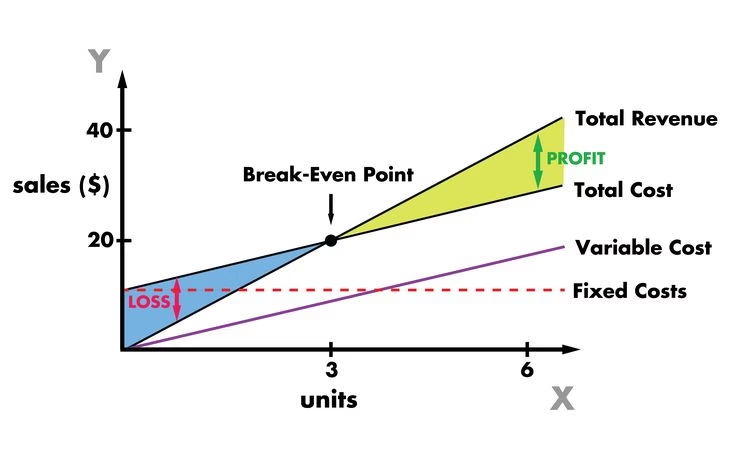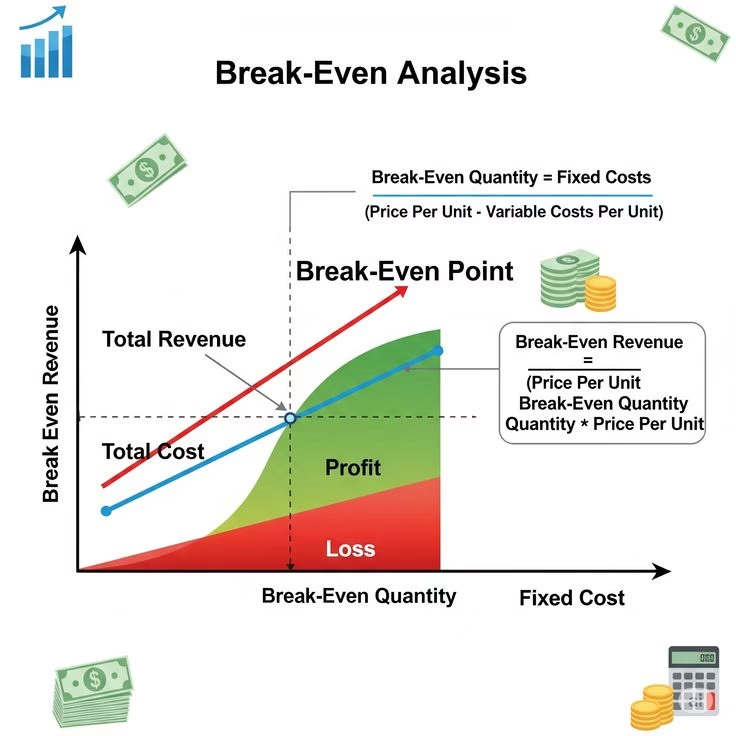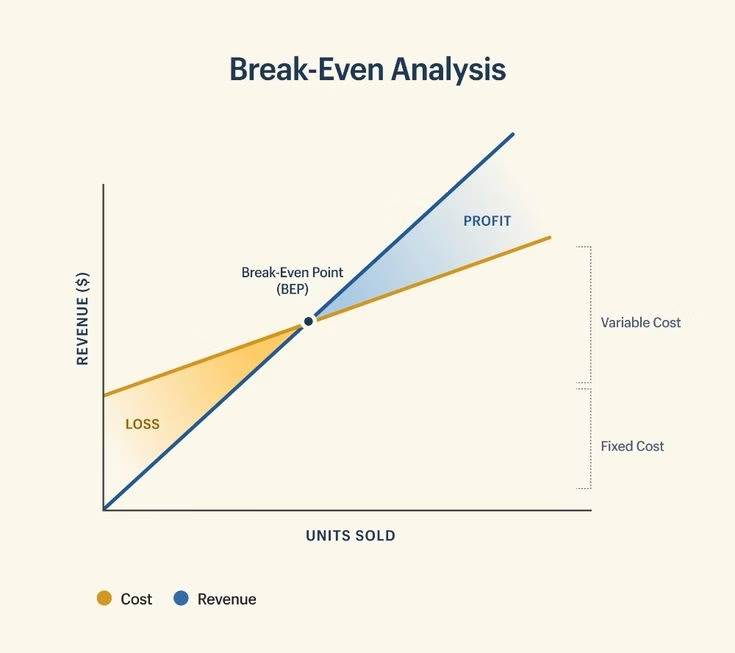

Businesses can use break even analysis, a financial computation to assertain when they will begin to turn into profit. The break even point BEP or the sales level is the level at which Sales revenues equal total cost and the business is neither profitable nor loss making.
Breakeven analysis in finance serves as a foundational decision-making tool that identifies the precise point at which total revenues equal total costs, resulting in neither profit nor loss. This analytical framework is indispensable for evaluating operational viability, pricing strategies, and risk exposure across diverse business contexts.
It is a crucial financial computation often called “no-profit—no-loss,” or “turnaround” point used to evaluate the feasibility of new products, services or business ventures.
BEP: Total Revenue = Total Cost

Key Elements:
Fixed cost
Fixed cost that do not change with the level of output or sales. Examples include, rent, salaries and insurance.
Variable cost
Variable cost are costs that vary directly with the level of production or sales. Examples include raw material, as these are the cost associated to the per unit of production.
Total costs
The sum of fixed and variable cost at any given level of production or Sales fixed cost + variable cost is equal to total cost.
| FIXED COSTS |
| ADD: VARIABLE COST |
| TOTAL COST |
Sales Revenue
Sales Revenue is the income from sale of goods and services.
Profit Volume Ratio
Profit Volume Ratio is the difference between sales revenue per unit and variable cost per unit, it contributes towards covering the fixed costs.

Key Formulas:
- Contribution: Sales – Variable Cost or Fixed Cost + Profit
- Margin of Safety (MOS): The difference between actual sales and break-even sales. It shows how much sales can drop before a loss occurs.
- Break-Even Point (BEP): The level of sales where the company makes no profit and no loss.
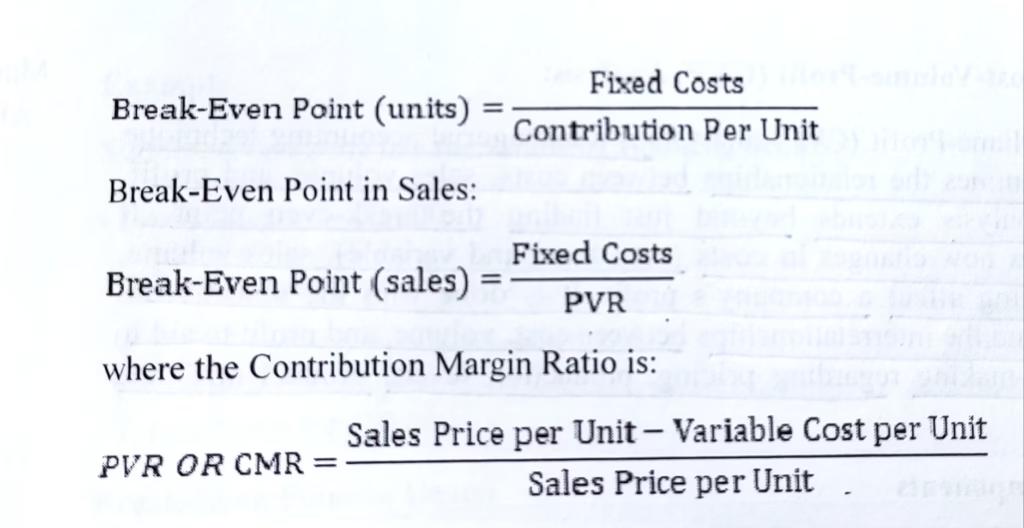
- In Units: Fixed Costs / Contribution Per Unit
- In Value: Fixed Costs / Profit Volume Ratio
- P/V Ratio (Profit-Volume): This indicates the percentage of sales available to cover fixed costs.
- Profit Volume Ratio= Contribution/Sales*100
- Using Change in Data (for two periods)= Change In Profit/Change In Sales*100
Key Components of PV Ratio:
- Contribution: Sales – Variable Cost (or Fixed Cost + Profit)
- Higher P/V Ratio: Indicates higher profitability.
- Lower P/V Ratio: Indicates lower profitability
| Income Statement To Compute Marginal Cost |
|---|
| SALES |
| LESS: (VARIABLE COSTS) |
| CONTRIBUTION |
| LESS: (FIXED COSTS) |
| PROFIT |
Financial Computation of Break Even Point:
The break even point can be ascertained in terms of units or sales.
Uses of Break Even Analysis:
Breakeven analysis is more than just a calculation; it is a strategic fiscal tool designed to:
- Determine Profitability: It clearly shows when a business will start making a profit. Any sales above the BEP represent net profit.
- Reach Conclusions: This fiscal parameter helps businesses understand their profitability, point of no profit- no loss and provides with a financial clarity which inturn leads to better decision making and accurate conclusions.
- Set Pricing Strategies: It helps determine the minimum price needed to cover costs and evaluate the impact of changing prices on profitability.
- Control Costs & Set Targets: It helps identify unnecessary expenses and sets clear sales targets for teams, acting as a goal for survival.
- Manage Risk: By calculating the “margin of safety”—the gap between actual sales and the break-even point—management can assess how much sales can drop before a loss occurs.
- Secure Financing: Investors and lenders often require this analysis to prove that a business plan is viable.
- Strategic Decision Making: Helps in making decisions about the pricing budgeting and planning.
- Potential Profitability Planning: Understanding the impact of cost structure changes on the potential profitability of the business.
- Financial Forecasting: Aids in forecasting and setting sales targets.
- Cost Control: Helps in identifying the impact of fixed and variable cost on the overall financial health of the business.
- Investment Analysis: Useful in assessing the feasibility of new projects or business Ventures.