
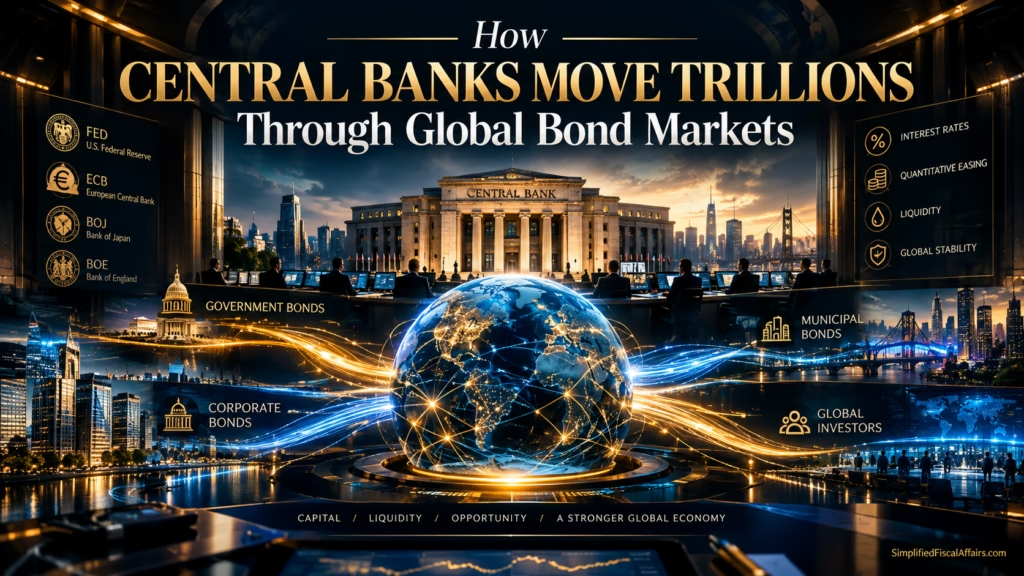
How Central Banks Move Trillions Through Global Bond Markets
How Monetary Policy Shapes Interest Rates, Bond Prices, and the Global Economy
“Every few weeks, a group of central bankers gathers in a meeting room. There are no trading screens, no dramatic speeches, and no cheering crowds. Yet the decisions made in that room can influence mortgages, business loans, government borrowing costs, stock markets, exchange rates, and trillions of dollars in bond prices around the world.”

Introduction: The Most Powerful Financial Institution You Rarely See
Imagine waking up to the following headlines:
- “Central Bank Raises Interest Rates by 0.25%.”
- “Government Bond Yields Jump Across Global Markets.”
- “Mortgage Rates Expected to Rise.”
- “Stock Markets React to Monetary Policy Decision.”
At first glance, these headlines may seem unrelated.
Yet they all stem from one decision.
The decision of a central bank.
Unlike commercial banks that serve individuals and businesses, central banks operate at the heart of a nation’s financial system. Their primary responsibility is not earning profits but promoting monetary and financial stability.
To achieve this, they influence the availability and cost of money throughout the economy.
Because bonds are fundamentally loans, they are directly affected by these policy decisions.

What Is a Central Bank?
A central bank is a public institution responsible for managing a country’s monetary system and supporting financial stability.
While responsibilities differ across countries, central banks generally aim to:
- Maintain price stability.
- Support sustainable economic growth.
- Promote financial system stability.
- Influence interest rates.
- Manage liquidity within the banking system.
- In many countries, oversee payment systems and act as a lender of last resort during periods of financial stress.
Unlike commercial banks, central banks do not typically compete for retail customers or operate primarily to maximize profits.
Their focus is the broader economy.


Why Interest Rates Matter So Much
Interest rates influence nearly every financial decision.
For households, they affect:
- Mortgage costs.
- Auto loans.
- Education financing.
- Savings returns.
For businesses, they influence:
- Expansion plans.
- Equipment purchases.
- Hiring decisions.
- Investment projects.
For governments, they affect:
- Debt servicing costs.
- Budget planning.
- Infrastructure financing.
For investors, they shape:
- Bond prices.
- Stock valuations.
- Currency movements.
- Portfolio allocation.
Because interest rates influence borrowing, spending, saving, and investment, they are among the most powerful tools available to central banks.
Understanding Monetary Policy
Monetary policy refers to the actions central banks take to influence financial conditions in pursuit of their economic objectives.
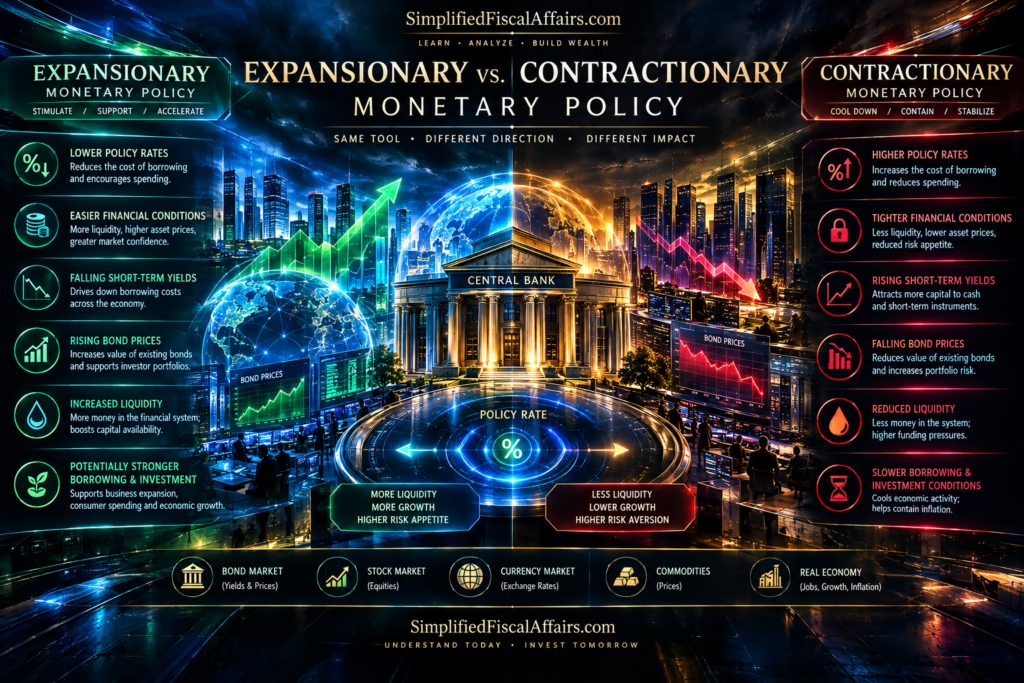
Although policy frameworks vary by country, central banks typically adjust short-term policy interest rates to help balance inflation and economic activity.
When inflation becomes persistently high, policymakers may seek to moderate demand.
When economic activity weakens significantly, they may seek to encourage borrowing and investment.
These adjustments affect financial markets through a chain of interconnected relationships.
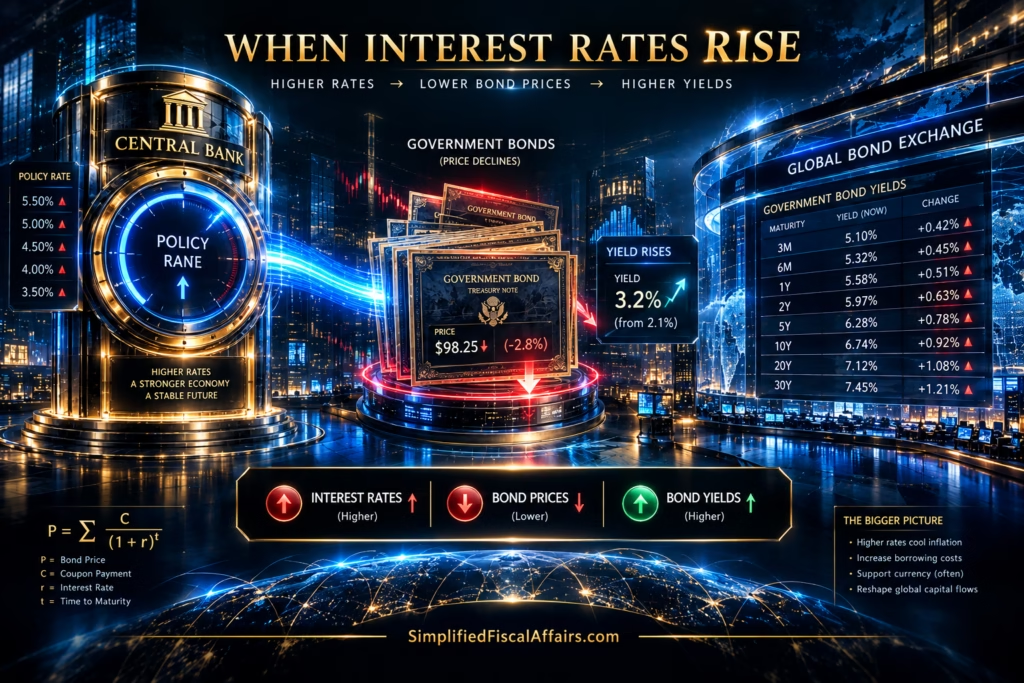
What Happens When a Central Bank Raises Interest Rates?
Suppose inflation begins rising well above the central bank’s objective.
To help slow inflation, policymakers increase the policy interest rate.
Higher policy rates generally make borrowing more expensive.
As financing costs rise:
- Consumers may reduce discretionary spending.
- Businesses may postpone some investment projects.
- Demand for loans may moderate.
- Overall economic activity may cool.
If inflationary pressures ease over time, price stability may gradually improve.
This process is rarely immediate, which is why monetary policy is often described as operating with time lags.
The Impact on Bond Markets
Interest-rate increases have important implications for bonds.
As we learned earlier:
When market interest rates rise, existing bond prices generally fall.
Why?
Because newly issued bonds begin offering higher yields.
Older bonds with lower coupons become relatively less attractive.
To remain competitive, their market prices adjust downward.
Professional bond investors therefore monitor central bank communications carefully, recognizing that even small policy changes can influence bond valuations.
What Happens When a Central Bank Lowers Interest Rates?
Now imagine the economy enters a period of significant weakness.
Businesses reduce investment.
Unemployment rises.
Consumer confidence declines.
To support economic activity, the central bank lowers policy interest rates.
Lower borrowing costs can encourage:
- Home purchases.
- Business expansion.
- Consumer spending.
- Investment in productive assets.
For existing bonds, lower market interest rates often increase their attractiveness.
Because they offer relatively higher coupons than newly issued bonds, their prices generally rise.
The Transmission Mechanism
Monetary policy does not affect the economy through a single channel.
Instead, changes in policy rates ripple outward.
A simplified sequence might look like this:
Central Bank Policy Decision
↓
Short-Term Interest Rates
↓
Bank Lending Rates
↓
Corporate Borrowing Costs
↓
Government Bond Yields
↓
Consumer Spending
↓
Business Investment
↓
Economic Growth and Inflation
Every stage influences the next, illustrating how one policy decision can affect millions of financial choices.

Inflation: The Central Bank’s Constant Companion
Inflation is one of the key indicators monitored by central banks.
If inflation remains persistently elevated:
- Policymakers may tighten monetary policy.
- Bond yields may rise.
- Existing bond prices may decline.
If inflation falls and economic growth weakens:
- Policymakers may ease monetary policy.
- Bond yields may decline.
- Existing bond prices may increase.
The interaction between inflation, interest rates, and bond markets forms one of the central themes of modern macroeconomics.
Why Investors Analyze Every Central Bank Statement
Professional investors pay close attention not only to policy decisions but also to the language used in official communications.
They examine:
- Inflation assessments.
- Economic growth expectations.
- Labour market conditions.
- Financial stability concerns.
- Forward guidance regarding possible future policy.
Small changes in wording can influence expectations about future interest rates, sometimes moving financial markets even when policy rates remain unchanged.
Monetary Policy and the Global Economy
The influence of major central banks often extends beyond their national borders.
Changes in interest rates can affect:
- International capital flows.
- Exchange rates.
- Commodity prices.
- Emerging market financing conditions.
- Global investment portfolios.
Because modern financial markets are highly interconnected, developments in one economy can influence borrowing costs and investment decisions elsewhere.
This interconnectedness helps explain why investors follow central bank announcements from several major economies, not just their own.
Institutional Insight
Professional bond managers continuously evaluate questions such as:
- Is monetary policy becoming more restrictive or more accommodative?
- Are inflation expectations changing?
- Which part of the yield curve is responding most strongly?
- How might future policy decisions affect bond duration and portfolio risk?
- Are current market prices already reflecting expected policy changes?
Successful investing often depends as much on anticipating policy trends as on analyzing individual securities.

Common Beginner Mistakes
Many new investors believe:
“Central banks control every interest rate directly.”
In reality, central banks primarily influence short-term policy rates. Longer-term interest rates are shaped by market forces, including expectations about inflation, economic growth, and future monetary policy.
Another misconception is:
“Lower interest rates always benefit every investment.”
Lower rates can support some asset prices, but their effects vary across sectors, economic conditions, and investment strategies.
Understanding context is essential.
Professional Investor’s Checklist
Before making bond investment decisions, experienced investors often consider:
✔ What is the current direction of monetary policy?
✔ Is inflation accelerating or moderating?
✔ What are markets expecting from future policy meetings?
✔ How sensitive is the portfolio to interest-rate changes?
✔ Are current bond yields adequately compensating for expected risks?
✔ Does the portfolio remain diversified under different policy scenarios?
Chapter Summary
Central banks play a central role in the global financial system by influencing interest rates, liquidity, and monetary conditions.
Through monetary policy, they affect borrowing costs for households, businesses, and governments while shaping bond prices, bond yields, and broader financial markets.
Although central banks cannot eliminate economic cycles, their decisions influence the pace of inflation, credit conditions, investment, and economic activity.
For bond investors, understanding monetary policy is essential because interest-rate expectations are among the most powerful drivers of bond market performance.
By following central bank actions and interpreting their economic signals, investors gain valuable insight into the forces shaping both the bond market and the wider economy.

← Previous Chapter The Inflation Effect — The Ultimate Mathematics of Real Wealth- XI
Next Chapter →Quantitative Easing Explained – XIII
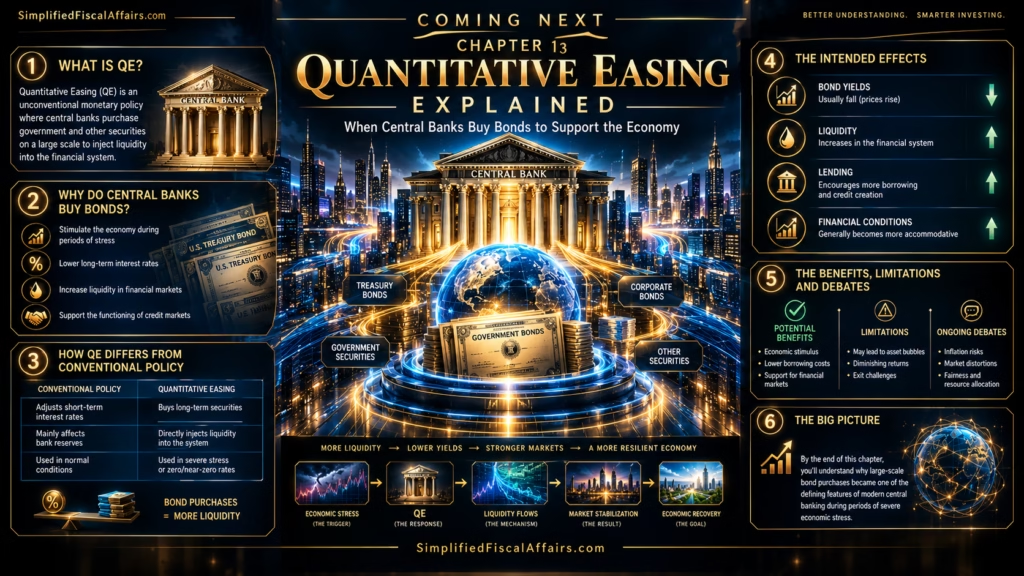
Coming Next
Chapter 13 – Quantitative Easing Explained: When Central Banks Buy Bonds to Support the Economy
In the next chapter, you’ll discover:
- What Quantitative Easing (QE) is.
- Why central banks sometimes purchase government and other securities on a large scale.
- How QE differs from conventional interest-rate policy.
- The intended effects of QE on bond yields, liquidity, lending, and financial conditions.
- The potential benefits, limitations, and debates surrounding this unconventional monetary policy.
By the end of the next chapter, you’ll understand why large-scale bond purchases became one of the defining features of modern central banking during periods of severe economic stress.