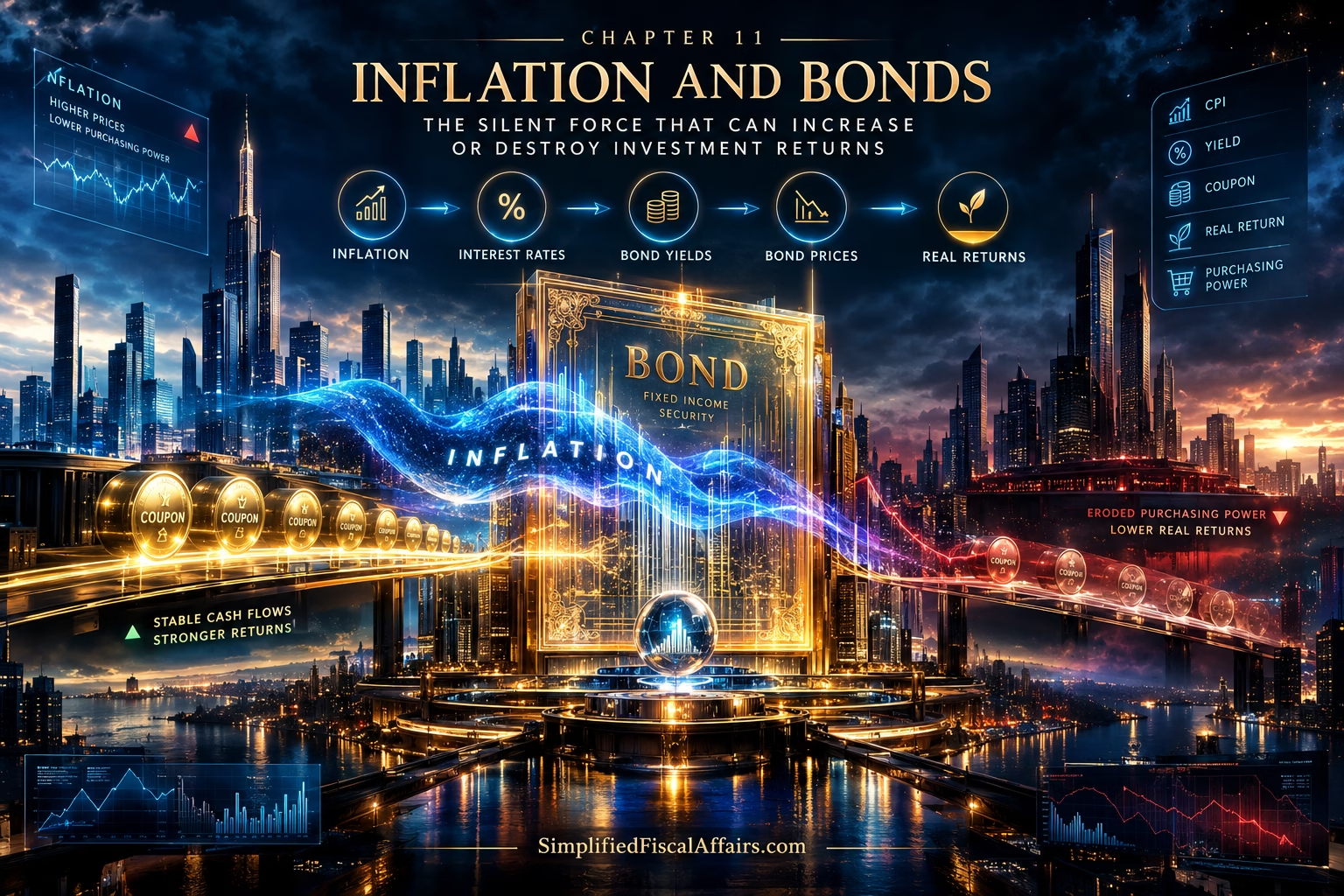
The Silent Force That Can Increase or Destroy Investment Returns
“Making money is only half the battle. The real goal of investing is preserving purchasing power. Inflation quietly determines whether your wealth is growing—or slowly disappearing.”
Introduction: The Hidden Tax Nobody Votes For
Imagine receiving a salary increase.
Last year you earned ₹10 lakh.
This year you earn ₹11 lakh.
Naturally, you feel wealthier.
But then you notice something else.
The cost of groceries has risen.
Electricity bills are higher.
Fuel costs more.
Restaurant meals have become more expensive.
Travel costs have increased.
Healthcare expenses continue climbing.
Although your income increased by 10%, the prices of many everyday goods and services also increased.
Your purchasing power may not have improved very much.
This simple example introduces one of the most important concepts in economics:
Inflation.
Inflation quietly influences almost every financial decision, from household budgets to billion-dollar investment portfolios.
For bond investors, understanding inflation is not optional—it is essential.
What Is Inflation?
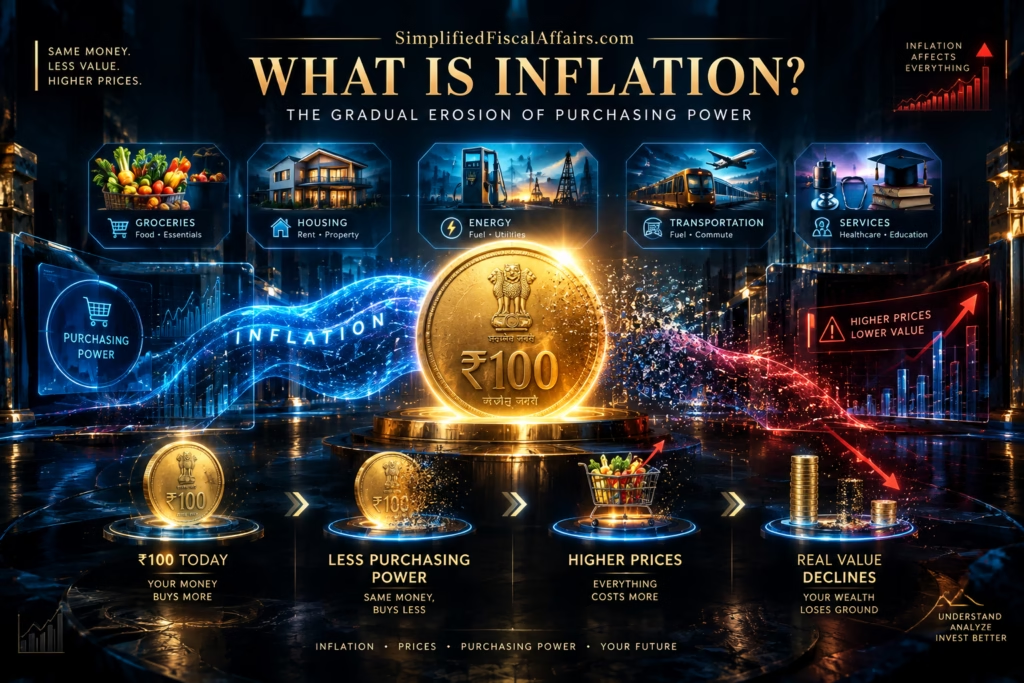
Inflation is the general increase in prices across an economy over time.
As prices rise, each unit of currency buys fewer goods and services than before.
This means money gradually loses purchasing power.
Suppose a cup of coffee costs ₹100 today.
If inflation averages 5% over the next year, that same coffee might cost approximately ₹105.
Nothing about the coffee necessarily changed.
Instead, the value of money relative to goods has declined.
For consumers, inflation raises living costs.
For investors, inflation changes the real value of investment returns.
Why Inflation Matters to Bond Investors
Imagine purchasing a government bond with:
- Face Value: ₹100,000
- Coupon Rate: 6%
- Annual Interest Payment: ₹6,000
At first glance, earning 6% appears attractive.
But consider two different economic environments.
Scenario A
Inflation = 2%
Approximate purchasing power gained:
6% – 2% = 4%
Your investment grows in real terms.
Scenario B
Inflation = 8%
Approximate purchasing power gained:
6% – 8% = –2%
Although you received every promised coupon payment, your money now buys fewer goods and services than before.
This demonstrates a crucial principle:
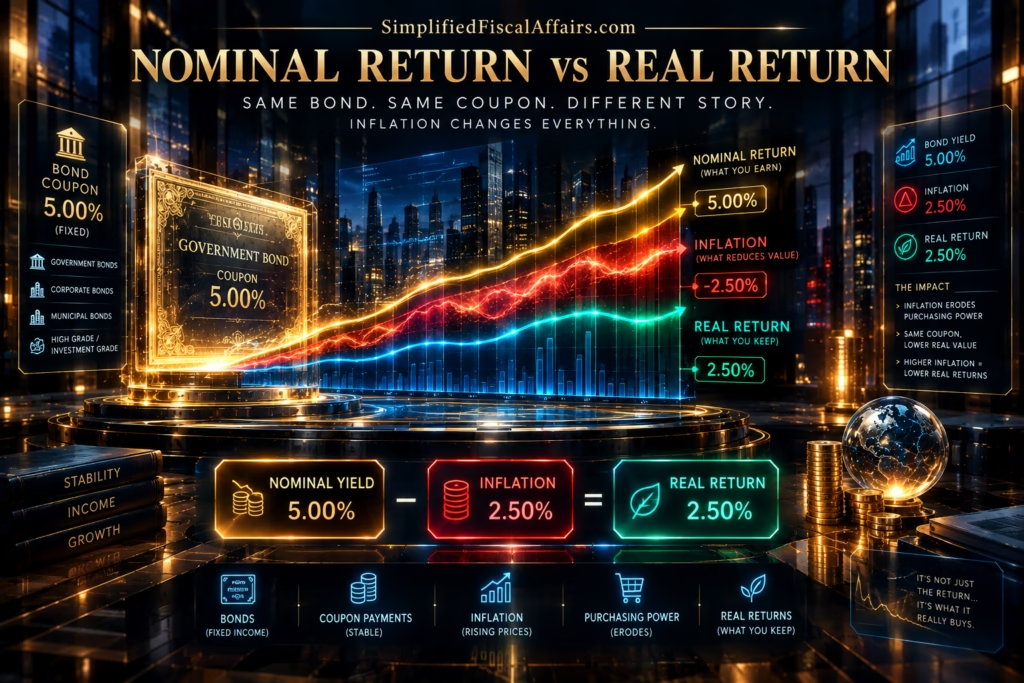
Nominal returns are not the same as real returns.
Nominal Return vs. Real Return
Professional investors distinguish between two types of investment returns.
Nominal Return
The percentage return shown before considering inflation.
Example:
Coupon Rate:
6%
Nominal Return:
6%
Real Return
The return after adjusting for inflation.
Approximate relationship:
Real Return ≈ Nominal Return − Inflation
Example:
Nominal Return:
6%
Inflation:
4%
Real Return:
Approximately 2%
The real return provides a clearer picture of whether an investment actually increases purchasing power over time.
Why Bond Prices Fall During Inflation
Earlier in this series, we learned an important rule:
When interest rates rise, bond prices generally fall.
But why do interest rates often rise during periods of high inflation?
The answer lies in monetary policy.
If inflation accelerates significantly, central banks may increase policy interest rates to slow economic activity and reduce inflationary pressures.
As new bonds begin offering higher yields, existing lower-coupon bonds become less attractive.
Their market prices typically decline.
Thus, inflation indirectly influences bond prices through changes in interest rates.
The Long-Term Investor’s Challenge
Suppose you purchase a 20-year bond paying a fixed coupon.
At the time of purchase, inflation is low.
Several years later, inflation rises sharply.
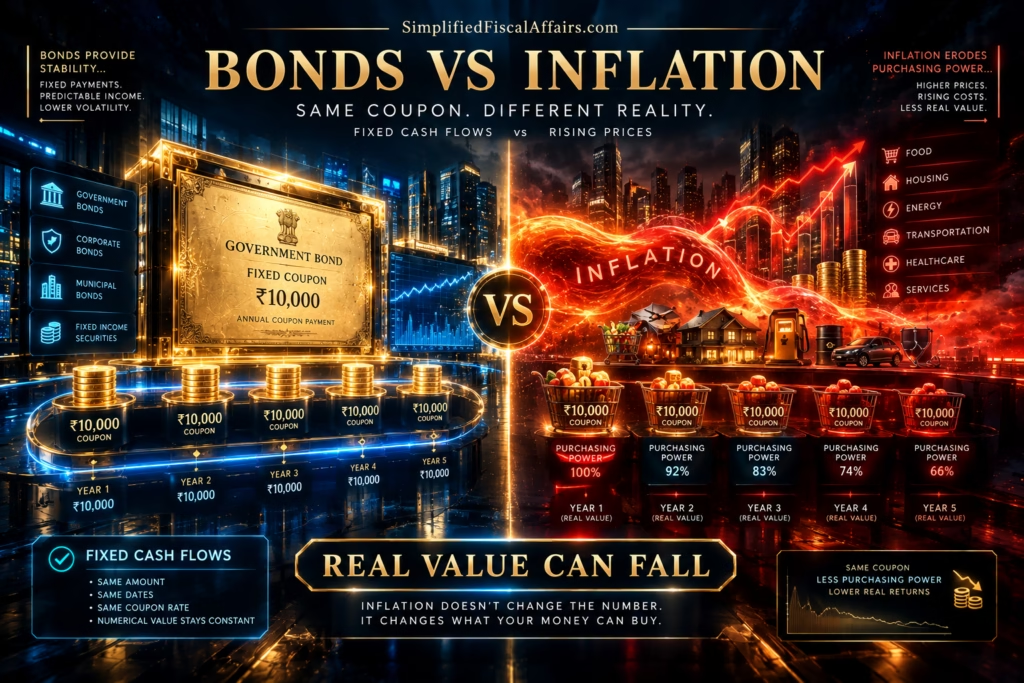
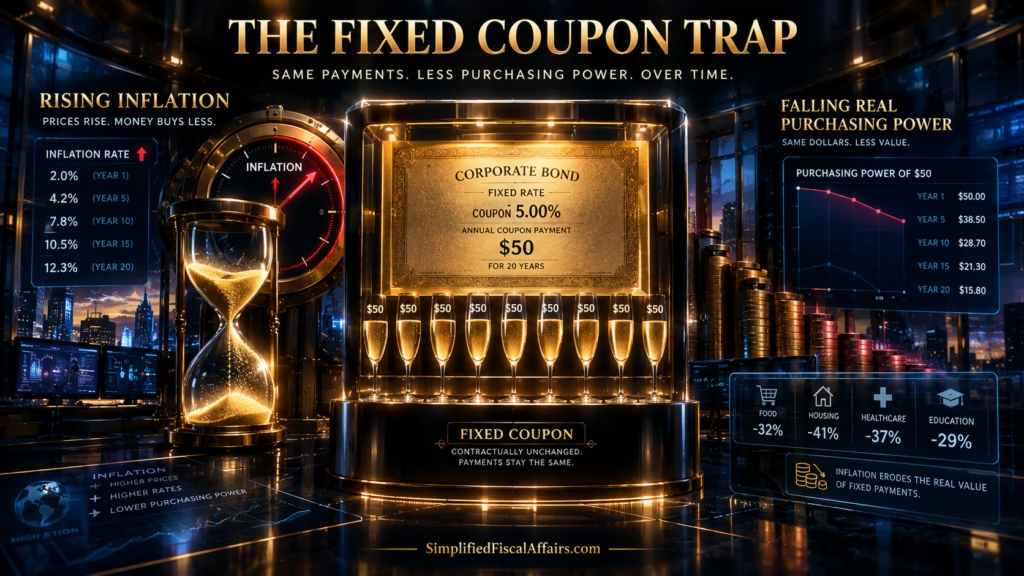
Your coupon payments remain exactly the same.
However, the cost of living increases each year.
Although the amount of money you receive has not changed, its purchasing power gradually declines.
This is known as inflation risk.
The longer the maturity of a fixed-rate bond, the greater the potential impact of unexpected inflation over its lifetime.
Inflation Expectations Shape the Bond Market
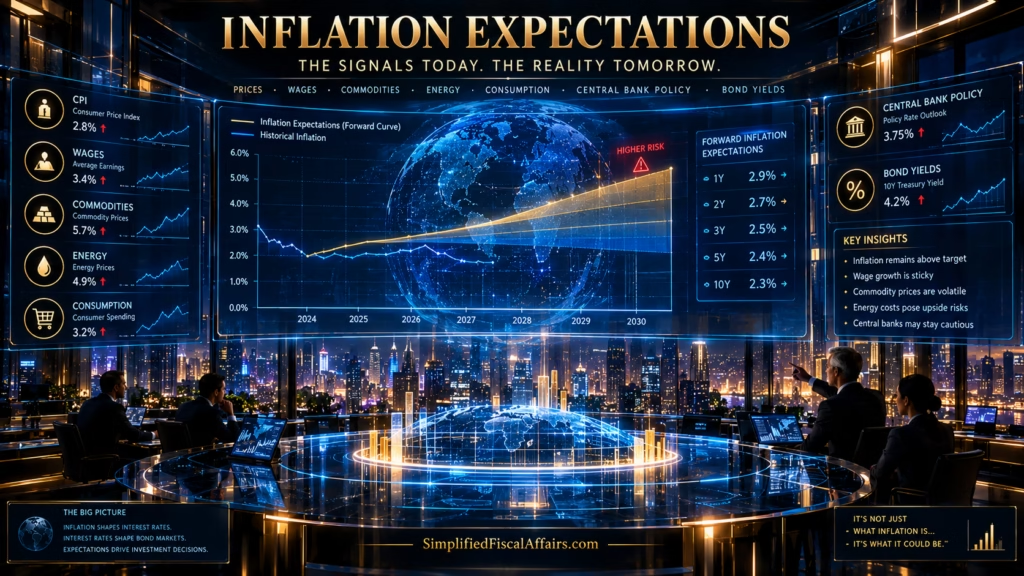
Financial markets do not react only to current inflation.
They also react to expected future inflation.
Imagine investors believe inflation will rise over the next several years.
They may demand higher yields before lending money for long periods.
Why?
Because they want additional compensation for the risk that future inflation reduces the purchasing power of their fixed coupon payments.
This expectation alone can influence bond prices long before inflation actually increases.
The Inflation–Interest Rate–Bond Price Connection
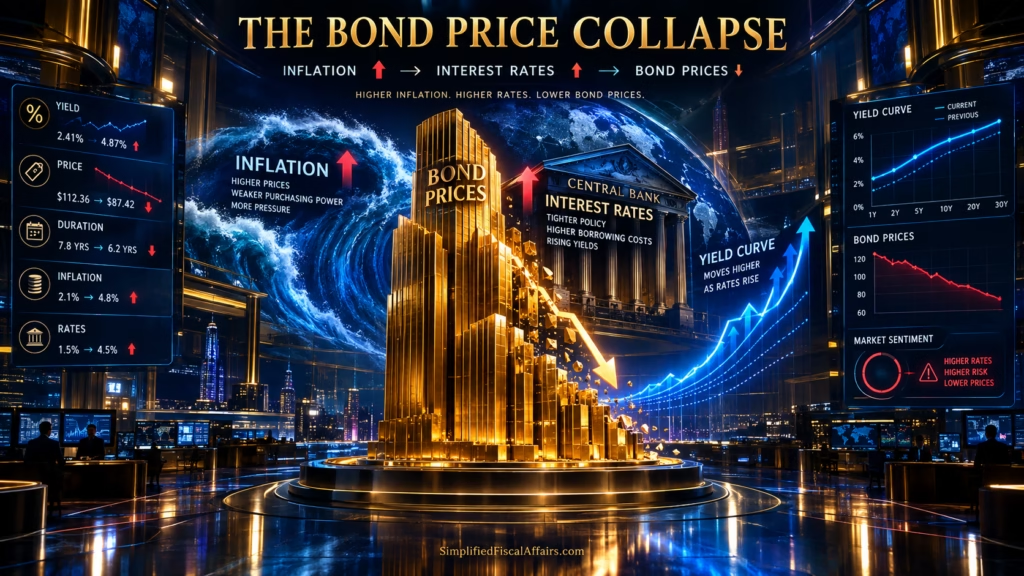
These relationships can be summarized as follows:
Higher Inflation Expectations
↓
Higher Interest Rates
↓
Lower Existing Bond Prices
↓
Higher Bond Yields
Conversely:
Lower Inflation Expectations
↓
Lower Interest Rates
↓
Higher Existing Bond Prices
↓
Lower Bond Yields
Understanding this chain of events helps explain many movements in global financial markets.
Real-World Illustration
Imagine you purchased a 10-year bond paying a 5% coupon.
Soon afterward, inflation unexpectedly increases to 8%.
Newly issued bonds begin offering 8–9% yields.
Would new investors eagerly buy your bond paying only 5%?
Probably not.
To attract buyers, your bond’s market price would likely decline until its yield became competitive with newly issued securities.
This example illustrates why inflation is one of the most significant risks facing fixed-income investors.
Can Bonds Protect Against Inflation?
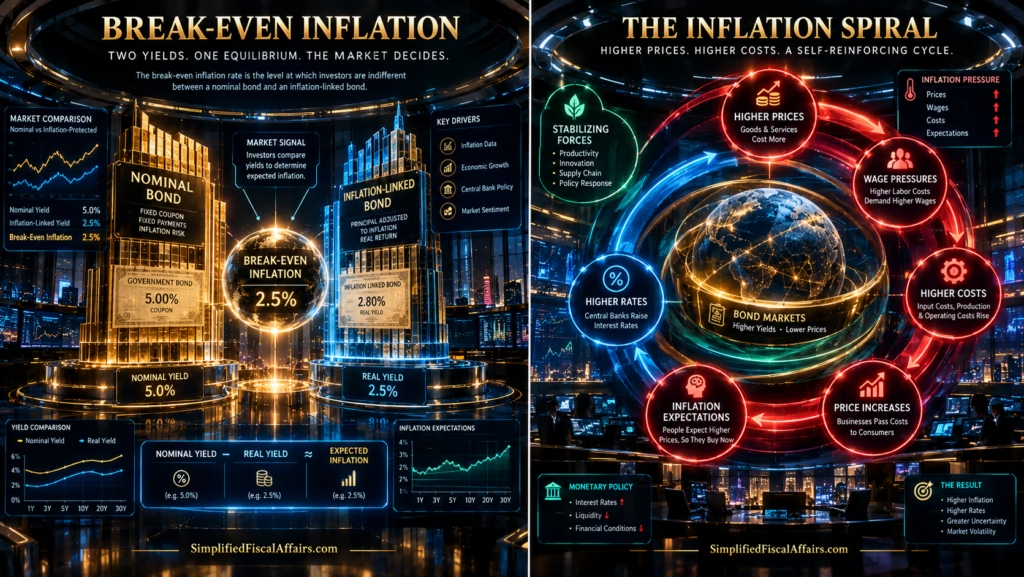
Some bonds are specifically designed to reduce inflation risk.
These securities adjust certain payments based on changes in inflation measures.
Instead of providing completely fixed cash flows, they seek to preserve purchasing power over time.
Such instruments can play an important role in diversified investment portfolios, particularly when investors expect inflation to remain elevated.
We will examine inflation-linked bonds in detail in a later series.
Why Central Banks Monitor Inflation So Closely
Central banks generally aim to maintain price stability while supporting sustainable economic growth.
Persistent inflation can:
- Reduce purchasing power.
- Increase economic uncertainty.
- Distort investment decisions.
- Raise borrowing costs.
- Affect employment and financial stability.
Because inflation influences nearly every corner of the economy, central bank decisions regarding interest rates often begin with careful analysis of inflation trends and expectations.
Those decisions, in turn, influence bond markets around the world.
Institutional Insight
Professional bond managers rarely evaluate a bond using its coupon alone.
They ask questions such as:
- What is the expected inflation rate over the life of this bond?
- Does the bond’s yield provide an adequate real return?
- How sensitive is this bond to future interest-rate changes?
- Would inflation-linked securities better protect purchasing power?
- How might central bank policy affect future yields?
These questions help investors focus not just on income, but on preserving long-term wealth.
Common Beginner Mistakes
Many investors assume:
“A positive return always means I made money.”
Not necessarily.
If inflation exceeds your investment return, your purchasing power may actually decline.
Another misconception is:
“Inflation only affects consumers.”
In reality, inflation influences governments, corporations, banks, bond markets, stock markets, currencies, and monetary policy.
It is one of the most important variables in modern finance.
Professional Investor’s Checklist
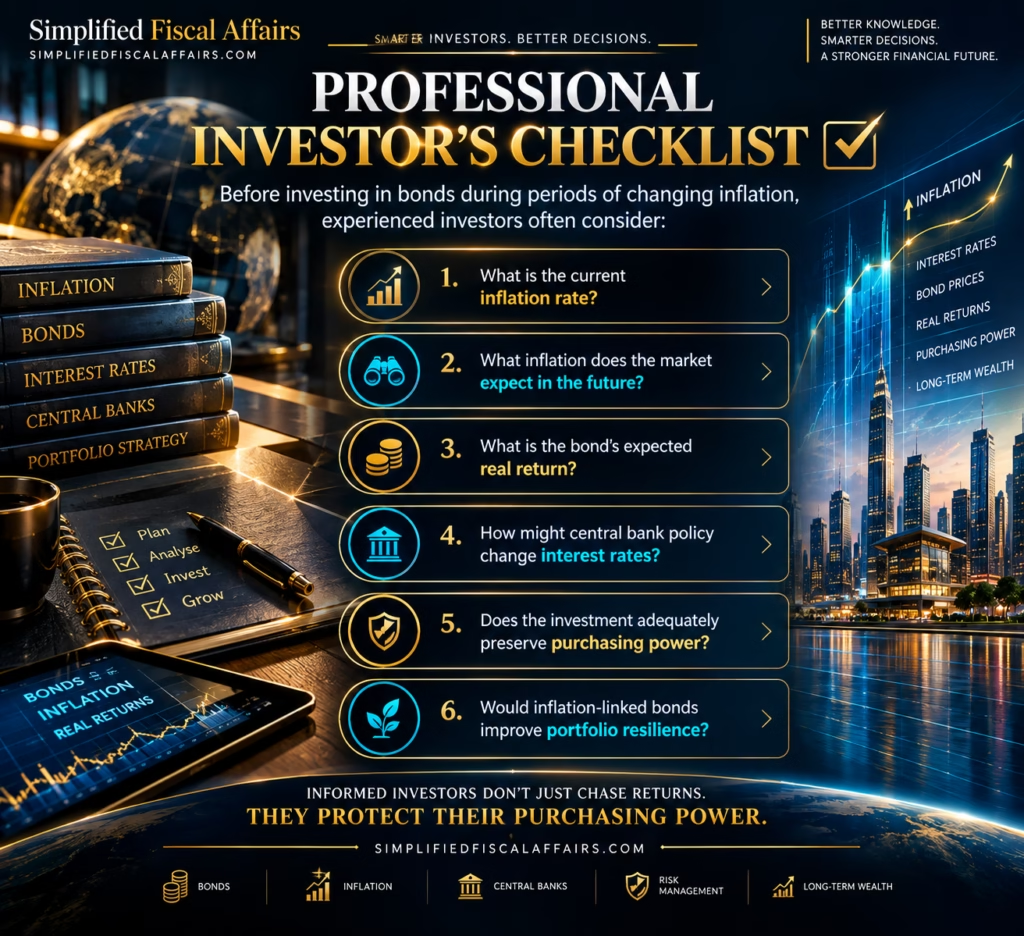
Before investing in bonds during periods of changing inflation, experienced investors often consider:
✔ What is the current inflation rate?
✔ What inflation does the market expect in the future?
✔ What is the bond’s expected real return?
✔ How might central bank policy change interest rates?
✔ Does the investment adequately preserve purchasing power?
✔ Would inflation-linked bonds improve portfolio resilience?
Chapter Summary
Inflation is one of the most powerful forces influencing bond investing because it determines the real value of future cash flows.
While bonds provide predictable coupon payments, inflation determines how much those payments can actually buy.
Professional investors therefore focus not only on nominal returns but also on real returns—the increase in purchasing power after accounting for inflation.
Understanding inflation also explains why central banks adjust interest rates, why bond yields change over time, and why existing bond prices can rise or fall dramatically as inflation expectations evolve.
For successful long-term investing, earning interest is important.
Preserving purchasing power is even more important.
← Previous Chapter The Yield Curve Explained— The Curve That Moves Markets- X
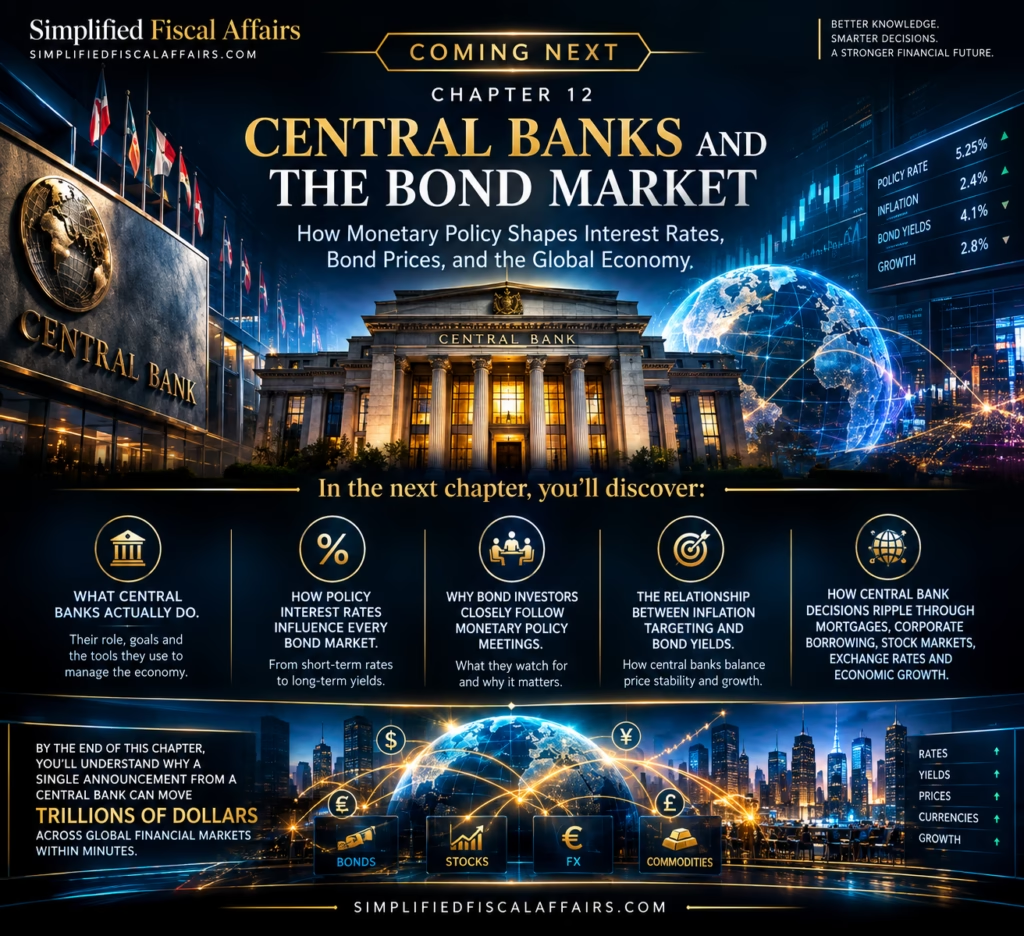
Next Chapter →Central Banks and the Bond Market: How Monetary Policy Shapes Interest Rates, Bond Prices, and the Global Economy – XII
Coming Next
Chapter 12 – Central Banks and the Bond Market: How Monetary Policy Shapes Interest Rates, Bond Prices, and the Global Economy
In the next chapter, you’ll discover:
- What central banks actually do.
- How policy interest rates influence every bond market.
- Why bond investors closely follow monetary policy meetings.
- The relationship between inflation targeting and bond yields.
- How central bank decisions ripple through mortgages, corporate borrowing, stock markets, exchange rates, and economic growth.
By the end of the next chapter, you’ll understand why a single announcement from a central bank can move trillions of dollars across global financial markets within minutes.