The Golden Rule of the Bond Market
Why Bond Prices and Interest Rates Move in Opposite Directions

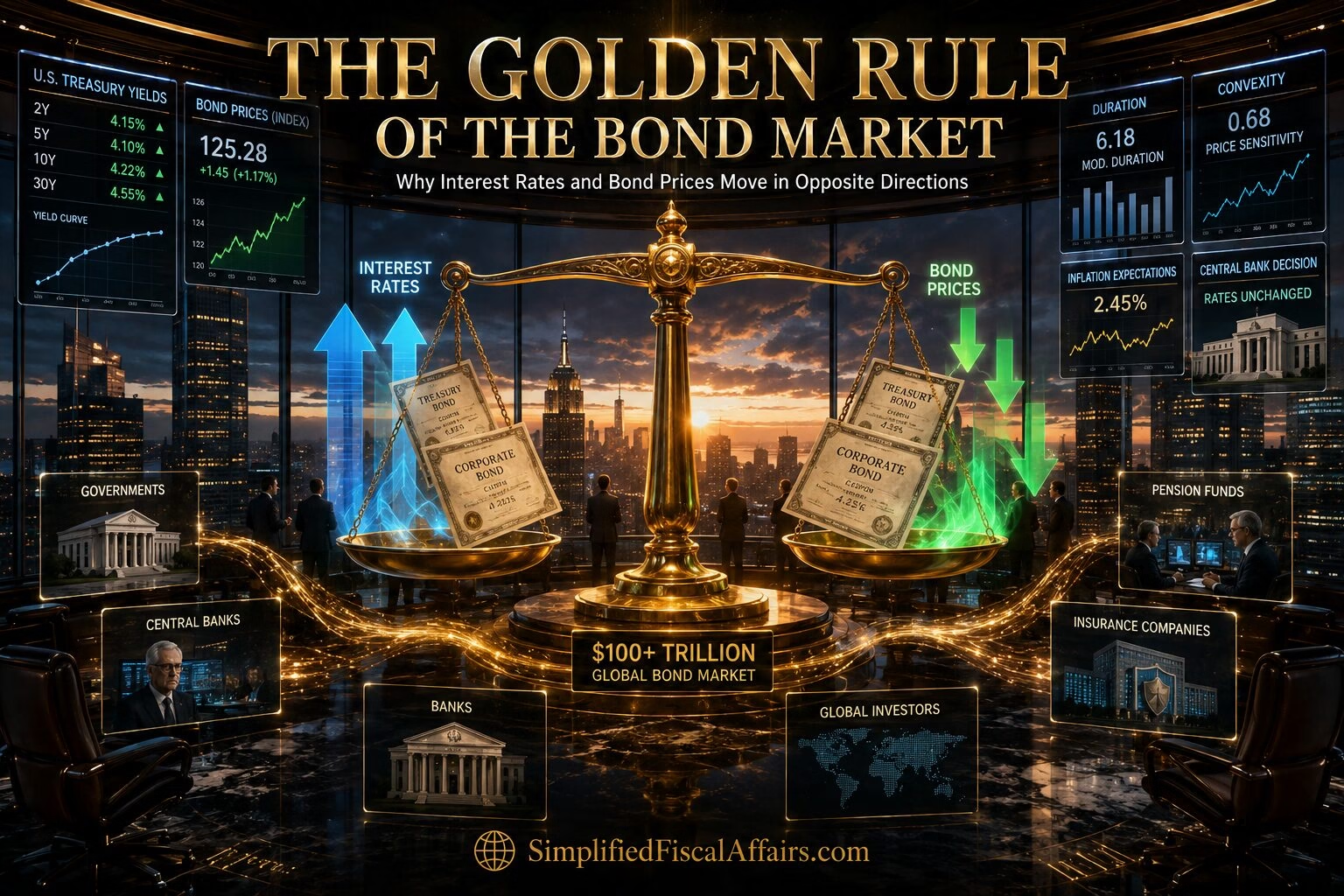
“There is one rule that every bond investor—from beginners to billion-dollar fund managers—must understand. It is so fundamental that it influences governments, central banks, pension funds, and global financial markets every single day: When interest rates rise, bond prices fall. When interest rates fall, bond prices rise.“

Introduction: The Rule That Confuses Almost Everyone
Imagine watching a financial news channel.
The anchor announces:
“Government bond yields jumped sharply today after the central bank increased interest rates.”
A few minutes later another headline appears:
“Bond prices declined across global markets.”
If you’re new to investing, this sounds strange.
Shouldn’t higher interest rates make bonds more valuable?
After all, earning more interest sounds like good news.
Surprisingly, the opposite happens.
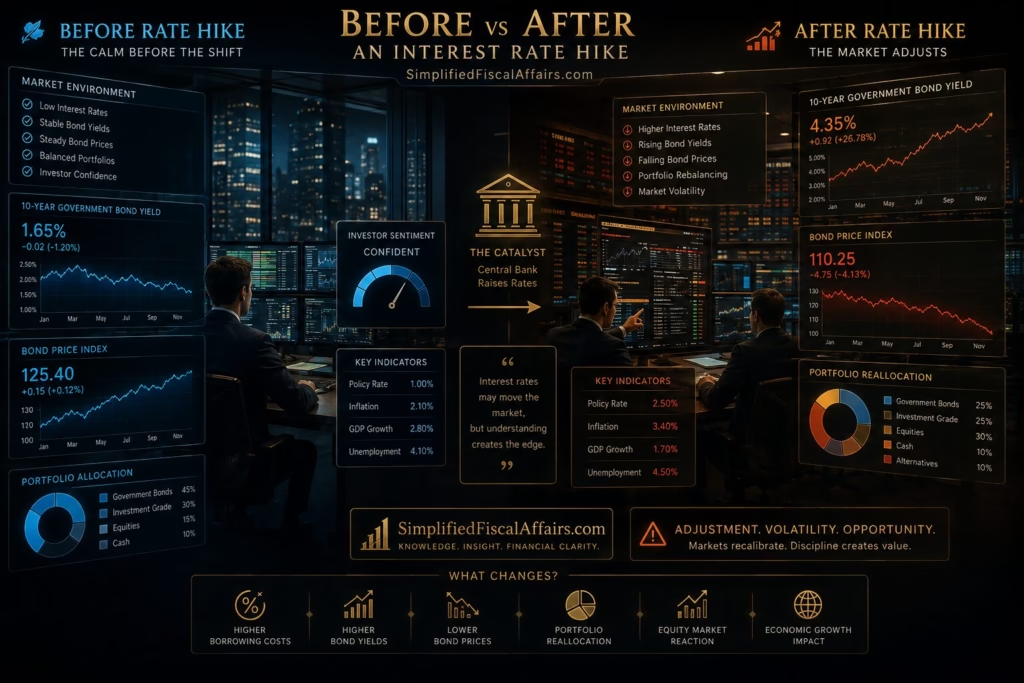
Existing bond prices usually fall when market interest rates rise.
Likewise, existing bond prices generally rise when market interest rates decline.
Understanding why this happens is perhaps the single most important lesson in bond investing.
Why Does This Inverse Relationship Exist?
Imagine walking into one of the world’s largest investment firms. Hundreds of traders monitor interest-rate decisions, bond yields, inflation forecasts, and global economic data. Suddenly, a central bank announces a small increase in interest rates.
Within seconds, billions of dollars disappear from the market value of existing bonds.
Nothing about those bonds has physically changed. The issuer is still the same. The coupon payments remain unchanged. The maturity date is exactly where it was a moment ago.
So why do bond prices suddenly fall?
This simple question leads us to what many professionals call the Golden Rule of the Bond Market:
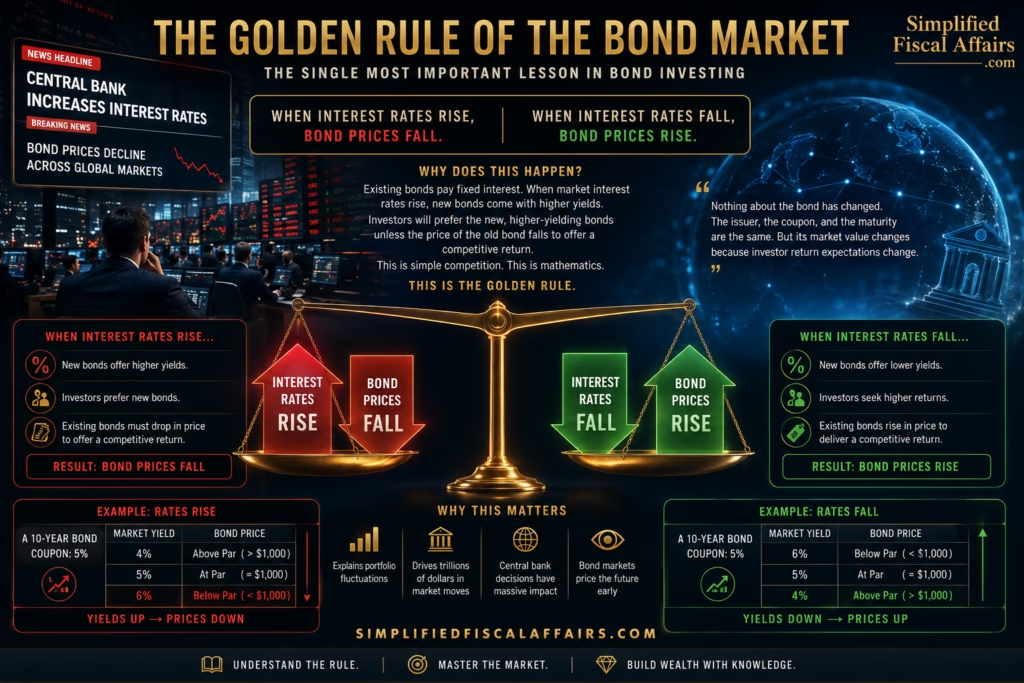
When interest rates rise, existing bond prices fall. When interest rates fall, existing bond prices rise.
At first glance, this relationship appears counterintuitive. If a bond continues paying exactly the same interest every year, why should its market value change simply because a central bank adjusts interest rates?
The answer lies in one of the most fundamental principles of investing: competition.
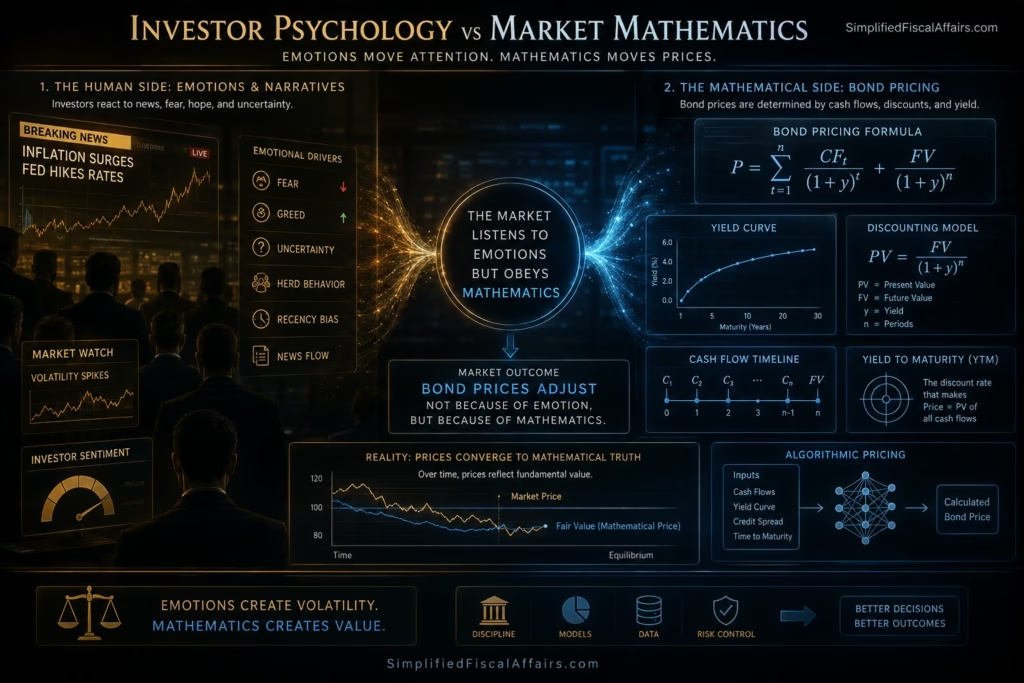
Every bond competes with newly issued bonds entering the market. When interest rates change, those new bonds begin offering different returns, forcing investors to reassess the value of older bonds. As buyers and sellers negotiate prices in the secondary market, existing bond prices adjust until their expected returns become competitive again.
This constant process of price adjustment is what creates the famous inverse relationship between interest rates and bond prices. It is not driven by emotion or coincidence—it is driven by mathematics, market competition, and investor expectations.
Understanding this single principle unlocks much of the bond market. It explains why portfolio values fluctuate, why central bank announcements can move trillions of dollars in minutes, why institutional investors closely watch every interest-rate decision, and why bond prices often react long before economic changes become visible elsewhere.
Before exploring yields, duration, and advanced fixed-income strategies, every investor should first understand this golden rule. Once you grasp why bond prices move opposite to interest rates, the mechanics of the entire bond market become far more intuitive.
Imagine Buying a Bond Today
Suppose you purchase a newly issued government bond with the following features:
- Face Value: ₹100,000
- Coupon Rate: 5%
- Annual Interest Payment: ₹5,000
- Maturity: 10 Years
Everything seems straightforward.
Every year you receive ₹5,000.
At the end of ten years, the government returns your ₹100,000.
You are satisfied with your investment.
But financial markets never stand still.
One Year Later, Interest Rates Rise
Now imagine the central bank raises interest rates.
New government bonds are issued with a 7% coupon instead of 5%.
A new investor now has two choices.
Option A
Buy your existing bond.
Annual income:
₹5,000
Option B
Buy a brand-new government bond.
Annual income:
₹7,000
Both bonds carry similar credit quality.
Which would most investors choose?
The new one.
It pays significantly more interest.
Your older bond has suddenly become less attractive.

So Why Would Anyone Buy Your Bond?
This is where markets perform an elegant adjustment.
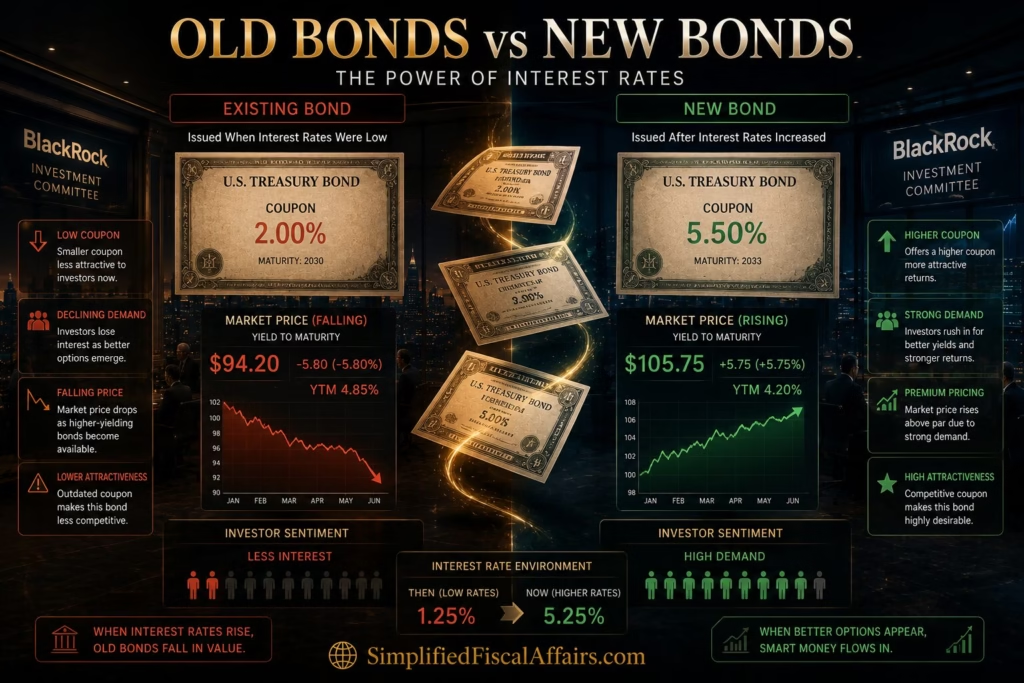
To persuade someone to purchase your older bond, you must reduce its selling price.
Instead of selling it for ₹100,000, you might have to sell it for:
₹96,000
Or perhaps:
₹94,000
Or even lower.
The exact price depends on prevailing market conditions.
By lowering the purchase price, the fixed ₹5,000 annual coupon now represents a more competitive return for the new buyer.
The bond’s income has not changed.
Its price has.
The Market Finds a New Balance
Financial markets constantly seek equilibrium.
If new bonds pay higher interest, older bonds with lower coupons must become cheaper.
Conversely, if new bonds offer lower interest, existing higher-coupon bonds become more desirable.
Investors compete to purchase them.
Their prices rise.
This balancing mechanism keeps the bond market efficient.

The Golden Rule
Every finance student should remember this sentence:
Bond Prices ↑ = Interest Rates ↓
Bond Prices ↓ = Interest Rates ↑
This inverse relationship lies at the heart of bond investing.
It influences:
- Government borrowing
- Corporate financing
- Pension fund management
- Central bank policy
- Mortgage rates
- Global investment flows
Understanding this one principle helps explain thousands of financial news stories.
A Real-World Illustration
Suppose two government bonds exist.
Bond A
Issued last year.
Coupon:
5%
Face Value:
₹100,000
Bond B
Issued today.
Coupon:
8%
Face Value:
₹100,000
If both are offered for exactly ₹100,000, which one would investors prefer?
Clearly, Bond B.
It generates higher annual income.
To remain competitive, Bond A must trade below face value.
Only then does its overall return become attractive relative to newly issued bonds.
This is why older bonds frequently trade at discounts when market interest rates rise.
What Happens When Interest Rates Fall?
Now reverse the situation.
Suppose you own a bond paying:
8%
A year later, new government bonds offer only:
5%
Suddenly your bond becomes extremely attractive.
It pays considerably more interest than newly issued securities.
Investors begin competing to buy it.
Competition pushes its market price upward.
You may be able to sell it for:
₹105,000
₹110,000
Or even more, depending on market conditions.
Your bond’s coupon never changed.
Its market value increased because higher-income bonds became scarce.
Why Central Banks Matter
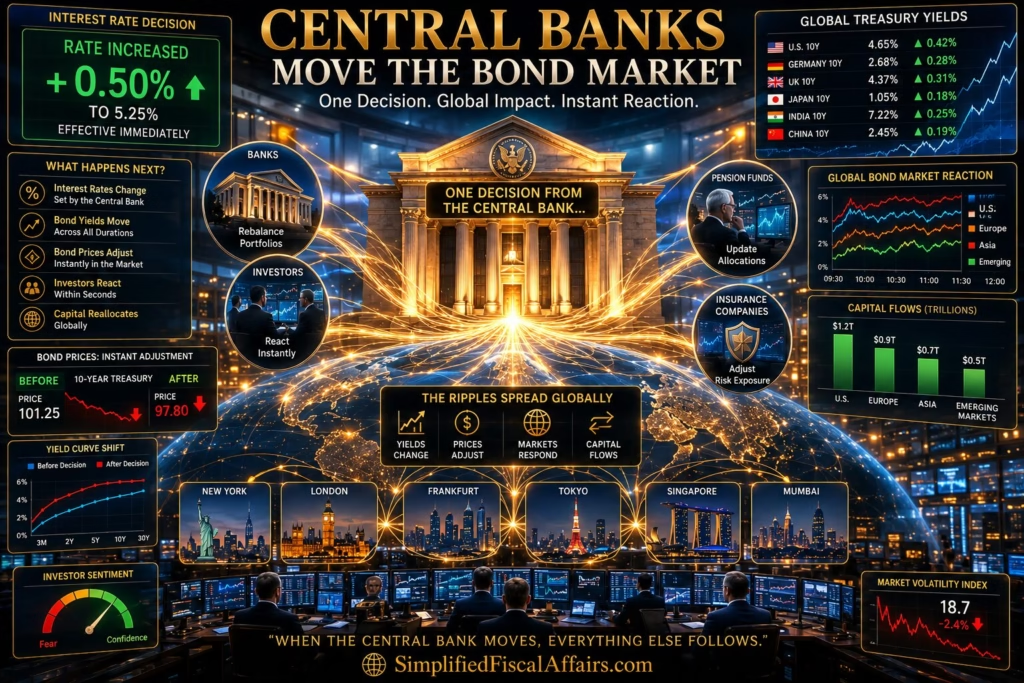
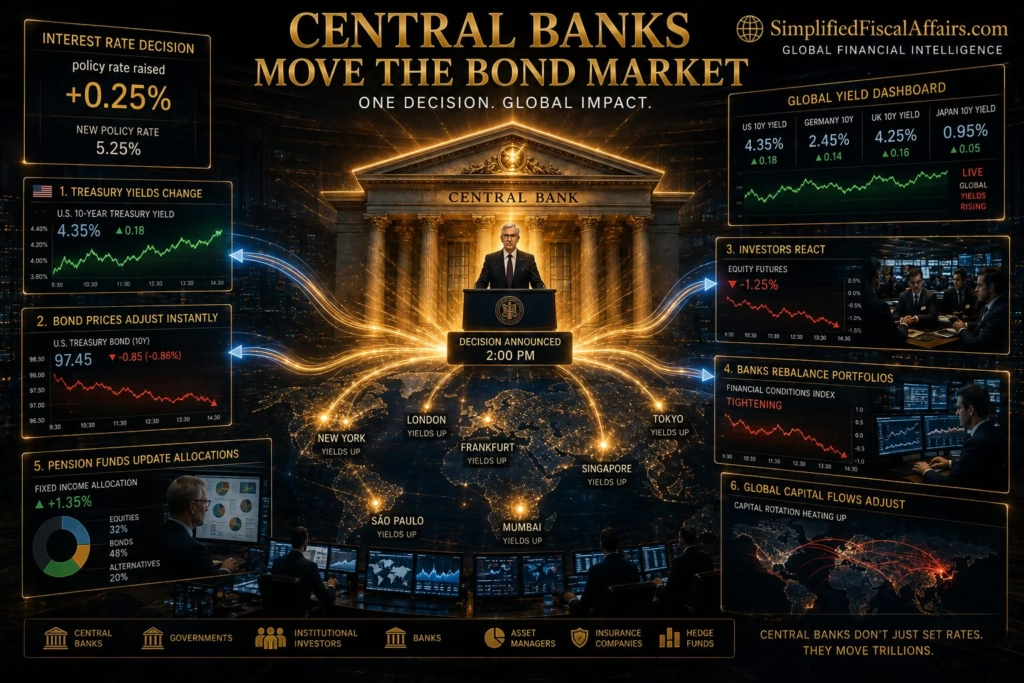
This relationship explains why financial markets closely monitor every central bank announcement.
When central banks raise policy interest rates:
- Newly issued bonds typically offer higher coupons.
- Existing lower-coupon bonds become less attractive.
- Existing bond prices generally decline.
When central banks reduce policy rates:
- Newly issued bonds offer lower coupons.
- Existing higher-coupon bonds become more attractive.
- Existing bond prices generally increase.
Because of this, central bank decisions can influence trillions of dollars in bond values within hours.
Why Professional Investors Watch Interest Rates Every Day
Large institutional investors rarely ask:
“Which bond pays the highest coupon?”
Instead they ask:
- Where are interest rates likely to move?
- Is inflation increasing?
- Will central banks tighten or ease monetary policy?
- Are bond prices likely to rise or fall?
- Does today’s price adequately compensate for future risks?
These questions shape investment decisions involving billions of dollars.
Bond investing is therefore not simply about collecting interest—it is about understanding the relationship between prices, yields, inflation, and economic expectations.

The Elevator Analogy
Imagine two elevators moving in opposite directions.
When one rises, the other falls.
They never move upward together.
Bond prices and market interest rates behave similarly.
As one climbs, the other generally declines.
This simple mental image helps many investors remember the relationship.
Common Beginner Mistakes
One common misconception is:
“Higher interest rates are always good for bond investors.”
Not necessarily.
They are generally beneficial for people purchasing new bonds.
However, they can reduce the market value of existing bonds.
Another misconception is:
“A bond that loses market value has failed.”
Again, not necessarily.
If you continue holding the bond until maturity and the issuer remains able to repay, you still receive the scheduled coupon payments and the return of principal according to the bond’s terms.
Market price fluctuations mainly affect investors who buy or sell before maturity.

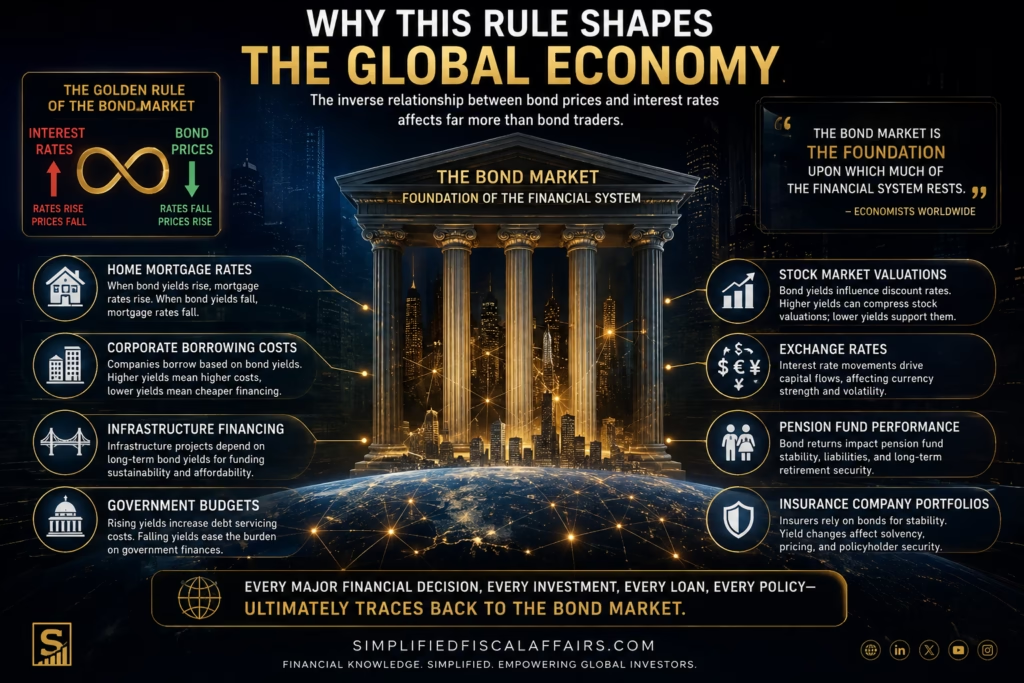
Why This Rule Shapes the Global Economy
The inverse relationship between bond prices and interest rates affects far more than bond traders.
It influences:
- Home mortgage rates.
- Corporate borrowing costs.
- Infrastructure financing.
- Government budgets.
- Stock market valuations.
- Exchange rates.
- Pension fund performance.
- Insurance company portfolios.
This is why economists often describe the bond market as the foundation upon which much of the financial system rests.
Chapter Summary
The golden rule of bond investing is straightforward but profoundly important:
When market interest rates rise, existing bond prices generally fall.
When market interest rates fall, existing bond prices generally rise.
This relationship exists because investors compare older bonds with newly issued ones. If new bonds offer higher returns, older bonds must become cheaper to remain attractive. If new bonds offer lower returns, existing higher-paying bonds become more valuable.
Mastering this principle provides the foundation for understanding bond yields, portfolio management, monetary policy, and the daily movements of global financial markets.
In the next chapter, we will build on this concept by exploring bond yields in much greater depth. You’ll discover why professional investors often care far more about yield than coupon rate, and how different measures of yield reveal the true return of a bond investment.
← Previous Chapter The Hidden Mechanics of Bond Investing – VI
Next Chapter →Bond Yields Explained – VIII
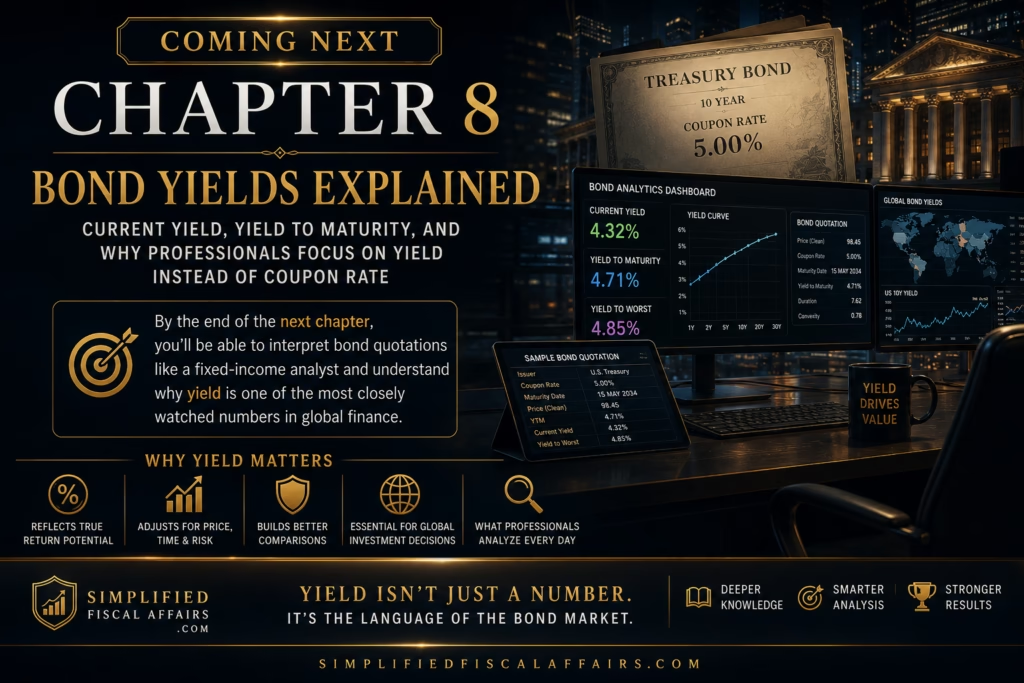
Coming Next
Chapter 8 – Bond Yields Explained: Current Yield, Yield to Maturity, and Why Professionals Focus on Yield Instead of Coupon Rate
By the end of the next chapter, you’ll be able to interpret bond quotations like a fixed-income analyst and understand why yield is one of the most closely watched numbers in global finance.
Disclaimer
This article is published solely for educational, informational, and public awareness purposes. Any companies, organizations, financial institutions, individuals, financial data or scenarios mentioned are used for explanatory or illustrative purposes unless explicitly identified as publicly documented cases. Documentary-style narratives, hypothetical examples, and reconstructed investigative scenarios are intended to help readers understand forensic auditing concepts and should not be interpreted as factual accounts of any specific ongoing investigation.
The information presented does not constitute legal, accounting, auditing, financial, investment, or professional advice. While every effort has been made to ensure accuracy, readers should consult qualified legal, accounting, forensic, or financial professionals before making decisions based on the information contained in this article.
SimplifiedFiscalAffairs.com does not make any allegations against any person, company, or institution, nor does it endorse or condemn any entity referenced. References to publicly known corporate frauds or legal cases are based on information available in the public domain and are included solely for educational analysis.
The publisher and author disclaim any liability for actions taken based on the contents of this article.