
Understanding Face Value, Coupon Rate, Market Price, Yield, and Maturity
“Every bond tells a financial story. Its face value reveals how much was borrowed. Its coupon shows the lender’s reward. Its price reflects the market’s opinion. Its yield reveals what an investor actually earns.”
Introduction: Looking Inside a Bond
Imagine buying a luxury watch.
Before purchasing it, you would probably examine its movement, materials, craftsmanship, warranty, and market value.
Professional investors approach bonds in much the same way.
Although a bond may appear to be a simple loan agreement, it is actually a financial instrument composed of several interconnected parts. Understanding these components is essential because they determine how much income a bond generates, how risky it is, and whether it represents good value at its current market price.
Many beginners make the mistake of focusing only on the interest rate printed on the bond certificate. Experienced investors know that the true value of a bond depends on much more than its stated coupon.
This chapter explores the five core building blocks that form the mechanics of every bond.
The Five Building Blocks of Every Bond
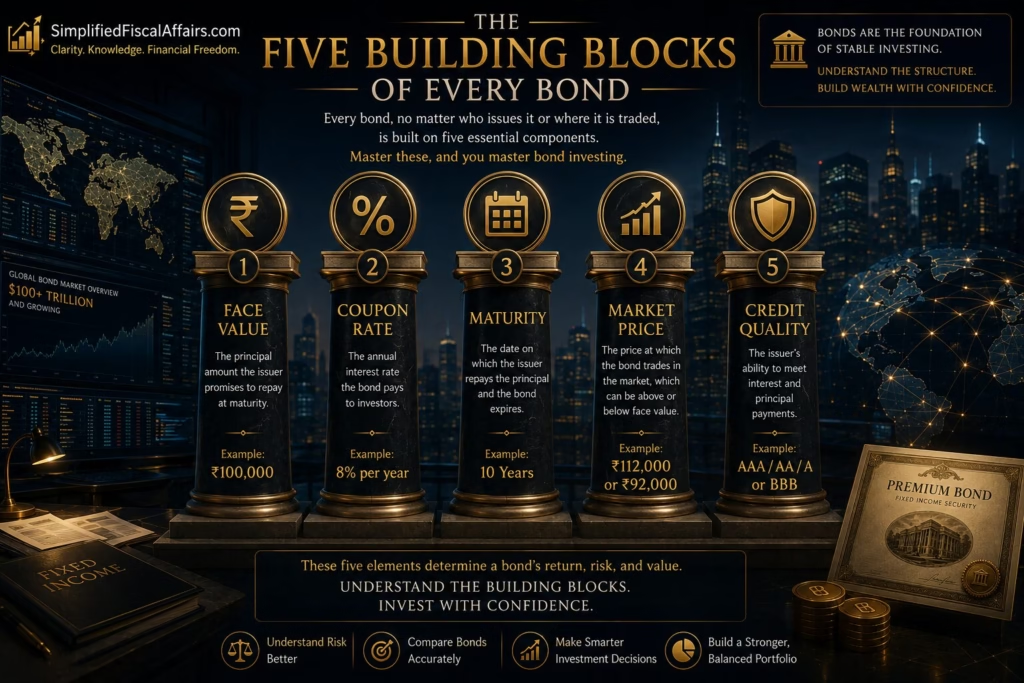
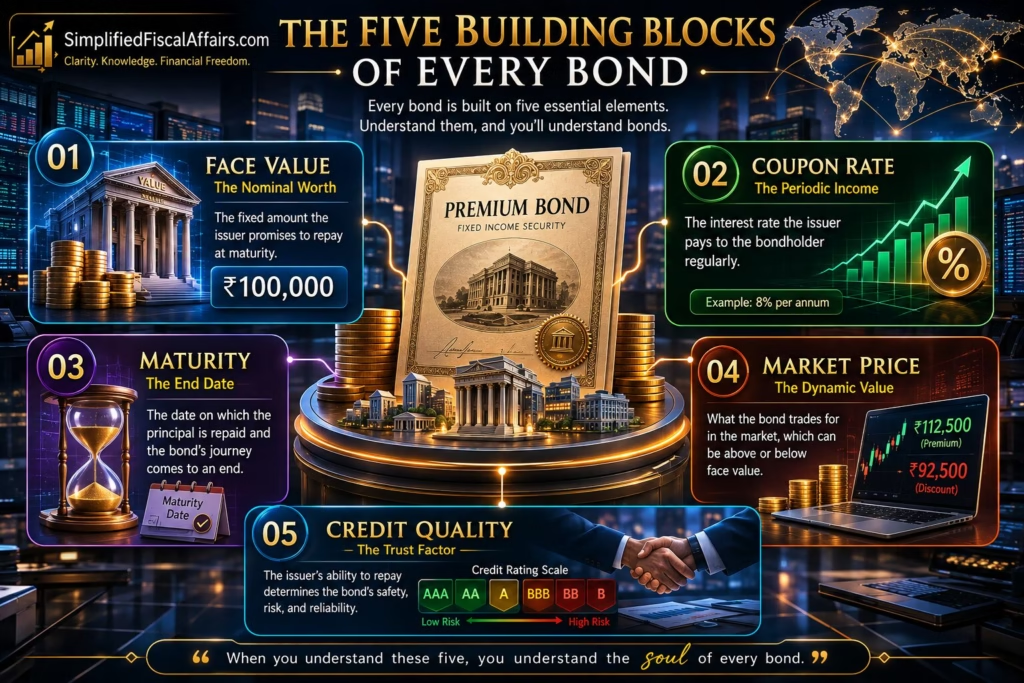
Regardless of whether a bond is issued by a government, a corporation, or an international organization, it contains five essential characteristics:
- Face Value (Principal)
- Coupon Rate
- Market Price
- Yield
- Maturity
Each element influences the others, and together they determine the bond’s investment decisions.
Face Value – The Amount Borrowed
Face value, also known as par value or principal, is the amount the issuer promises to repay when the bond reaches maturity.
Think of face value as the original loan amount.
For example:
A company issues a bond with a face value of ₹100,000.
If you hold the bond until maturity, the issuer promises to return ₹100,000 along with the interest payments which the investor receives annually throughout its maturity.
The face value serves as the basis for calculating interest payments and final repayment.
Coupon Rate – The Promised Interest
The coupon rate is the annual interest percentage applied to the bond’s face value.
Suppose the bond has:
- Face Value: ₹100,000
- Coupon Rate: 8%
Annual interest payment:
₹100,000 × 8% = ₹8,000
This amount remains fixed unless the bond has special features such as a floating-rate structure.
Historically, physical bond certificates contained detachable coupons that investors presented to receive interest payments. Although modern bonds are almost entirely electronic, the term coupon remains part of financial language.

Maturity – When the Loan Ends
Every bond has a lifespan.
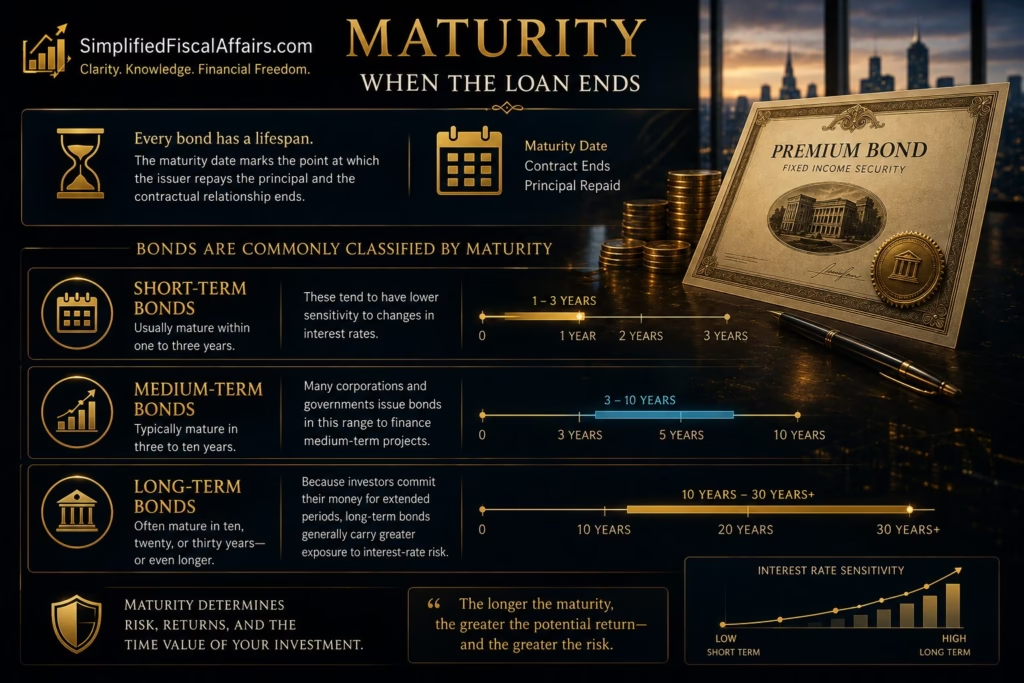
The maturity date marks the point at which the issuer repays the principal and the contractual relationship ends.
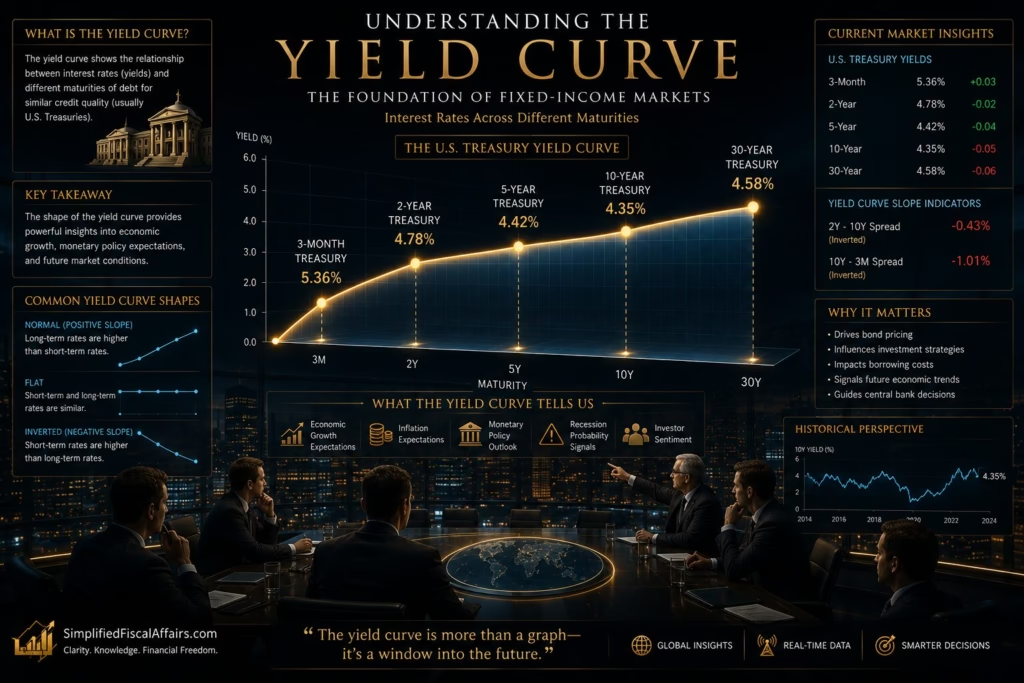
Bonds are commonly classified by maturity:
Short-Term Bonds
Usually mature within one to three years.
These tend to have lower sensitivity to changes in interest rates.
Medium-Term Bonds
Typically mature in three to ten years.
Many corporations and governments issue bonds in this range to finance medium-term projects.
Long-Term Bonds
Often mature in ten, twenty, or thirty years—or even longer.
Because investors commit their money for extended periods, long-term bonds generally carry greater exposure to interest-rate movements.
Market Price – Why Bonds Don’t Always Trade at Face Value
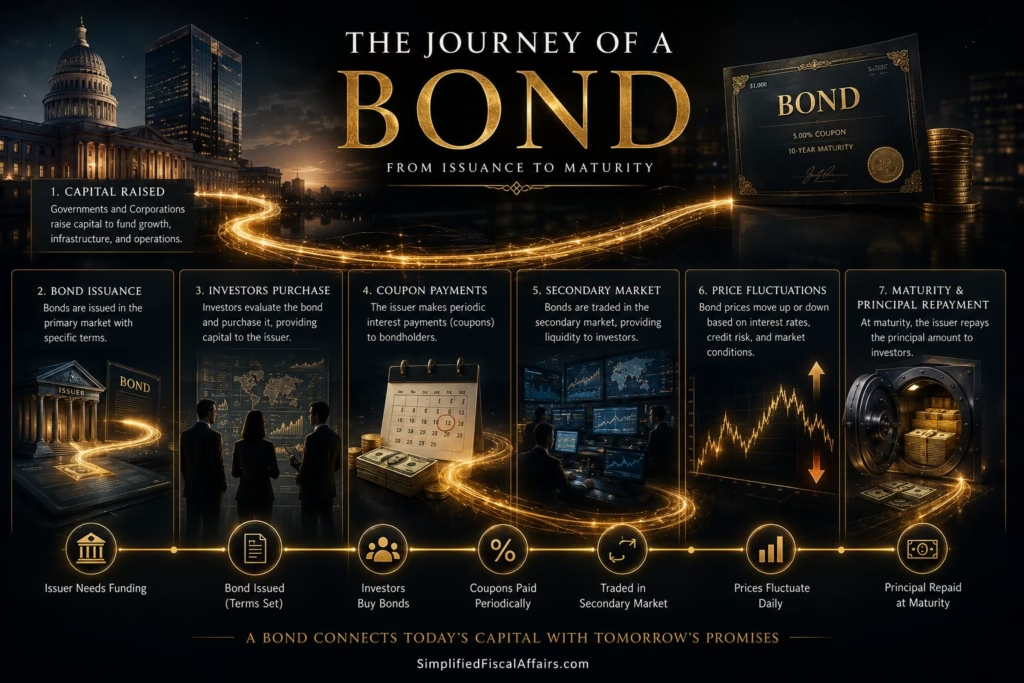
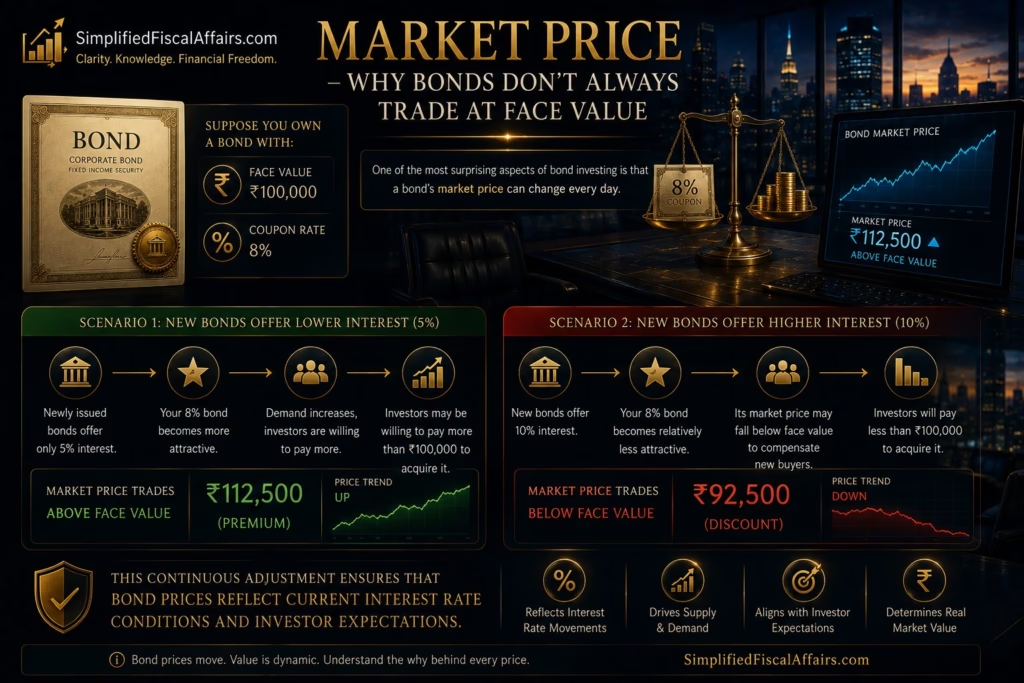
One of the most surprising aspects of bond investing is that a bond’s market price can change every day.
Suppose you own a bond with:
- Face Value: ₹100,000
- Coupon Rate: 8%
If newly issued bonds begin offering only 5% interest, your bond becomes more attractive because it pays a higher annual income.
As demand increases, investors may be willing to pay more than ₹100,000 to acquire it.
Conversely, if new bonds offer 10% interest, your 8% bond becomes relatively less attractive.
Its market price may fall below face value to compensate new buyers.
This continuous adjustment ensures that bond prices reflect prevailing market conditions.
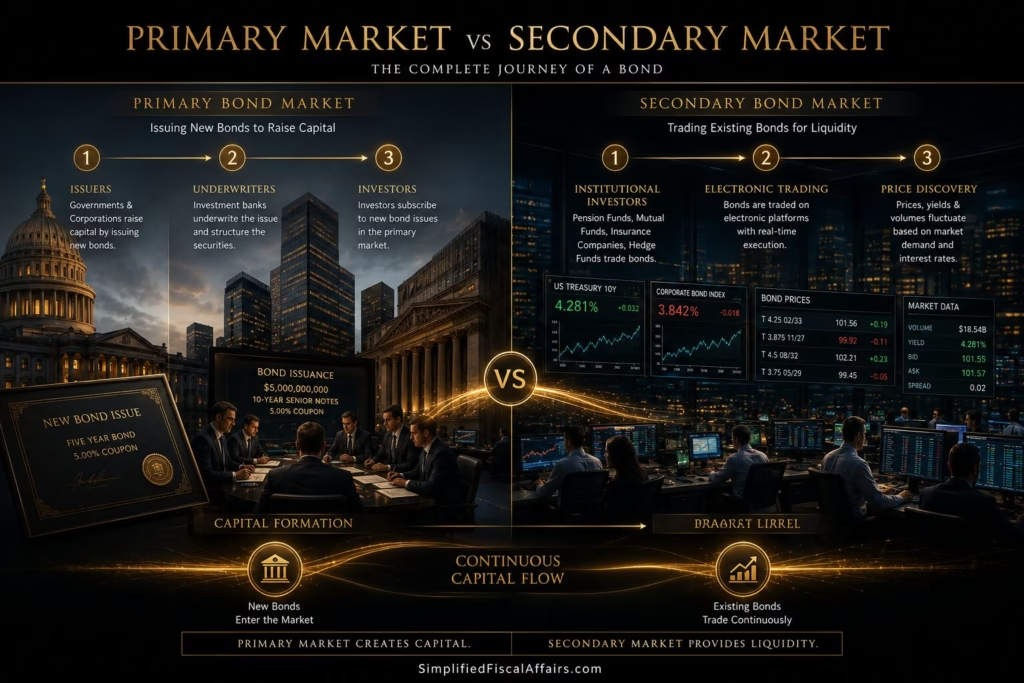
Yield – The Return Investors Actually Earn
Many new investors assume the coupon rate and yield are identical.
They are not.
The coupon rate is fixed at issuance.
Yield depends on the price an investor pays for the bond.
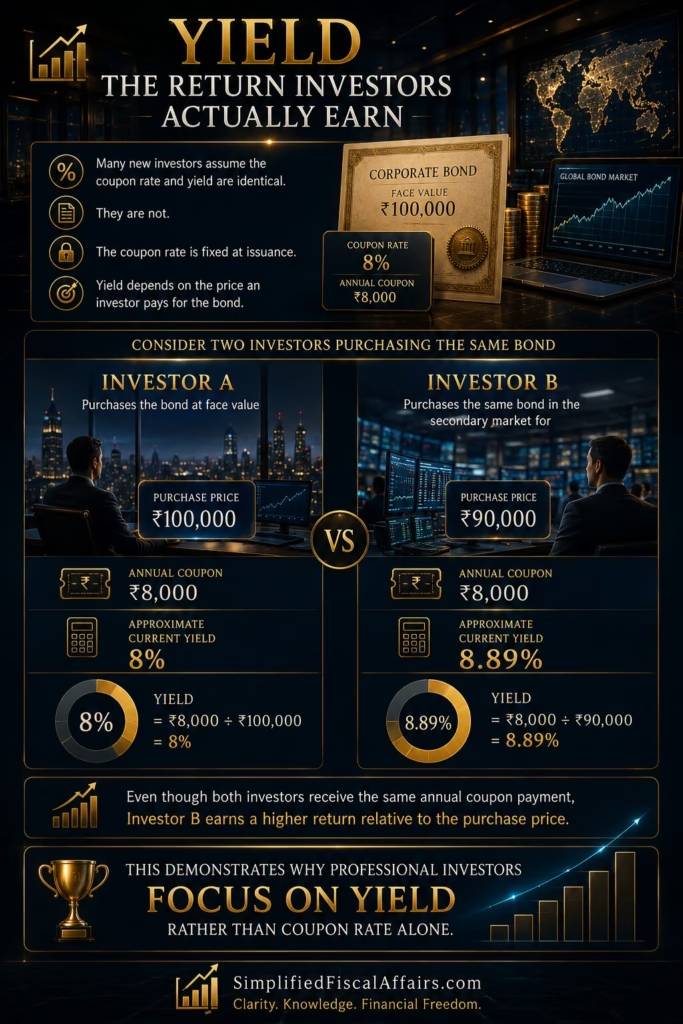
Consider two investors purchasing the same bond.
Investor A
Purchases the bond at face value:
₹100,000
Annual coupon:
₹8,000
Approximate current yield:
8%
Investor B
Purchases the same bond in the secondary market for:
₹90,000
The coupon payment remains:
₹8,000
Approximate current yield:
₹8,000 ÷ ₹90,000 = 8.89%
Even though both investors receive the same annual coupon payment, Investor B earns a higher return relative to the purchase price.
This demonstrates why professional investors focus on yield rather than coupon rate alone.
The Relationship Between Bond Prices and Yields
One of the most important principles in fixed-income investing is:
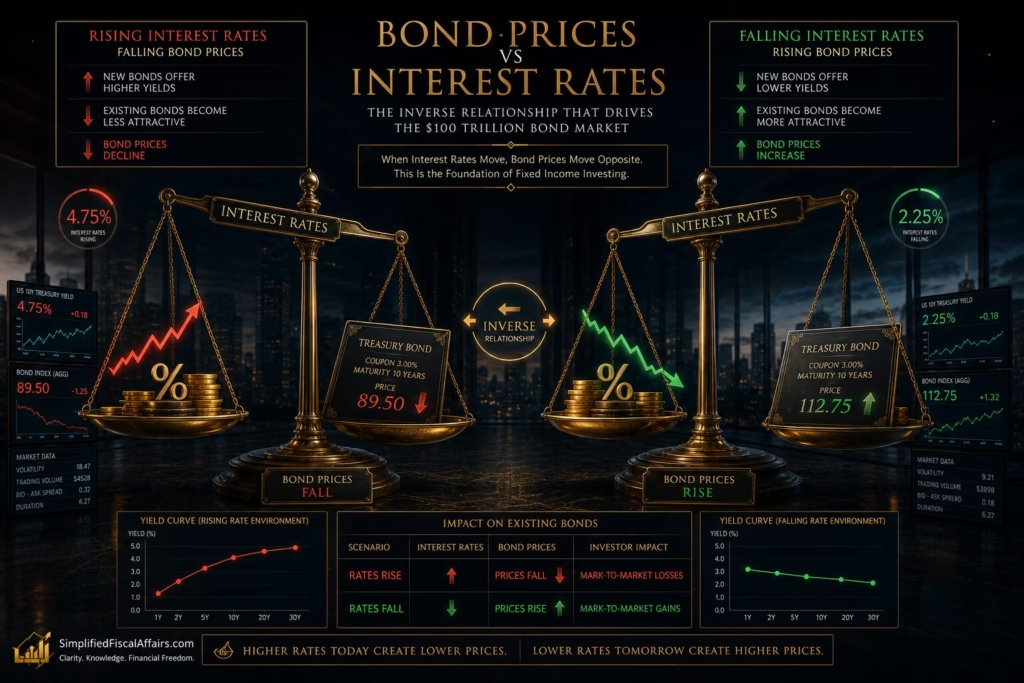
Bond prices and bond yields move in opposite directions.
This inverse relationship underpins much of bond market analysis.
If demand for a bond rises:
- Market price increases.
- Yield decreases.
If demand falls:
- Market price declines.
- Yield increases.
At first this may seem counterintuitive, but remember:
The coupon payment is fixed.
When investors pay a higher price for the same fixed income stream, their percentage return falls.
When they pay a lower price, their percentage return rises.
This simple relationship explains countless headlines about financial markets.
A Real-World Example
Imagine a government issues a 10-year bond with:
- Face Value: ₹100,000
- Coupon Rate: 6%
You purchase it at issuance.
One year later, market interest rates decline significantly.
New government bonds now offer only 4%.
Investors seeking higher income become interested in your existing 6% bond.
Competition among buyers pushes its market price above ₹100,000.
Although the coupon remains unchanged, the bond becomes more valuable because it provides income above prevailing market rates.
This is why bond prices fluctuate even though the issuer’s repayment promise has not changed.
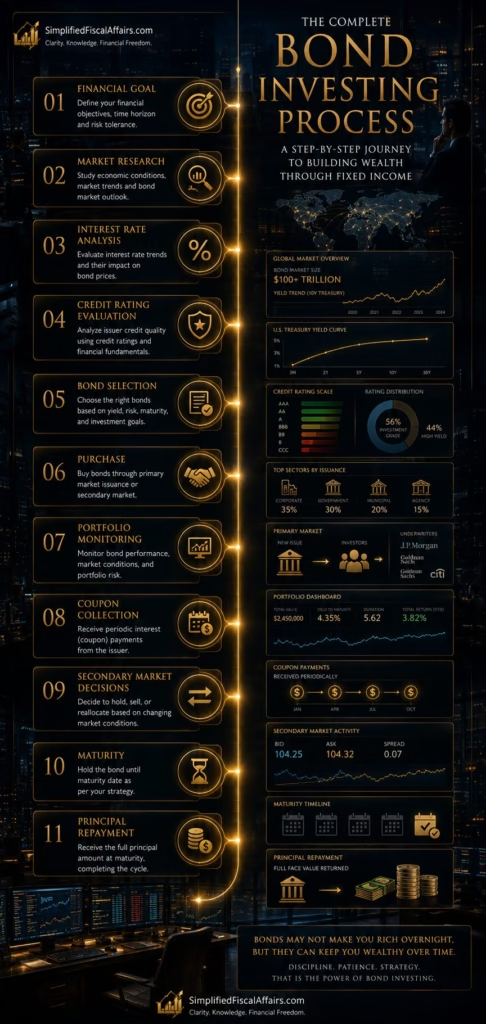
Why Institutional Investors Study These Numbers
Large institutions managing billions of dollars cannot rely on intuition.
Before purchasing bonds, analysts examine:
- Expected yield
- Remaining maturity
- Credit quality
- Interest-rate outlook
- Inflation expectations
- Liquidity
- Default probability
- Portfolio diversification
Even a small difference in yield can translate into millions of dollars when managing large portfolios.
Understanding bond mechanics is therefore fundamental to professional investment management.
Common Misconceptions
Many first-time investors believe:
“If I buy a bond, its value never changes.”
In reality, the market value of a bond fluctuates continuously until maturity.
Another common misconception is:
“Higher coupon means a better investment.”
Not necessarily.
A bond with a high coupon issued by a financially weak borrower may carry significantly greater risk than a lower-coupon bond issued by a highly creditworthy government.
Successful investing requires evaluating the complete picture rather than focusing on a single number.
Key Takeaways
Every bond consists of five essential elements:
- Face Value – the amount repaid at maturity.
- Coupon Rate – the fixed interest promised by the issuer.
- Market Price – the amount investors currently pay for the bond.
- Yield – the actual return based on the purchase price.
- Maturity – the date on which the principal is repaid.
These concepts form the foundation of fixed-income investing. Mastering them enables investors to interpret bond prices, compare investment opportunities, and understand how changes in interest rates affect the value of existing bonds.
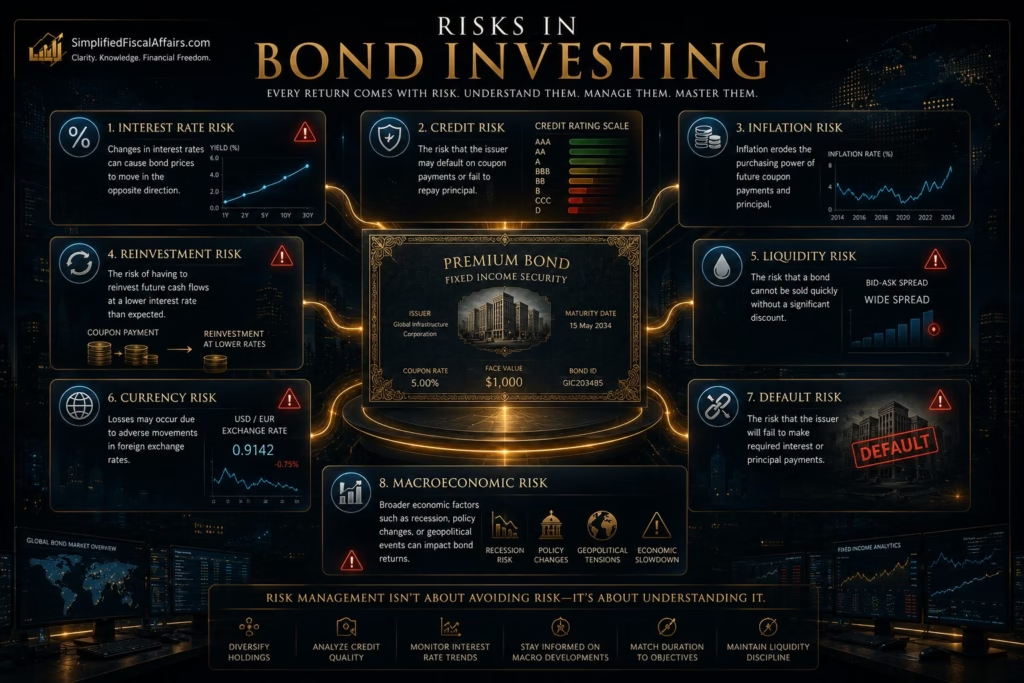
However, one crucial question remains unanswered:
Why do interest rates and bond prices move in opposite directions?
That relationship is so important that it deserves an entire chapter of its own.
← Previous Chapter The Strategic Choice: Why Companies Borrow Instead of Diluting Ownership- V
Next Chapter →Why Bond Prices and Interest Rates Move in Opposite Directions- VII
Coming Next
Chapter 7 – The Golden Rule of the Bond Market: Why Bond Prices and Interest Rates Move in Opposite Directions
In the next chapter, we will explore the most important law of bond investing. Through intuitive examples, practical scenarios, and institutional perspectives, you’ll learn why central bank decisions can cause bond prices to rise or fall—and why every professional investor closely watches interest rates before buying or selling bonds.
Disclaimer: This fiscal information is provided solely for educational and informational purposes and should not be considered financial, investment, legal, tax, or professional advice. The examples, figures, and calculations are simplified for learning and illustration and may not reflect actual market prices, yields, transaction costs, taxes, or investment outcomes. Bond prices and yields fluctuate due to market conditions, interest rates, credit risk, and other factors. Always conduct your own research and consult a qualified financial professional before making any investment decisions.