
What Is A Forensic Audit?
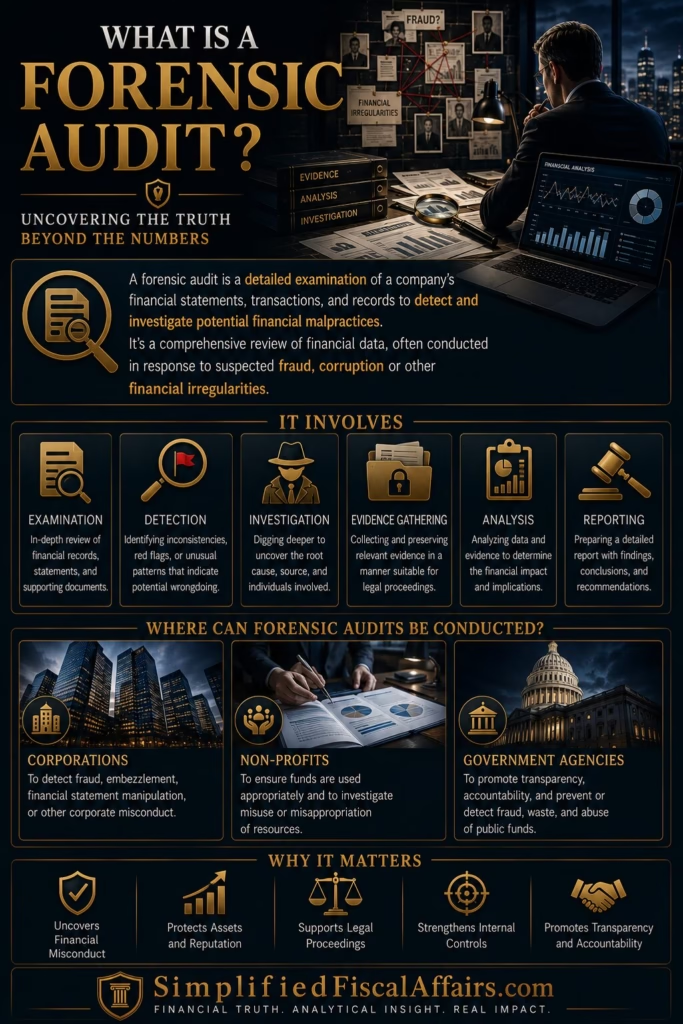
Forensic Audit is a meticulous and thorough examination of financial records and transactions to uncover a potential fraud, embezzlement, or other financial irregularities. It’s a specialized field that combines accounting, auditing, and investigative skills to uncover the truth behind financial discrepancies.
A forensic audit is a detailed examination of a company’s financial statements, transactions, and records to detect and investigate potential financial malpractices. It’s a comprehensive review of financial data, often conducted in response to suspected fraud, corruption or other financial irregularities.
Forensic audits can be conducted on various types of organizations, including corporations, non-profits and government agencies.
Importance of Forensic Audit:
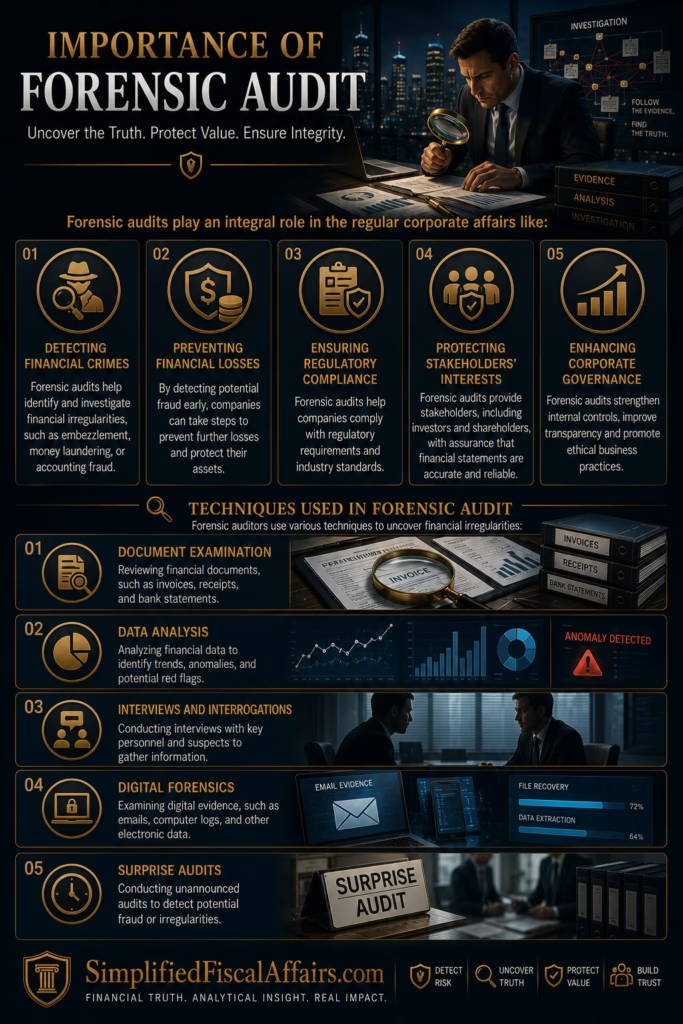
Forensic audits play an integral role in the regular corporate affairs like:
Detecting Financial Crimes: Forensic audits help identify and investigate financial irregularities, such as embezzlement, money laundering, or accounting fraud.
Preventing Financial Losses: By detecting potential fraud early, companies can take steps to prevent further losses and protect their assets.
Ensuring Regulatory Compliance: Forensic audits help companies comply with regulatory requirements and industry standards.
Protecting Stakeholders’ Interests: Forensic audits provide stakeholders, including investors and shareholders, with assurance that financial statements are accurate and reliable.
Techniques Used In Forensic Audit:
Forensic auditors use various techniques to uncover financial irregularities:
Document Examination: Reviewing financial documents, such as invoices, receipts, and bank statements.
Data Analysis: Analyzing financial data to identify trends, anomalies, and potential red flags.
Interviews and Interrogations: Conducting interviews with key personnel and suspects to gather information.
Digital Forensics: Examining digital evidence, such as emails, computer logs, and other electronic data.
Surprise Audits: Conducting unannounced audits to detect potential fraud or irregularities.
Types of Forensic Audits:
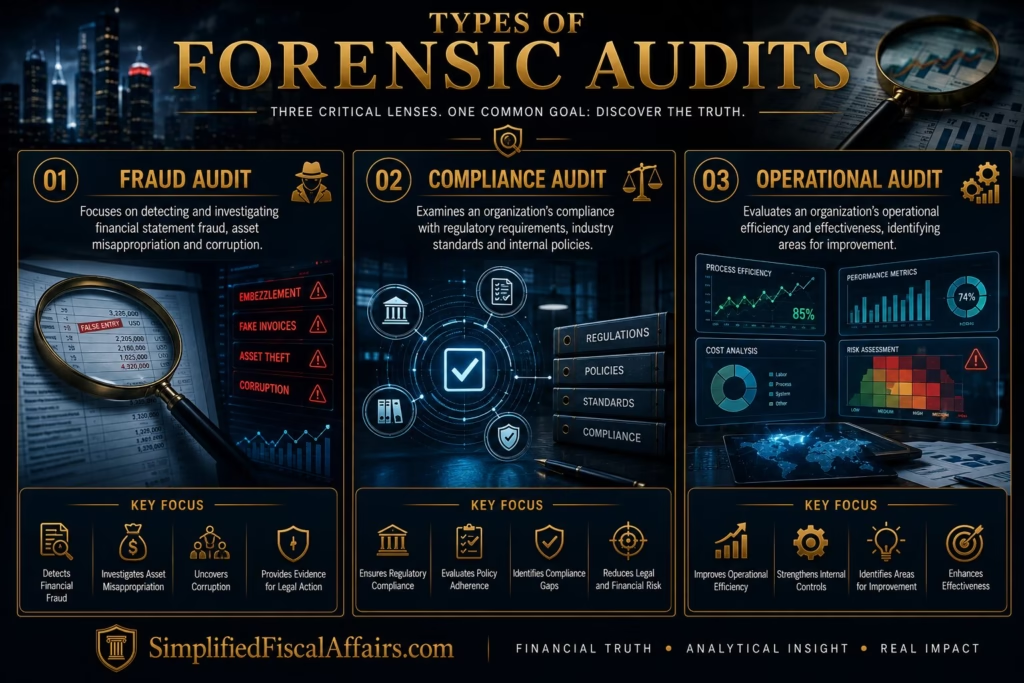
1. Fraud Audit: Focuses on detecting and investigating financial statement fraud, asset misappropriation and corruption.
2. Compliance Audit: Examines an organization’s compliance with regulatory requirements, industry standards and internal policies.
3. Operational Audit: Evaluates an organization’s operational efficiency and effectiveness, identifying areas for improvement.
Skills Required for Forensic Audit:
Forensic auditors need a unique combination of skills, including:
1. Accounting and Auditing Expertise: Knowledge of accounting principles, auditing standards, and financial regulations.
2. Investigative Skills: Ability to analyze data, identify patterns, and follow leads.
3. Communication Skills: Effective communication and interviewing skills to gather information and present findings.
4. Analytical Skills: Ability to analyze complex financial data and identify potential irregularities.
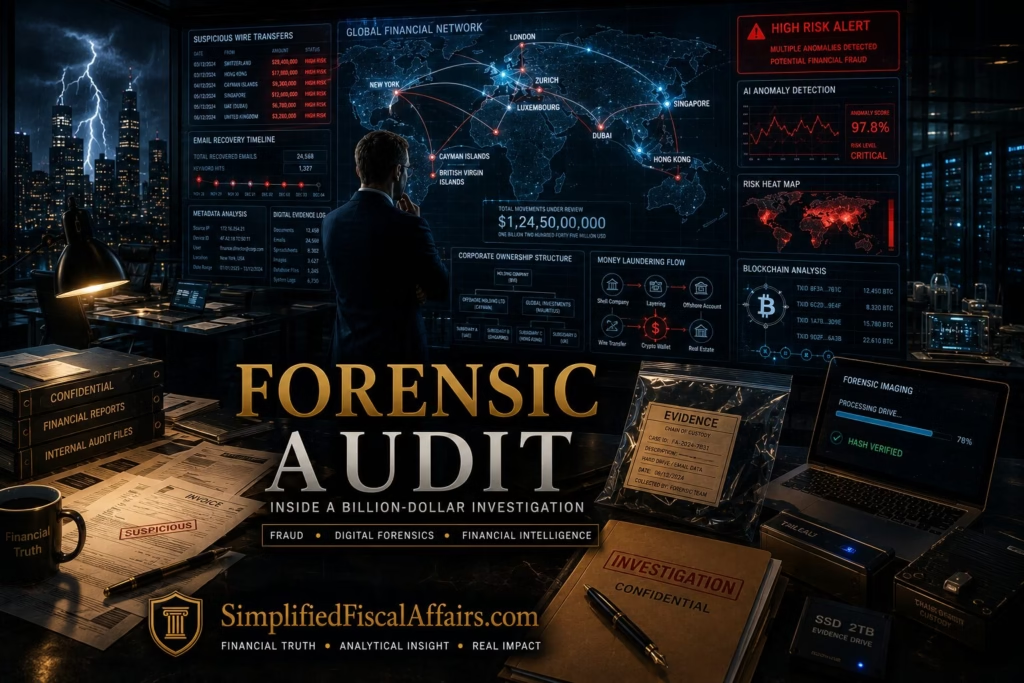
Following the Money from the First Anonymous Email to the Final Court Verdict
“Fraud rarely begins with a billion dollars. It begins with one unchecked decision.”
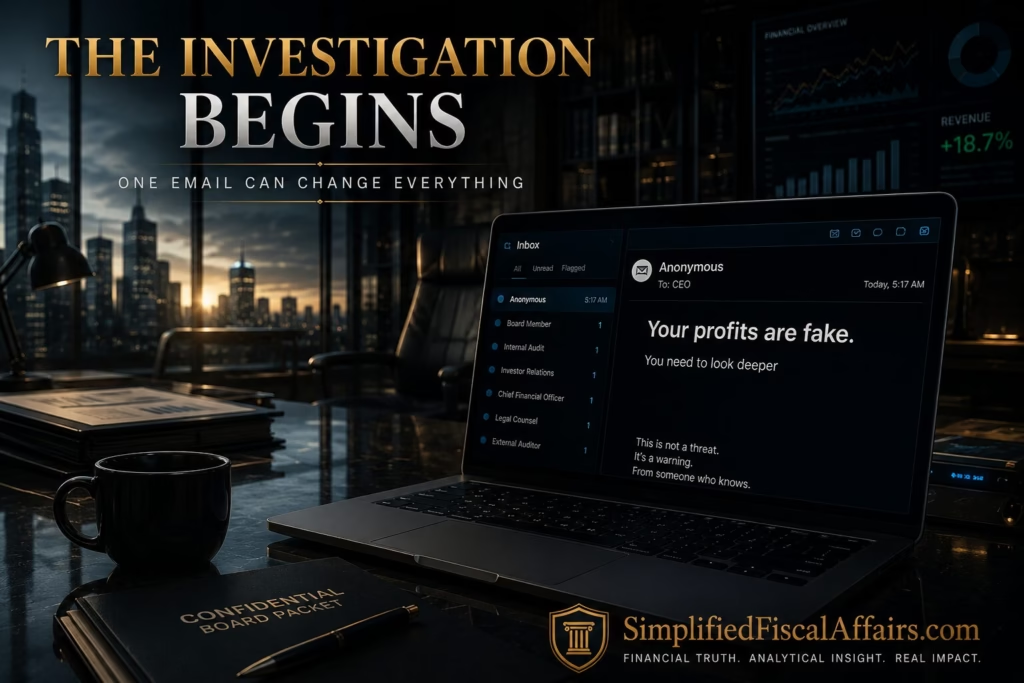
At exactly 8:17 on a quiet Monday morning, an anonymous email arrived in the inbox of the Chairperson of one of the world’s largest manufacturing companies.
It contained only one sentence.
“Your profits are fake. Look at Project Orion before someone destroys the evidence.”
No signature.
No attachment.
No explanation.
Within forty-eight hours, one of the world’s leading forensic accounting teams had quietly occupied an unused floor of the company’s headquarters.
Employees continued entering the building with coffee in hand, unaware that an investigation had already begun.
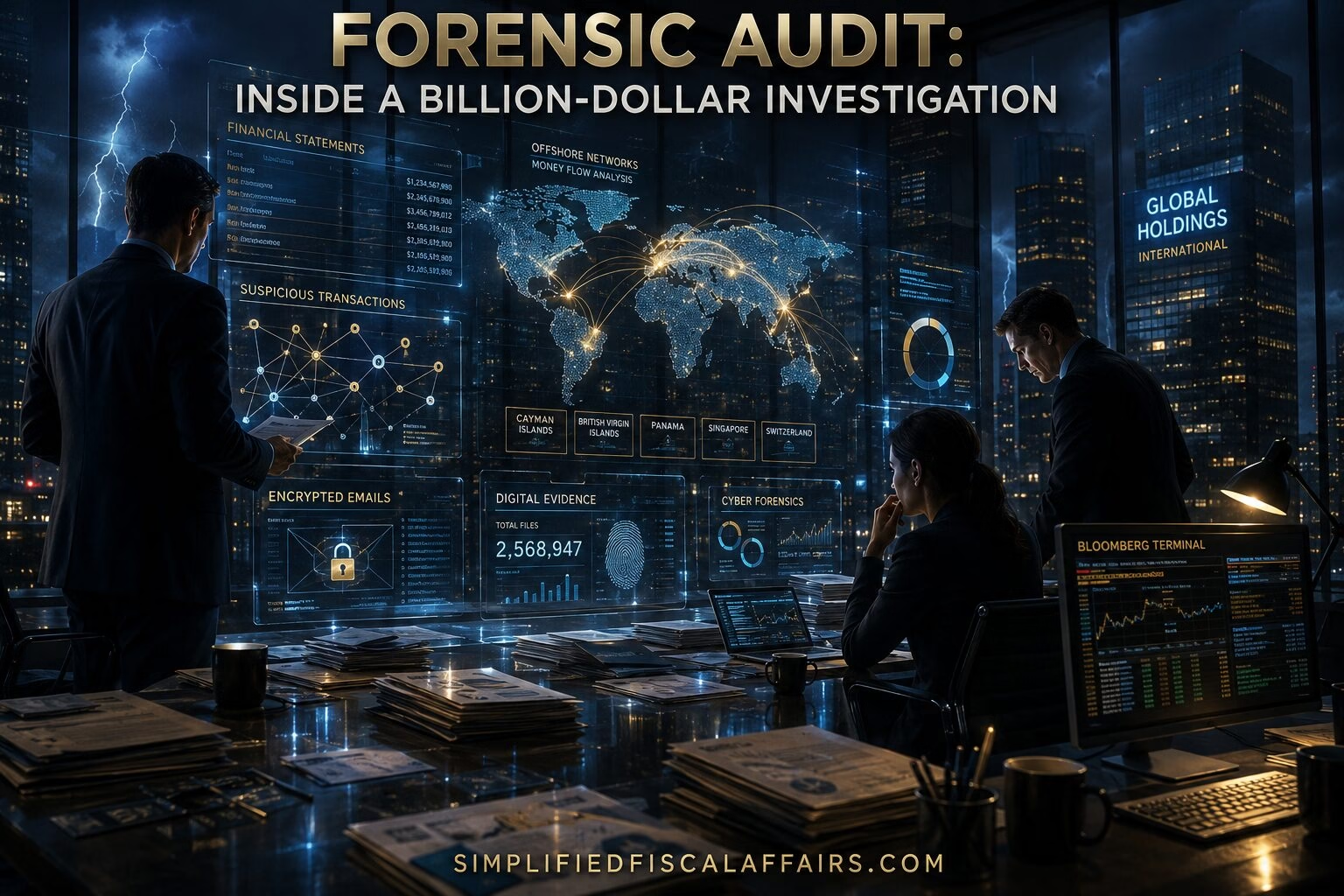
What started as a simple allegation would eventually uncover years of manipulated financial statements, hidden shell companies, encrypted communications, deleted emails, falsified invoices, offshore bank accounts, and billions of dollars in fraudulent transactions.
This is the world of forensic auditing—not the routine verification of numbers, but a sophisticated financial investigation where accountants think like detectives, lawyers, intelligence analysts, and cybersecurity experts simultaneously.
Welcome inside a billion-dollar forensic audit.
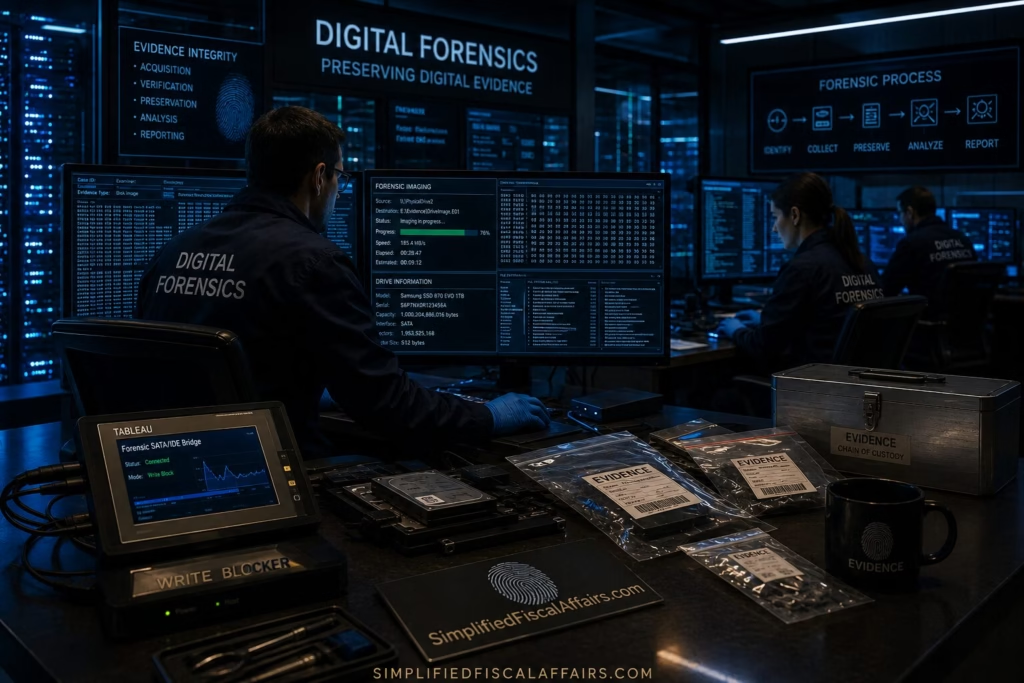
Every Investigation Begins with Suspicion
Contrary to popular belief, forensic auditors are rarely called because fraud has already been proven.
They are called because something feels wrong.
Perhaps profits keep rising while cash balances keep shrinking.
Maybe suppliers complain they have never been paid despite accounting records showing completed payments.
Perhaps inventory exists perfectly on spreadsheets but mysteriously cannot be found inside warehouses.
Sometimes the warning signs are even subtler.
Executive lifestyles suddenly become unusually extravagant.
Accounting adjustments appear minutes before quarterly reporting deadlines.
Documents seem almost too perfect.
Experienced investigators know that fraud leaves behavioral fingerprints long before it leaves accounting evidence.
Their first responsibility is not proving fraud.
It is determining whether fraud is even possible.
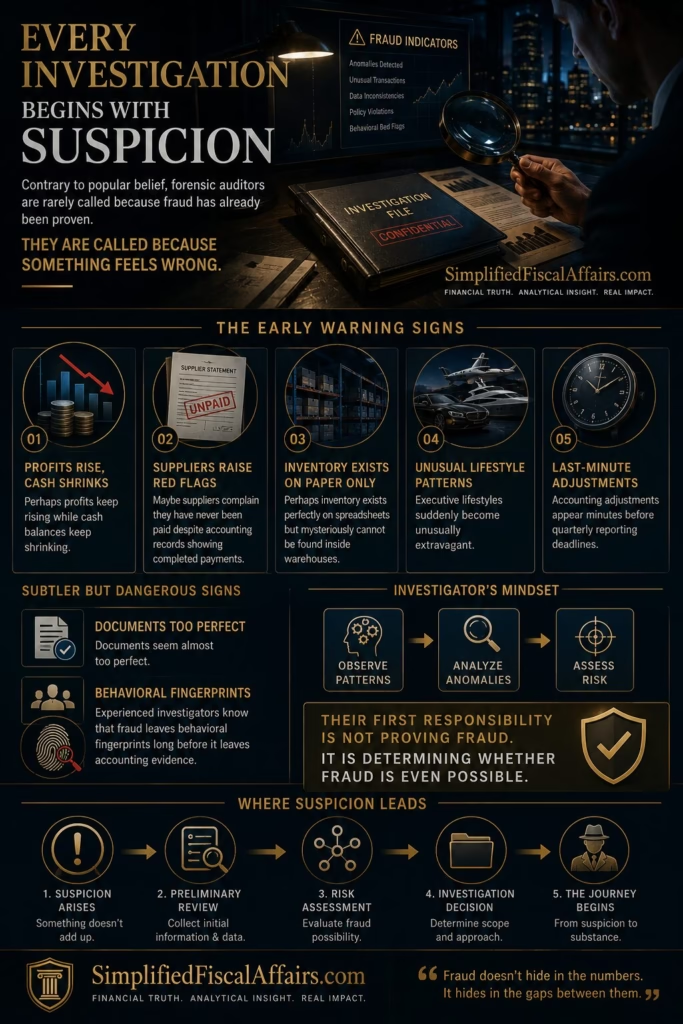
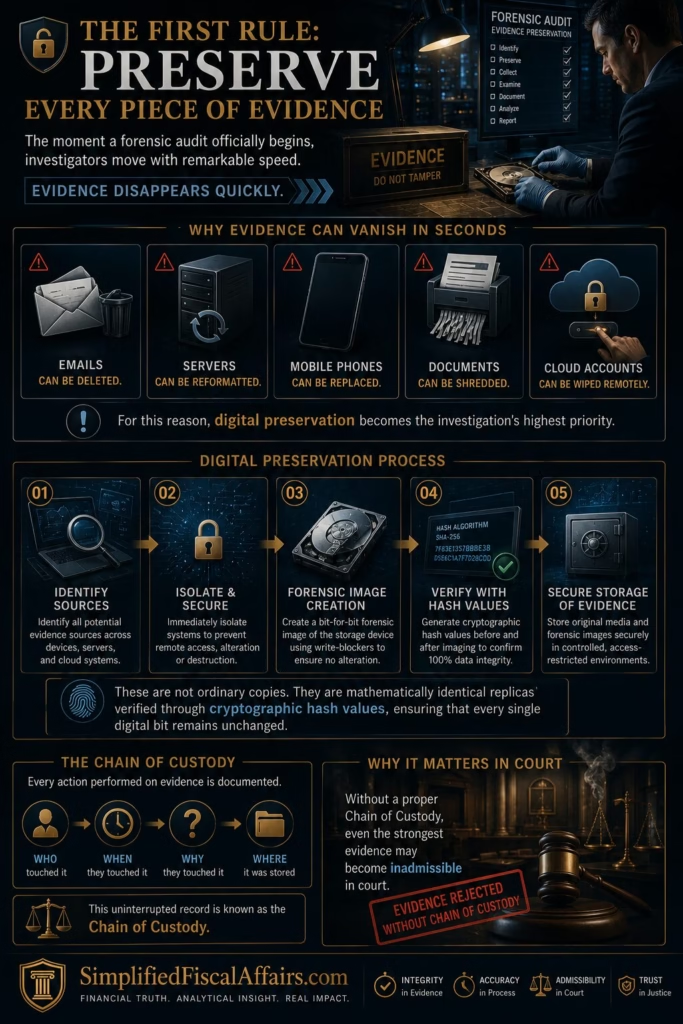
The First Rule: Preserve Every Piece of Evidence
The moment a forensic audit officially begins, investigators move with remarkable speed.
Evidence disappears quickly.
Emails can be deleted.
Servers can be reformatted.
Mobile phones can be replaced.
Documents can be shredded.
Cloud accounts can be wiped remotely.
For this reason, digital preservation becomes the investigation’s highest priority.
Instead of opening computers normally, forensic specialists create exact forensic images of hard drives.
These are not ordinary copies.
They are mathematically identical replicas verified through cryptographic hash values, ensuring that every single digital bit remains unchanged.
Every action performed on evidence is documented.
Who touched it.
When they touched it.
Why they touched it.
Where it was stored.
This uninterrupted record is known as the Chain of Custody.
Without it, even the strongest evidence may become inadmissible in court.
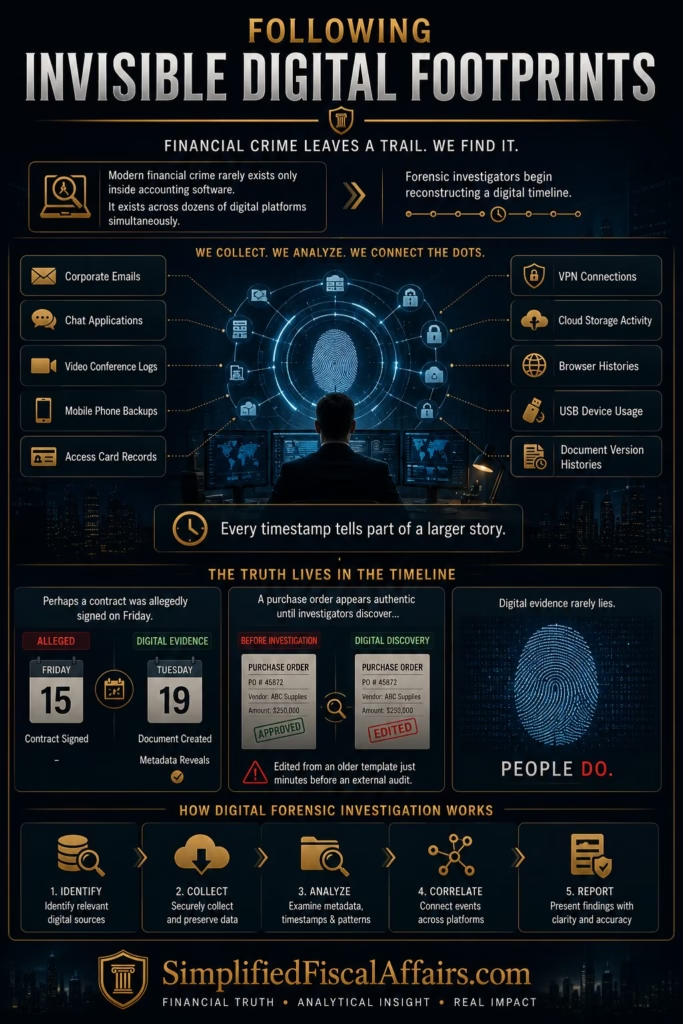
Following Invisible Digital Footprints
Modern financial crime rarely exists only inside accounting software.
It exists across dozens of digital platforms simultaneously.
Forensic investigators begin reconstructing a digital timeline.
They collect:
- Corporate emails
- Chat applications
- Video conference logs
- Mobile phone backups
- Access card records
- VPN connections
- Cloud storage activity
- Browser histories
- USB device usage
- Document version histories
Every timestamp tells part of a larger story.
Perhaps a contract was allegedly signed on Friday.
Metadata reveals it was actually created the following Tuesday.
A purchase order appears authentic until investigators discover that it was edited from an older template just minutes before an external audit.
Digital evidence rarely lies.
People do.

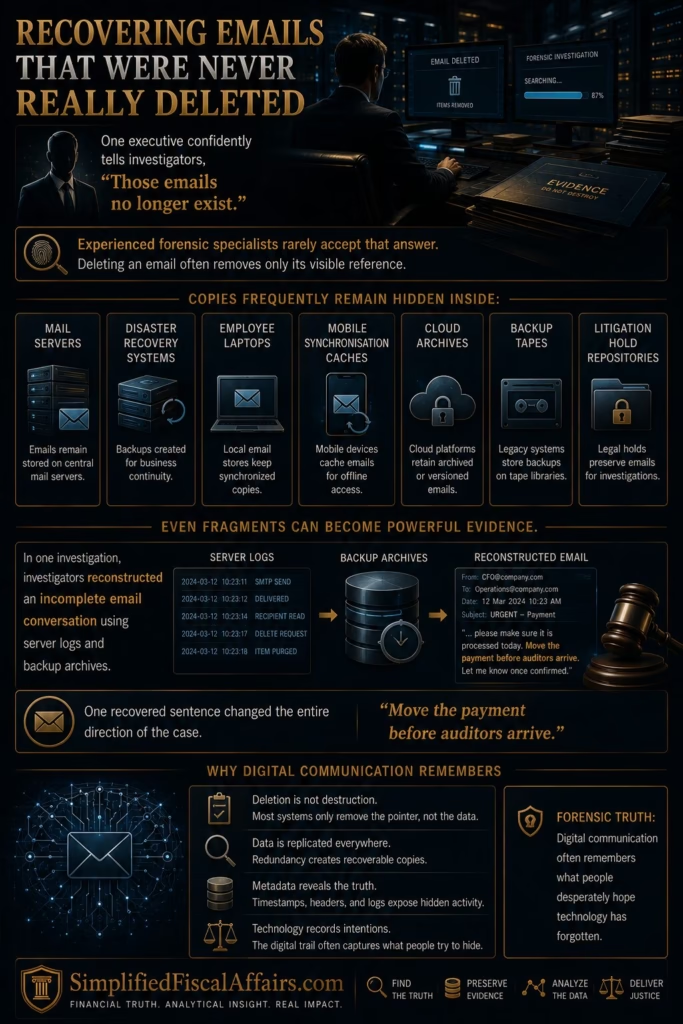
Recovering Emails That Were Never Really Deleted
One executive confidently tells investigators,
“Those emails no longer exist.”
Experienced forensic specialists rarely accept that answer.
Deleting an email often removes only its visible reference.
Copies frequently remain hidden inside:
- Mail servers
- Disaster recovery systems
- Employee laptops
- Mobile synchronisation caches
- Cloud archives
- Backup tapes
- Litigation hold repositories
Even fragments can become powerful evidence.
In one investigation, investigators reconstructed an incomplete email conversation using server logs and backup archives.
One recovered sentence changed the entire direction of the case.
“Move the payment before auditors arrive.”
Those words ultimately became central courtroom evidence.
Digital communication often remembers what people desperately hope technology has forgotten.
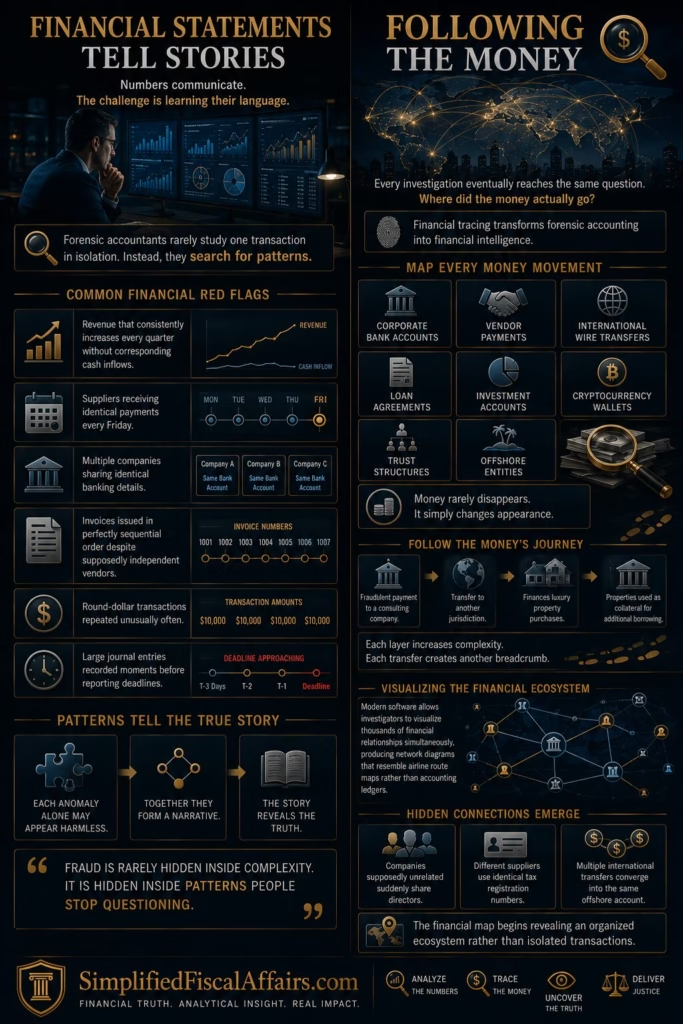
Financial Statements Tell Stories
Numbers communicate.
The challenge is learning their language.
Forensic accountants rarely study one transaction in isolation.
Instead, they search for patterns.
Revenue that consistently increases every quarter without corresponding cash inflows.
Suppliers receiving identical payments every Friday.
Multiple companies sharing identical banking details.
Invoices issued in perfectly sequential order despite supposedly independent vendors.
Round-dollar transactions repeated unusually often.
Large journal entries recorded moments before reporting deadlines.
Each anomaly alone may appear harmless.
Together they form a narrative.
Fraud is rarely hidden inside complexity.
It is hidden inside patterns people stop questioning.

Following the Money
Every investigation eventually reaches the same question.
Where did the money actually go?
Financial tracing transforms forensic accounting into financial intelligence.
Investigators map every transaction.
Corporate bank accounts.
Vendor payments.
International wire transfers.
Loan agreements.
Investment accounts.
Cryptocurrency wallets.
Trust structures.
Offshore entities.
Money rarely disappears.
It simply changes appearance.
A fraudulent payment to a consulting company becomes a transfer to another jurisdiction.
That transfer finances luxury property purchases.
Those properties become collateral for additional borrowing.
Each layer increases complexity.
Each transfer creates another breadcrumb.
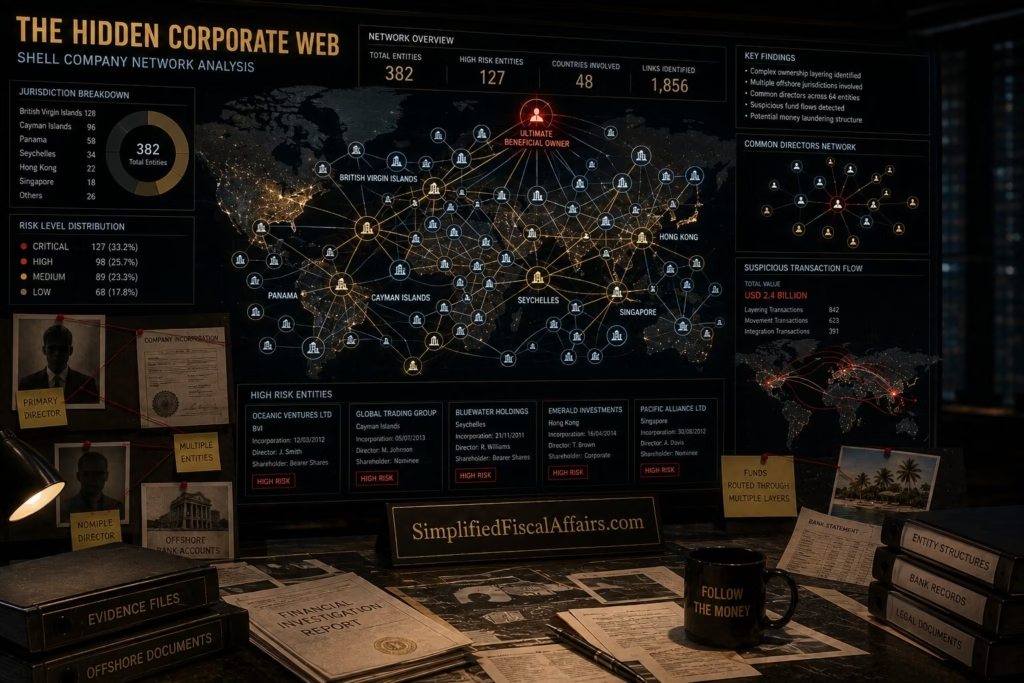
Modern software allows investigators to visualize thousands of financial relationships simultaneously, producing network diagrams that resemble airline route maps rather than accounting ledgers.
Eventually hidden connections begin appearing.
Companies supposedly unrelated suddenly share directors.
Different suppliers use identical tax registration numbers.
Multiple international transfers converge into the same offshore account.
The financial map begins revealing an organized ecosystem rather than isolated transactions.
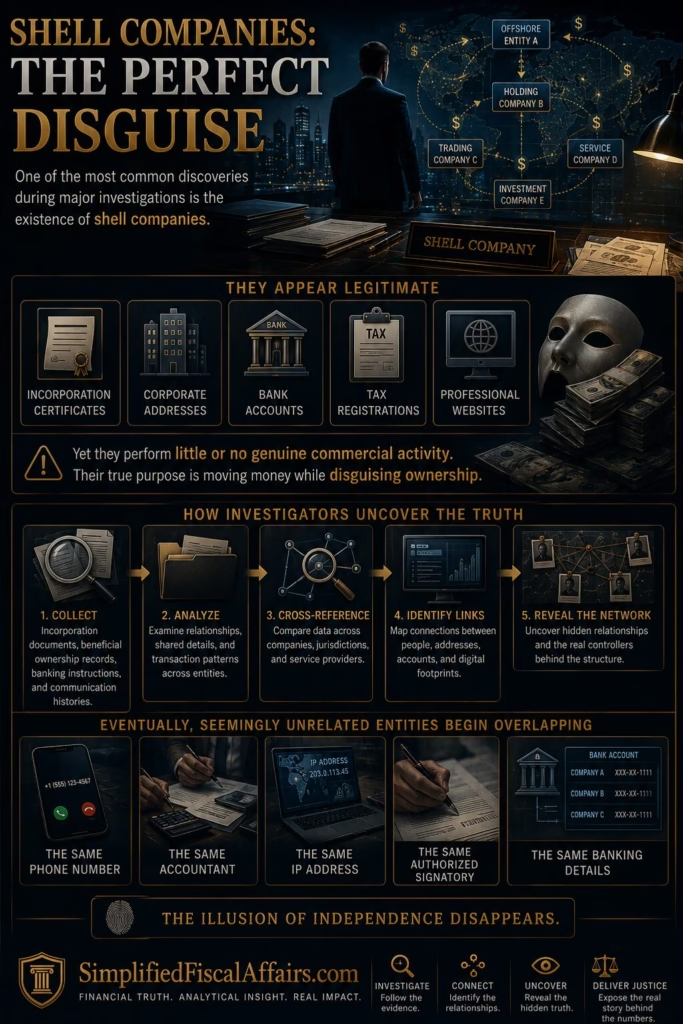
Shell Companies: The Perfect Disguise
One of the most common discoveries during major investigations is the existence of shell companies.
These entities often appear legitimate.
They possess incorporation certificates.
Corporate addresses.
Bank accounts.
Tax registrations.
Professional websites.
Sometimes they even maintain minimal accounting records.
Yet they perform little or no genuine commercial activity.
Their true purpose is moving money while disguising ownership.
Investigators compare incorporation documents, beneficial ownership records, banking instructions, and communication histories.
Eventually seemingly unrelated entities begin overlapping.
The same phone number.
The same accountant.
The same IP address.
The same authorized signatory.
The illusion of independence disappears.
Interviews Become Psychological Investigations
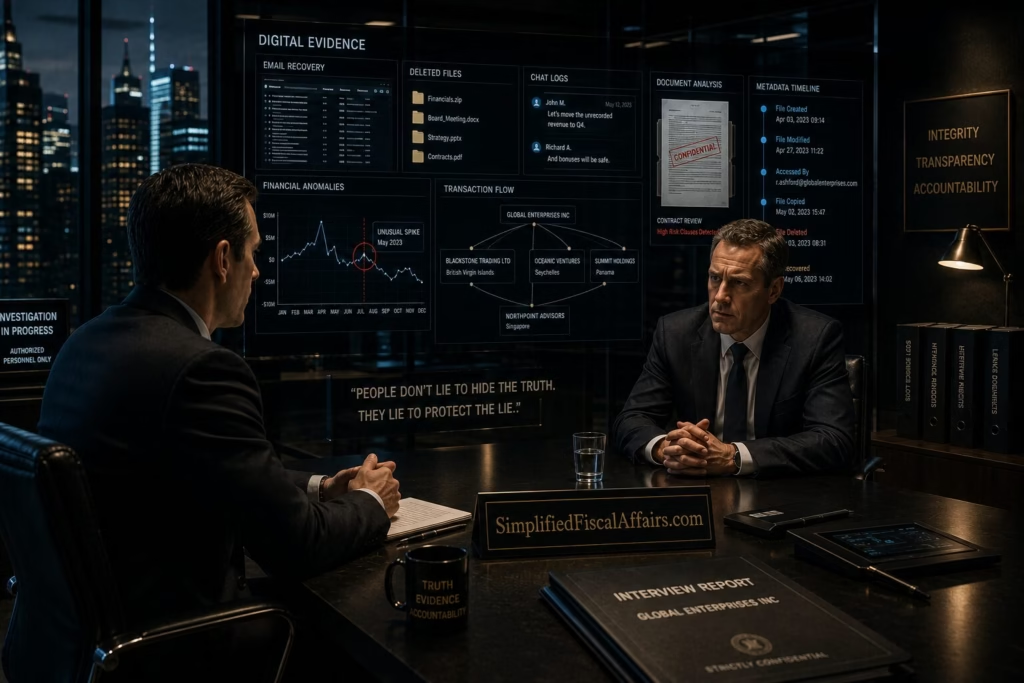
Contrary to television dramas, forensic interviews rarely involve aggressive interrogations.
The most effective investigators spend far more time listening than speaking.
They compare narratives.
Small inconsistencies matter.
One manager says a meeting occurred on Wednesday.
Another insists it happened Thursday.
Calendar records reveal neither.
An access-card log shows neither individual entered the building that week.
Truth survives cross-verification.
Falsehood struggles under independent evidence.
Sometimes the investigation changes direction because of one unexpected sentence.
“I thought everyone already knew about those payments.”
Those few words may expose knowledge previously denied across the organization.
Technology Changes Everything
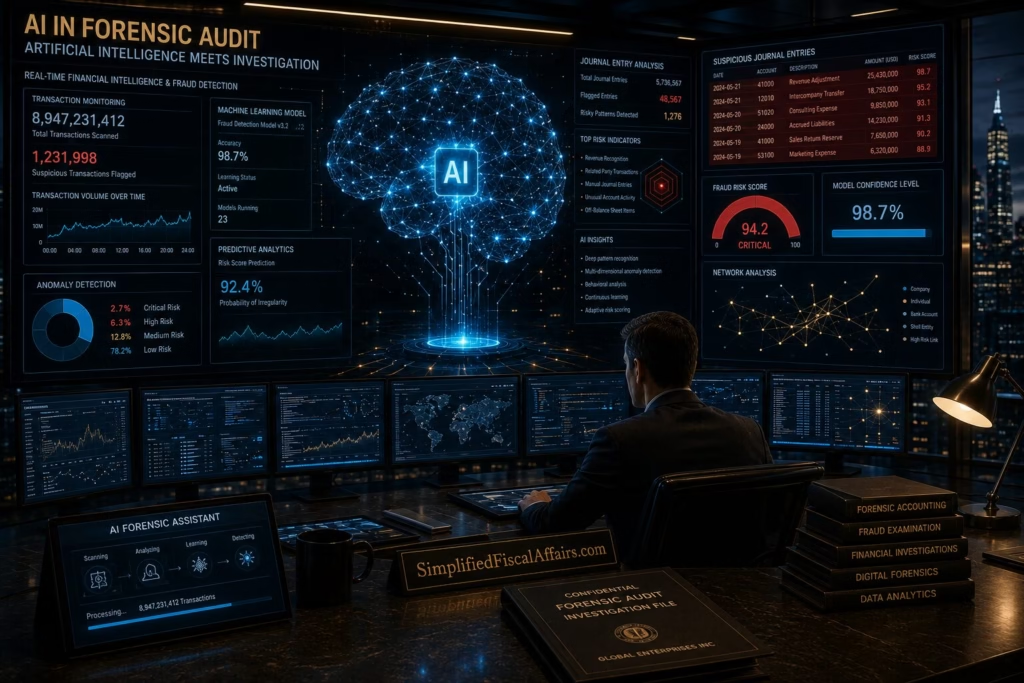
Modern forensic investigations increasingly depend upon artificial intelligence.
Machine learning identifies unusual journal entries across millions of transactions.
Natural language processing searches millions of emails for suspicious conversations.
Relationship analytics uncover hidden networks connecting individuals, vendors, directors, and financial accounts.
Image analysis detects manipulated invoices.
Metadata analysis reconstructs document histories.
Rather than replacing investigators, technology expands their investigative vision.
Algorithms identify anomalies.
Humans determine whether those anomalies represent fraud.
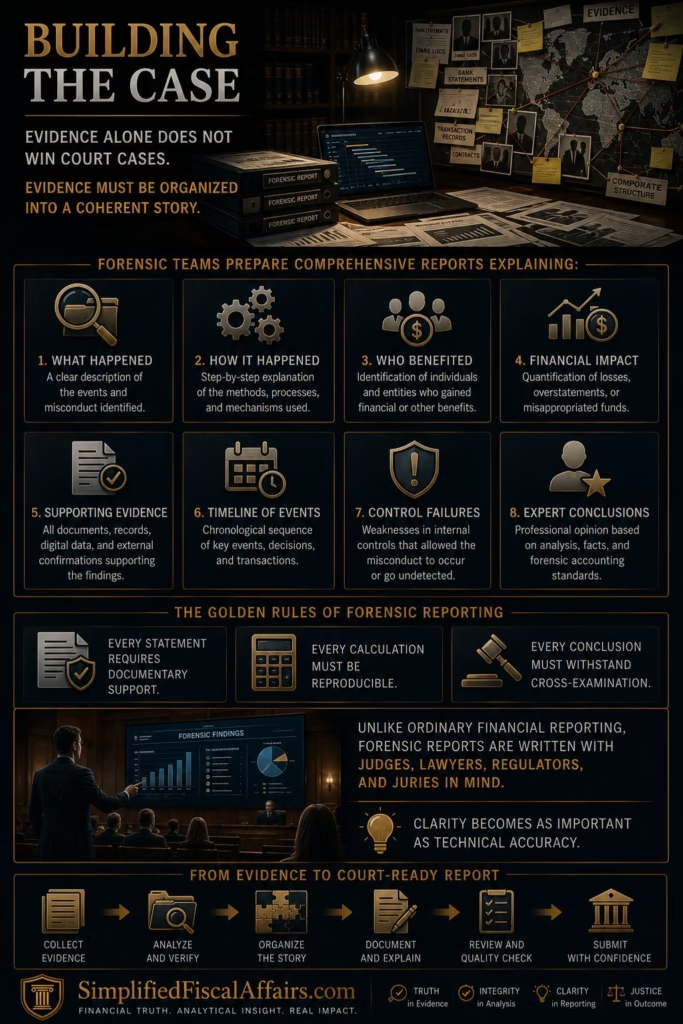
Building the Case
Evidence alone does not win court cases.
Evidence must be organized into a coherent story.
Forensic teams prepare comprehensive reports explaining:
- What happened
- How it happened
- Who benefited
- Financial impact
- Supporting evidence
- Timeline of events
- Control failures
- Expert conclusions
Every statement requires documentary support.
Every calculation must be reproducible.
Every conclusion must withstand cross-examination.
Unlike ordinary financial reporting, forensic reports are written with judges, lawyers, regulators, and juries in mind.
Clarity becomes as important as technical accuracy.
Inside the Courtroom
Months—or sometimes years—after the investigation begins, the courtroom becomes the final testing ground.
The forensic auditor enters not as an advocate but as an independent expert witness.
The opposing lawyer challenges every assumption.
“How can you prove this email is authentic?”
“Who accessed the computer?”
“Could someone else have made these journal entries?”
“Were alternative explanations considered?”
Professional credibility depends upon meticulous documentation accumulated throughout the investigation.
The chain of custody.
- Digital hashes.
- Bank confirmations.
- Interview notes.
- Transaction records.
- Independent corroboration.
Each piece strengthens the larger narrative.
Justice depends not merely on discovering truth but proving it convincingly.

Lessons from Real Corporate Scandals
History demonstrates that the largest frauds rarely rely upon sophisticated mathematics.
Instead, they exploit trust.
Although corporate scandals differ in execution, they share common characteristics:
- Weak internal controls
- Concentration of authority
- Poor governance
- Manipulated documentation
- Delayed questioning
- Excessive trust
Fraud evolves.
Human behavior changes very little.
The Most Valuable Discovery Is Often Not the Fraud
Many forensic investigations conclude without criminal prosecution.
Yet they still create enormous value.
Weak controls become stronger.
Cybersecurity improves.
Governance becomes more transparent.
Risk management matures.
Whistleblower systems gain credibility.
Organizations discover vulnerabilities before criminals exploit them.
In this sense, forensic auditing serves not merely as an investigative discipline but as a powerful mechanism for institutional resilience.
The Future of Forensic Auditing
Tomorrow’s investigations will look dramatically different.
Artificial intelligence will review billions of transactions within minutes.
Blockchain analytics will trace cryptocurrency across decentralized networks.
Predictive analytics will identify fraud before financial statements are even published.
Continuous auditing systems will monitor organizations in real time rather than months later.
Yet one principle will remain unchanged.
Every fraudulent transaction ultimately involves a human decision.
Technology may detect anomalies.
Only experienced investigators can understand motives.

Final Thoughts
A forensic audit is far more than an examination of accounting records.
It is a reconstruction of reality.
Every invoice, email, transaction, phone call, database log, bank transfer, deleted file, and witness statement becomes a fragment of a much larger puzzle.
Some investigations recover stolen billions.
Others restore public confidence.
Many prevent future disasters before they occur.
The greatest forensic investigators understand that financial statements tell only part of the story.
The real story lies hidden beneath the numbers—in the decisions people made, the evidence they tried to erase, and the digital footprints they unknowingly left behind.
In the end, money almost always leaves a trail.
The real challenge is having the patience, expertise, and determination to follow it all the way to the truth.

Disclaimer
This article is published solely for educational, informational, and public awareness purposes. Any companies, organizations, financial institutions, individuals, or scenarios mentioned are used for explanatory or illustrative purposes unless explicitly identified as publicly documented cases. Documentary-style narratives, hypothetical examples, and reconstructed investigative scenarios are intended to help readers understand forensic auditing concepts and should not be interpreted as factual accounts of any specific ongoing investigation.
The information presented does not constitute legal, accounting, auditing, financial, investment, or professional advice. While every effort has been made to ensure accuracy, readers should consult qualified legal, accounting, forensic, or financial professionals before making decisions based on the information contained in this article.
SimplifiedFiscalAffairs.com does not make any allegations against any person, company, or institution, nor does it endorse or condemn any entity referenced. References to publicly known corporate frauds or legal cases are based on information available in the public domain and are included solely for educational analysis.
The publisher and author disclaim any liability for actions taken based on the contents of this article.