

SERIES 3 – The Birth of Debt
From Clay Tablets to Trillion-Dollar Markets
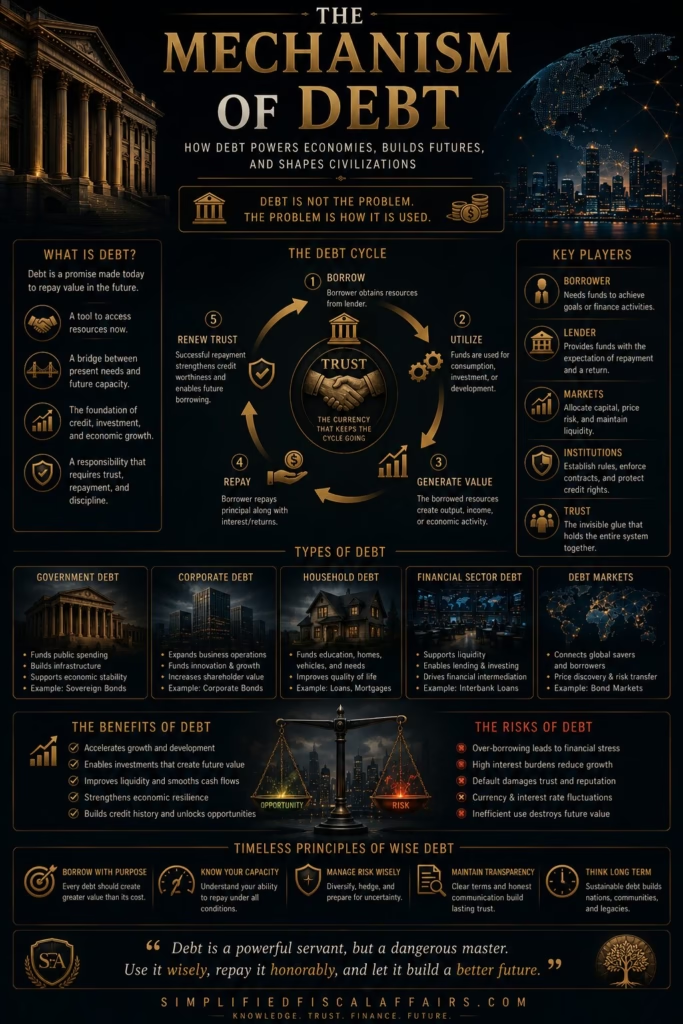
How Ancient Civilizations Invented Borrowing Thousands of Years Before Modern Banks
“Long before skyscrapers, stock exchanges, and investment banks existed, humanity had already discovered one of its most powerful financial inventions—the ability to borrow from tomorrow to build today.”
Introduction: The Story Begins Long Before Wall Street
When people hear the word bond, they often picture modern financial districts filled with traders, digital screens, and billion-dollar transactions.
But the true origins of borrowing stretch back more than 5,000 years, to a time when there were no banks, no paper currency, no stock exchanges, and certainly no smartphones displaying live bond yields.
Instead, there were farmers, merchants, kings, and priests trying to solve a simple but profound problem:
How do you finance today’s needs using tomorrow’s income?
That question gave birth to one of humanity’s oldest financial ideas—credit.
Without it, civilizations would have struggled to build irrigation systems, store food, wage wars, construct temples, or expand trade. Debt was not invented to make finance more complicated; it emerged because cooperation and long-term planning required trust.
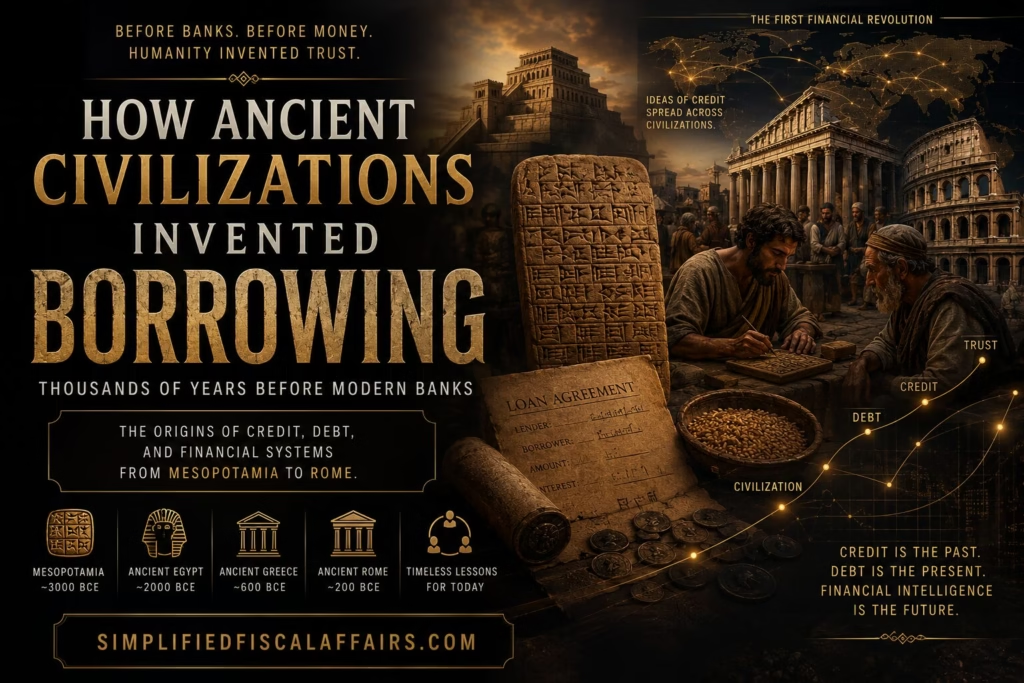
Before Money Came Credit
Many people assume the sequence of history was:
Barter → Coins → Banking → Credit
In reality, historians and economists believe that credit relationships often existed before widespread coinage.
Imagine a farming village around 3000 BCE.
One farmer harvests a large surplus of barley. Another suffers a poor harvest because of drought.
Instead of demanding immediate payment, the first farmer agrees:
“Take fifty sacks of barley today. After your next harvest, return sixty.”
No coins change hands.
No paper contract exists.
What matters is a shared understanding that the debt will be repaid in the future.
This simple agreement captures the essence of lending and borrowing.
Mesopotamia: Where Finance Was Recorded
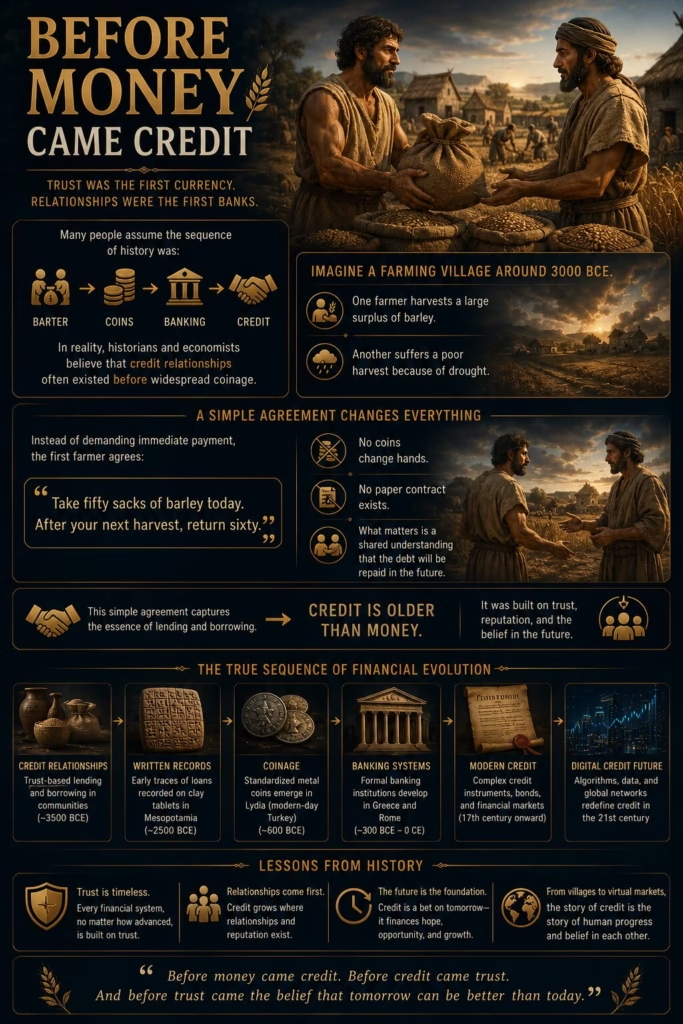
The world’s earliest known financial records come from ancient Mesopotamia, often called the cradle of civilization.
Situated between the Tigris and Euphrates rivers, Mesopotamian cities developed sophisticated systems of agriculture, taxation, trade, and administration.
As economic activity grew, memory alone was no longer sufficient.
People needed written records.
Scribes began inscribing financial agreements onto clay tablets using cuneiform writing.
These tablets documented:
- Grain loans
- Livestock loans
- Silver obligations
- Interest payments
- Repayment schedules
- Property transfers
In many respects, these clay tablets served the same purpose as today’s legally binding financial contracts.
The medium has changed—from clay to digital databases—but the underlying principle remains remarkably similar.
Temples: The First Financial Institutions
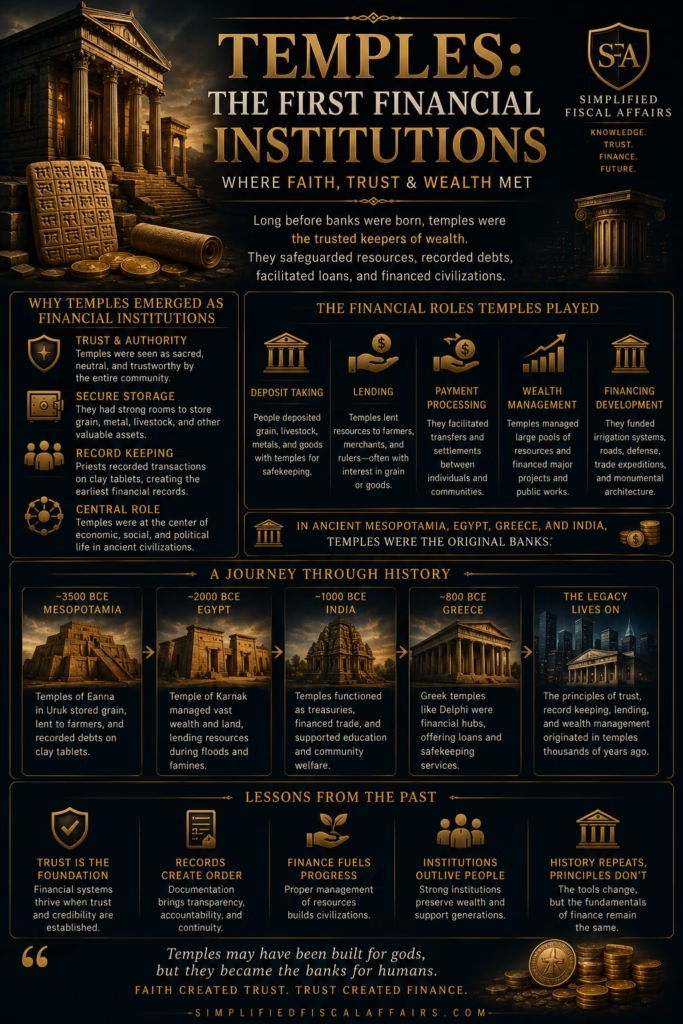
In Mesopotamia, temples were not merely places of worship.
They also functioned as major economic centers.
Temples collected agricultural produce, managed land, employed workers, stored grain, and distributed resources during periods of scarcity.
Because they possessed substantial reserves, they became natural lenders.
A farmer needing seeds before planting season could borrow grain from the temple and repay the loan after harvest.
This arrangement benefited both parties.
The farmer gained the resources needed to produce a crop.
The temple received repayment plus additional grain as compensation for providing the loan.
These early lending practices illustrate how financial systems often evolve from practical economic needs rather than abstract theory.
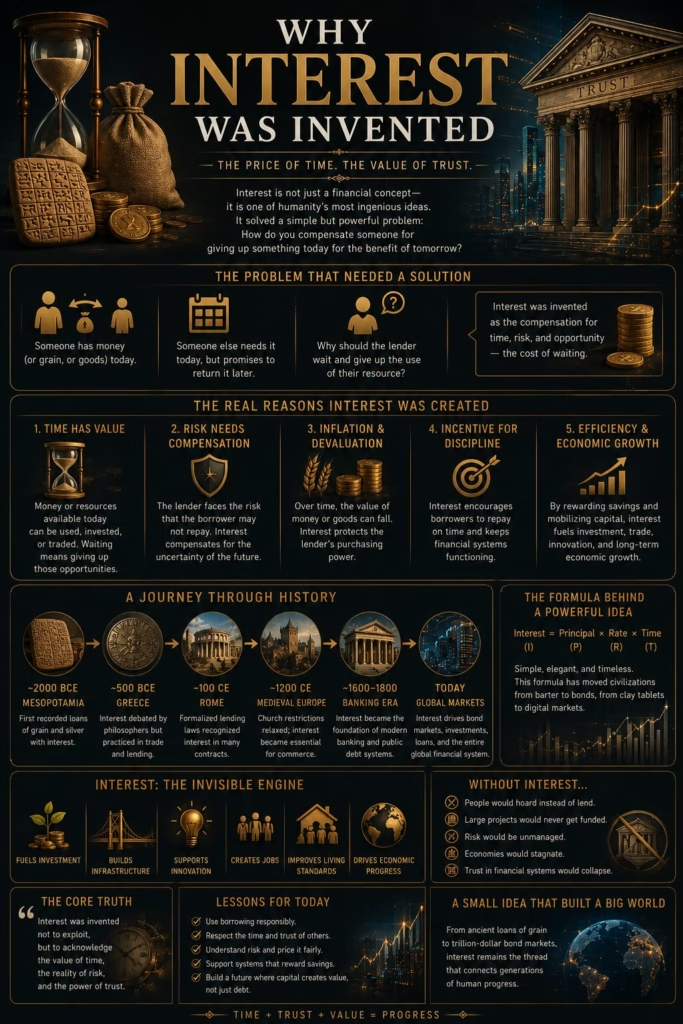
Why Interest Was Invented
One question has puzzled students of finance for centuries:
Why should a lender receive more than they originally lent?
The answer lies in opportunity cost and risk.
If a merchant lends silver to another trader, that silver cannot be used elsewhere during the loan period.
The lender also accepts uncertainty.
The harvest may fail.
Trade routes may become unsafe.
War may interrupt commerce.
The borrower may simply be unable to repay.
Interest emerged as compensation for delaying consumption, accepting uncertainty, and providing valuable resources to others.
Although modern finance uses sophisticated mathematical models to measure risk, the basic logic has remained consistent for thousands of years.
Ancient Egypt and Seasonal Finance
Along the banks of the Nile River, agriculture depended on predictable annual floods.
Farmers often required seeds, tools, or food months before harvest.
Credit allowed them to bridge this gap.
Loans supported agricultural production, while repayment typically occurred after crops were collected.
This seasonal financing resembles many modern business loans.
Today, companies often borrow to cover expenses before receiving revenue.
The timing has changed, but the financial challenge remains the same: matching current costs with future income.
The Greeks and the Expansion of Trade
As maritime trade expanded across the Mediterranean, merchants faced new risks.
A trading voyage required ships, crews, cargo, and months of travel.
Financing such expeditions demanded significant capital.
Specialized loans emerged to support commercial voyages.
Some agreements even reflected the risks of sea travel.
If the ship successfully returned, the lender earned a higher return.
If the vessel was lost at sea, repayment obligations could be reduced or eliminated under certain arrangements.
These early innovations demonstrate how finance continually adapts to the realities of commerce.
Rome: Borrowing on an Imperial Scale
The Roman Empire transformed borrowing into an instrument of statecraft.
Maintaining roads, aqueducts, military campaigns, and public buildings required enormous financial resources.
Roman officials developed increasingly sophisticated legal systems governing contracts, property rights, and debt obligations.
Although today’s government bond markets are far more advanced, the Roman experience highlighted an enduring truth:
Large governments require reliable access to long-term financing.
Whether constructing an aqueduct in ancient Rome or a high-speed rail network in the twenty-first century, public investment often depends on borrowing.
Trust: The Invisible Currency

Across every civilization, one ingredient mattered more than gold or silver.
Trust.
A loan is fundamentally a promise.
The lender believes repayment will occur.
The borrower commits to honoring that obligation.
Without trust, lending collapses.
Without lending, investment slows.
Without investment, economic growth becomes more difficult.
Even today’s highly sophisticated bond markets ultimately rely on this timeless principle.
Credit ratings, audited financial statements, legal contracts, and regulatory oversight all exist to strengthen confidence between borrowers and lenders.
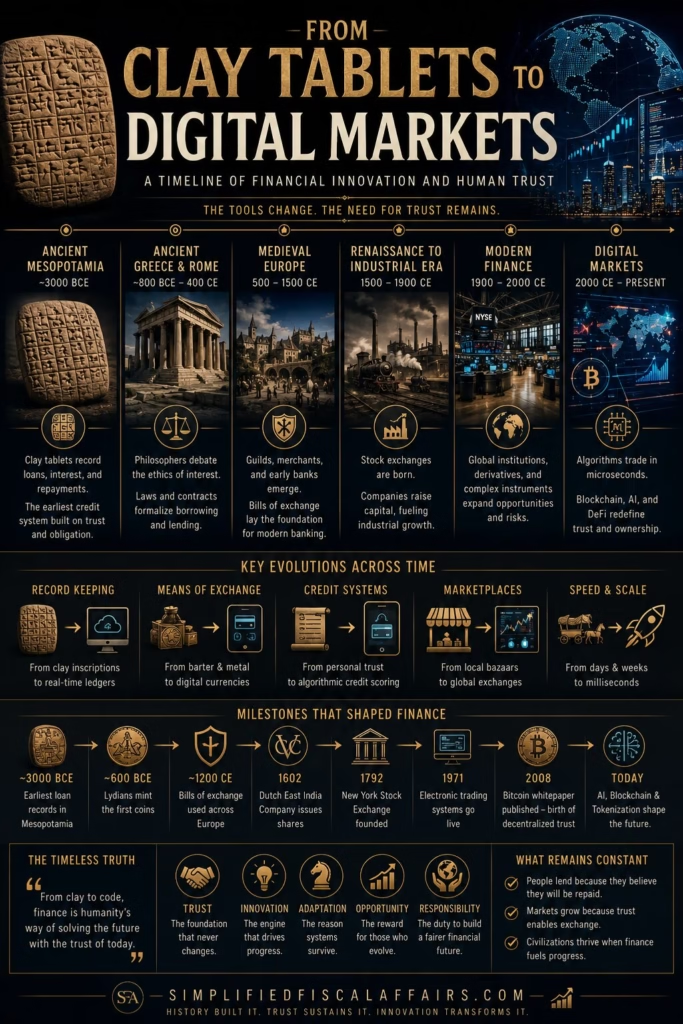
From Clay Tablets to Digital Markets
Consider how far financial technology has evolved.
Ancient scribes pressed symbols into wet clay.
Medieval merchants recorded debts in handwritten ledgers.
Modern banks use electronic databases.
Institutional investors execute bond trades in milliseconds across global financial networks.
Despite these technological transformations, the essence of borrowing has not changed.
A borrower receives resources today.
A lender expects repayment tomorrow.
The financial instruments have become more complex, but the underlying promise remains remarkably constant.
Lessons from History
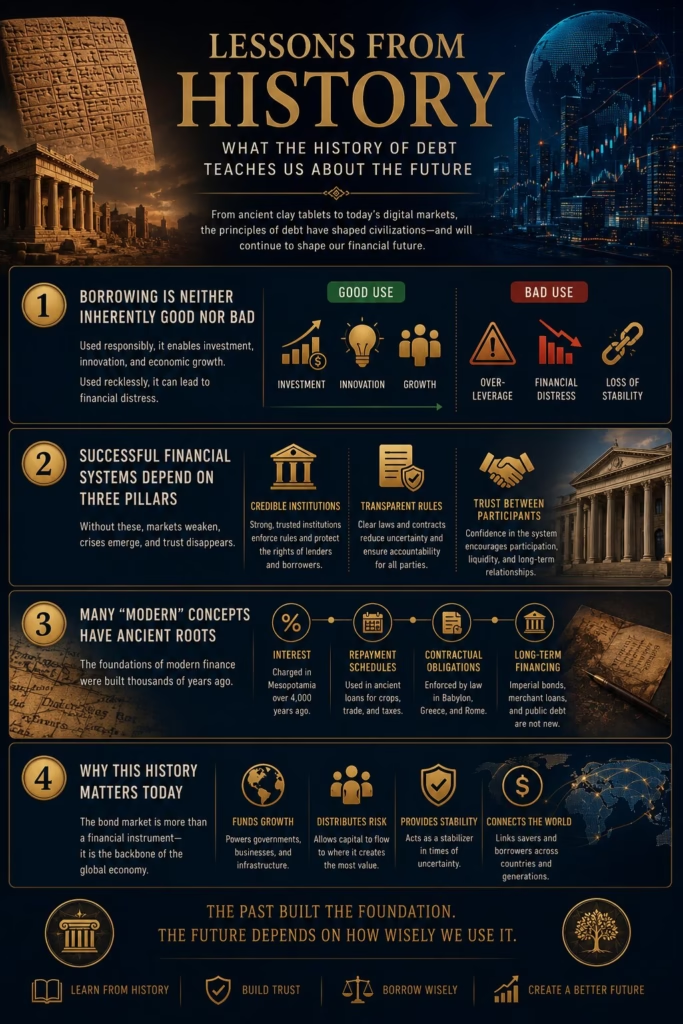
The history of debt teaches us several enduring lessons.
First, borrowing is neither inherently good nor bad. Used responsibly, it enables investment, innovation, and economic growth. Used recklessly, it can lead to financial distress.
Second, successful financial systems depend on credible institutions, transparent rules, and trust between participants.
Third, many concepts that appear uniquely modern—interest, repayment schedules, contractual obligations, and long-term financing—have roots stretching back thousands of years.
Understanding this history helps explain why the bond market occupies such a central position in the global economy today.
Summary
The bond market did not emerge overnight. It evolved gradually from the earliest lending arrangements between farmers, merchants, temples, and governments. Ancient civilizations developed systems of credit because economic progress required more than immediate exchange—it required confidence in the future.
From clay tablets in Mesopotamia to digital trading platforms handling billions of dollars every day, the tools have changed dramatically. Yet every bond still rests on the same timeless foundation: a promise to repay.
As we continue this journey, we will move from history to structure. Having explored where debt came from, the next chapter examines how modern governments transformed borrowing into one of the largest and most influential financial markets ever created.
← Previous Chapter What Exactly Is a Bond? II
Next Chapter →Why Governments Borrow Money- IV
Coming Next
Series 4 – Why Governments Borrow Money: The Birth of Sovereign Bonds
In the next chapter, you’ll discover:
- Why governments issue bonds instead of simply raising taxes.
- Why printing unlimited money is not a sustainable solution.
- How sovereign bonds became the benchmark for global finance.
- Why investors around the world lend trillions to governments.
- How government bond markets influence interest rates, inflation, currencies, and economic growth.