
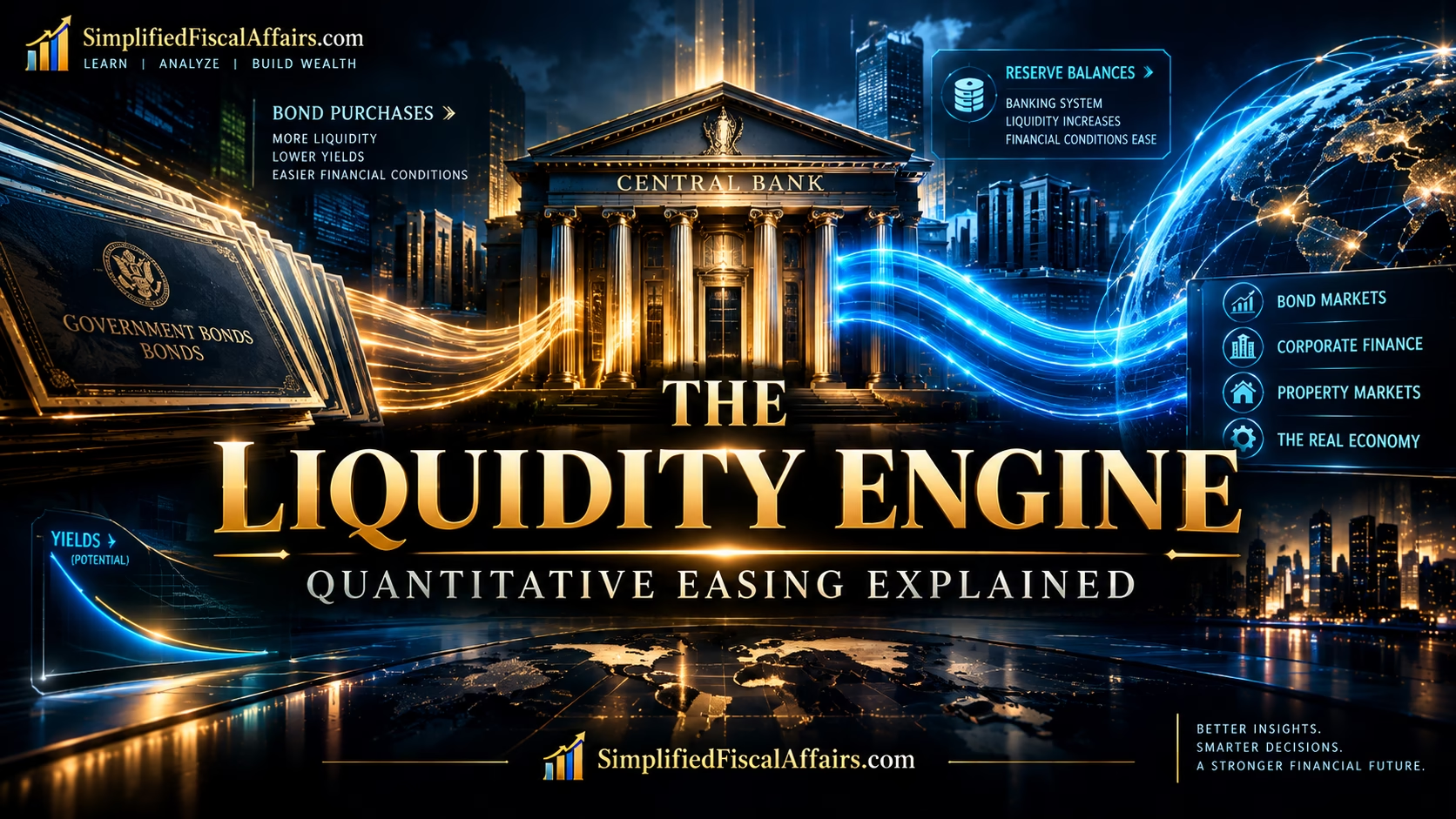
When Central Banks Buy Bonds to Support the Economy
“Sometimes lowering interest rates is not enough. When conventional tools lose their effectiveness, central banks may turn to an extraordinary policy: purchasing massive quantities of bonds. This approach, known as Quantitative Easing, has reshaped modern monetary policy and influenced financial markets around the world.”
Introduction: What Happens When the Economy Stops Moving?
Imagine an economy facing severe financial stress.
Businesses delay investment.
Banks become cautious about lending.
Consumers reduce spending.
Investors seek safety instead of taking risks.
Economic activity slows sharply.
In response, the central bank lowers its policy interest rate.
Normally, lower interest rates encourage borrowing and investment.
But what happens if policy rates are already very low?
How can the central bank provide additional support when its traditional tool has little room to move?
This question became especially important during major financial crises.
One answer was Quantitative Easing, often abbreviated as QE.
What Is Quantitative Easing?
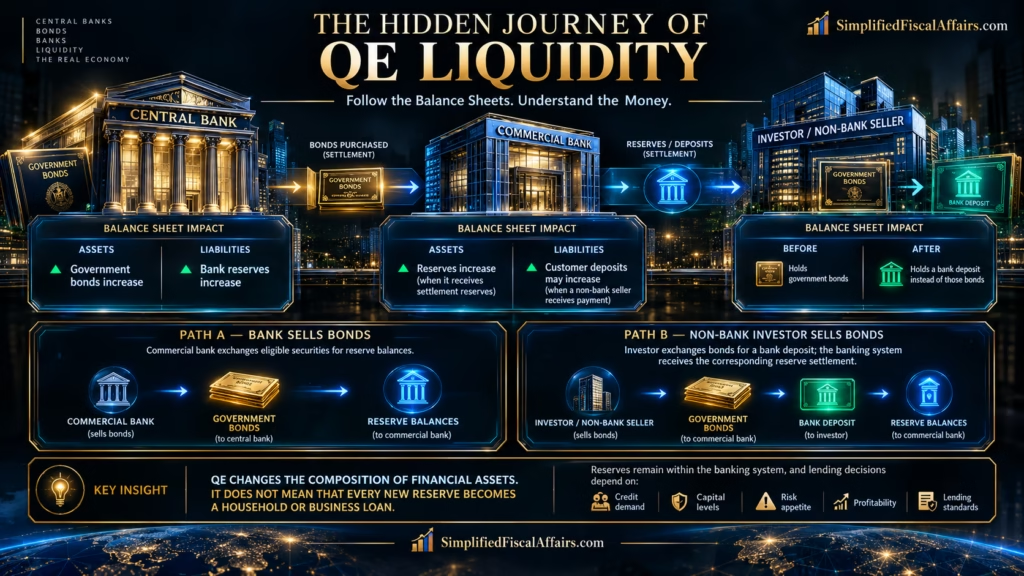
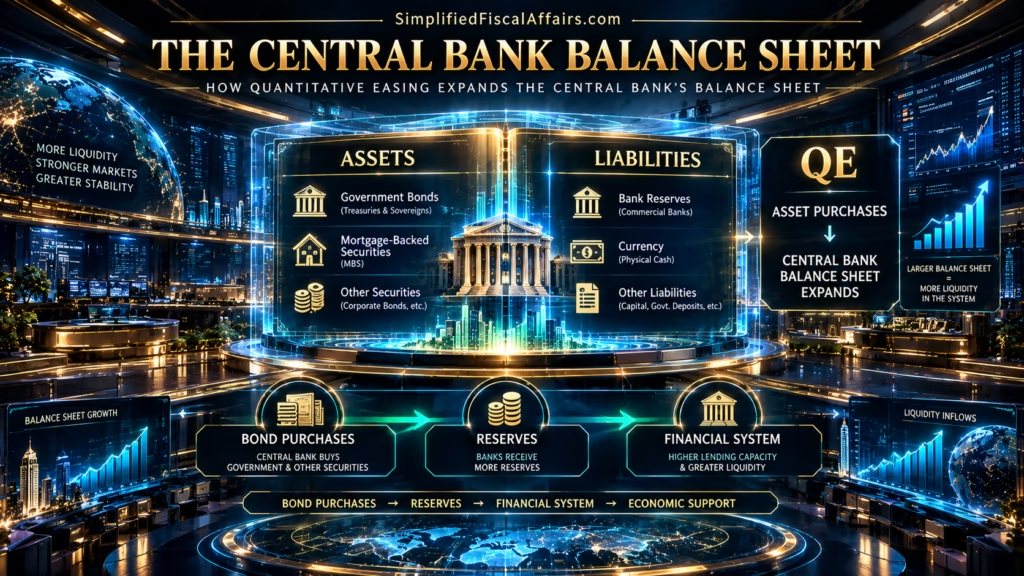
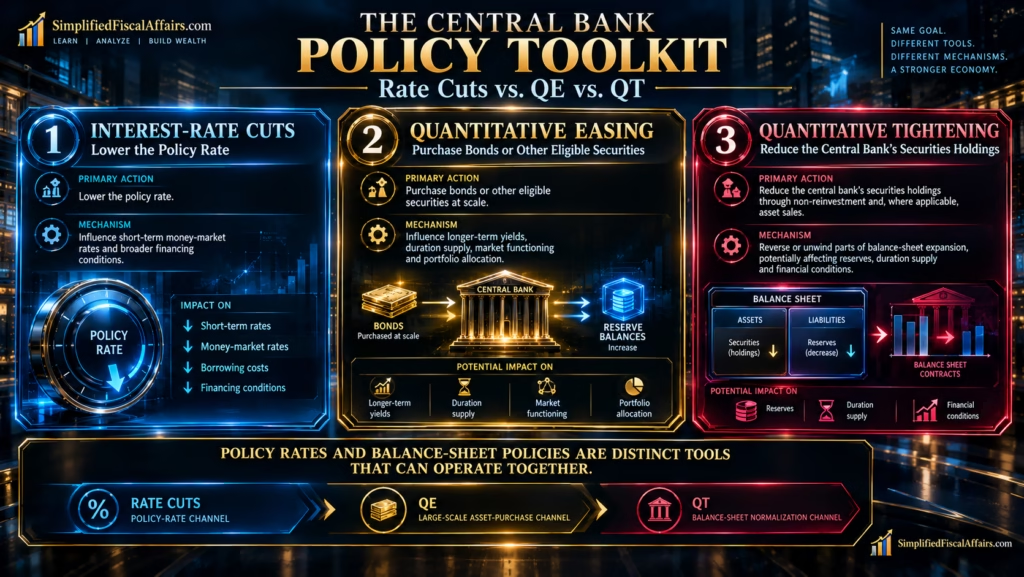
Quantitative Easing is an unconventional monetary policy in which a central bank purchases large quantities of financial assets—most commonly government bonds—from financial markets.
Unlike ordinary open market operations, QE is typically used when policy interest rates are already very low and additional economic support is considered necessary.
The objectives may include:
- Lowering longer-term interest rates.
- Improving liquidity in financial markets.
- Supporting the flow of credit.
- Encouraging investment and spending.
- Reinforcing confidence during periods of financial stress.
QE is designed to influence broader financial conditions rather than simply changing one interest rate.
Why Buy Bonds?
At first, the idea seems unusual.
Why would a central bank buy large amounts of government bonds that already exist?
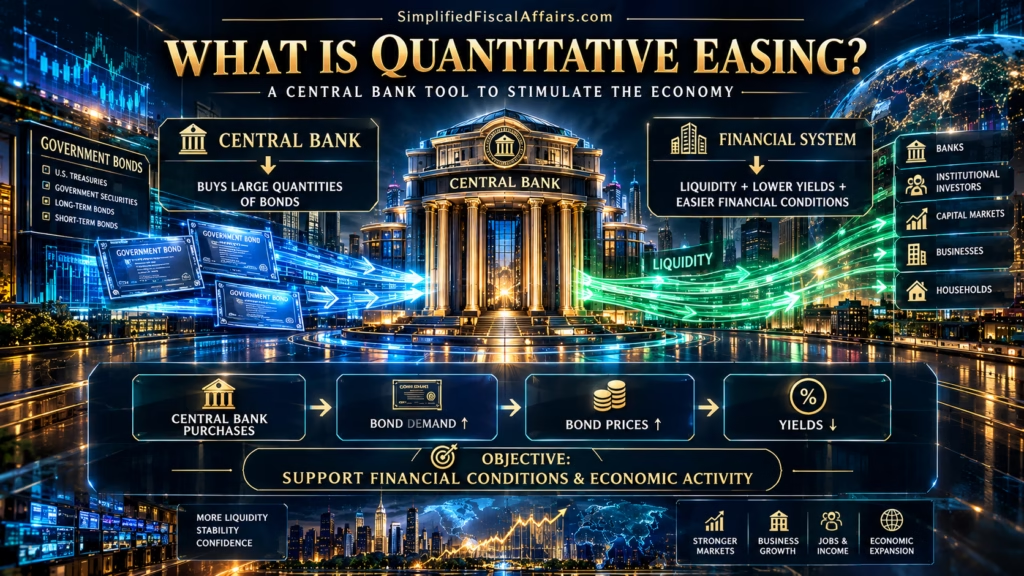
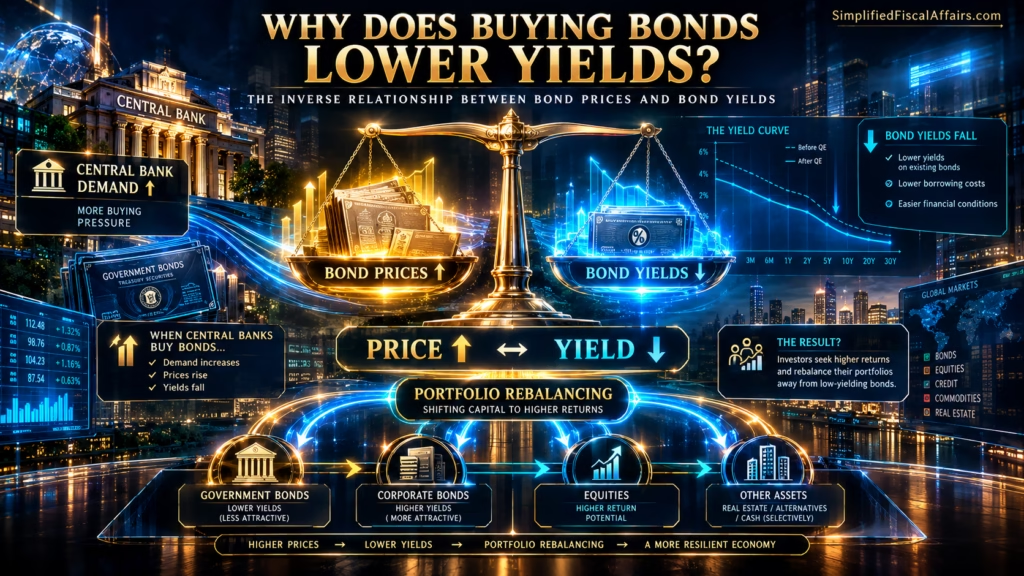
The answer lies in the relationship between bond prices and yields.
Recall the golden rule:
When bond prices rise, yields generally fall.
If the central bank purchases substantial quantities of government bonds, demand increases.
Greater demand tends to raise bond prices.
Higher prices generally reduce yields.
Lower yields can influence borrowing costs across the economy.
This is one of the primary channels through which QE is intended to operate.
How QE Works Step by Step
A simplified sequence looks like this:
Step 1
The economy experiences significant weakness.
Growth slows.
Inflation remains below the central bank’s objective.
Financial markets become strained.
Step 2
The central bank has already reduced policy interest rates substantially.
Further conventional rate cuts are limited.
Step 3
The central bank announces a large-scale asset purchase programme.
It begins purchasing government bonds and, in some cases, other high-quality securities.
Step 4
Demand for those bonds increases.
Bond prices generally rise.
Yields generally decline.
Step 5
Lower yields may reduce borrowing costs throughout the economy.
Businesses, households, and governments may find financing more affordable.
The policy aims to support economic activity and improve financial conditions.

A Simple Example
Imagine the market contains a large supply of 10-year government bonds.
Investors are uncertain.
Many hesitate to buy.
The central bank announces that it intends to purchase a substantial quantity of these bonds.
Suddenly, there is a major new buyer in the market.
Demand increases.
Prices tend to rise.
Yields generally decline.
As government bond yields fall, borrowing costs in other parts of the financial system may also decrease because many lending rates are influenced by government bond markets.

How QE Differs from Traditional Interest-Rate Policy
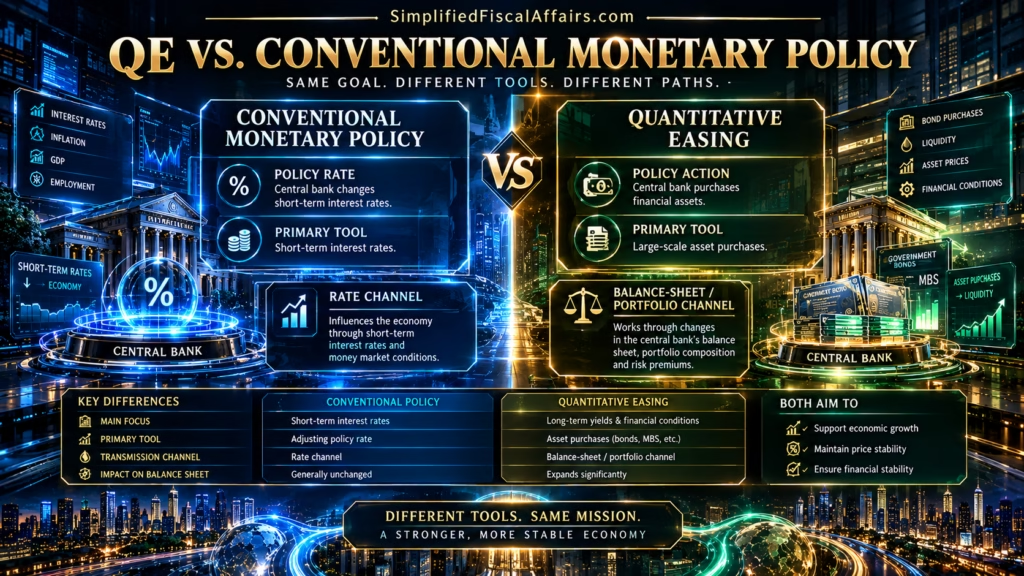
Under conventional monetary policy, the central bank primarily adjusts a short-term policy interest rate.
QE is different.
Instead of focusing only on short-term rates, QE seeks to influence:
- Longer-term interest rates.
- Financial market liquidity.
- Investor confidence.
- Broader financing conditions.
In this sense, QE extends monetary policy beyond its traditional framework.
Why Investors Pay Attention to QE
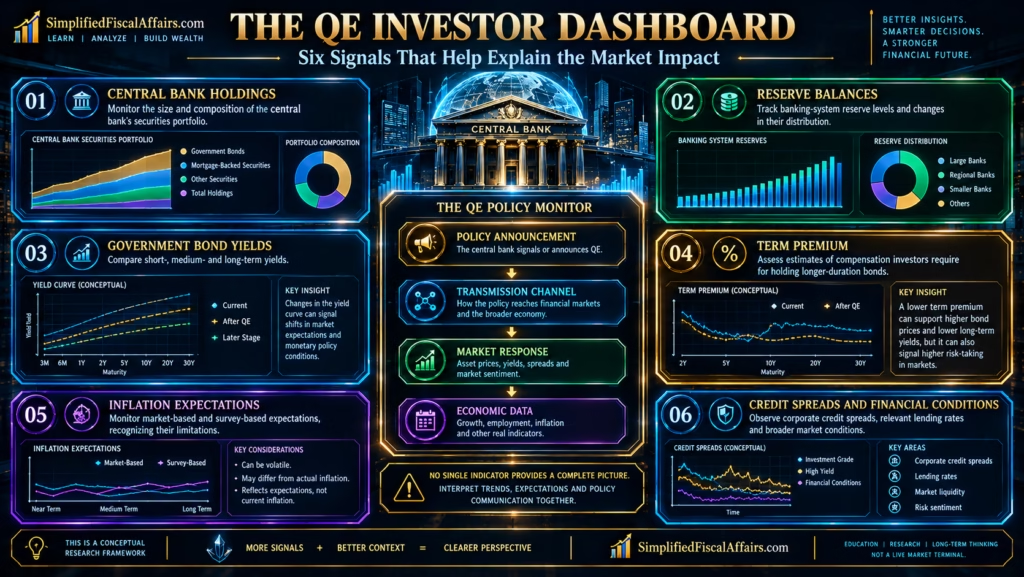
Bond investors closely monitor QE announcements because large-scale purchases can influence:
- Government bond yields.
- Corporate bond markets.
- Mortgage financing.
- Equity valuations.
- Currency movements.
- Portfolio allocation decisions.
When central banks become significant buyers of government bonds, market dynamics can change considerably.
Professional investors therefore evaluate not only whether QE is occurring, but also:
- The expected size of purchases.
- The duration of the programme.
- Which assets are eligible.
- How long purchases are expected to continue.

Can QE Influence the Stock Market?
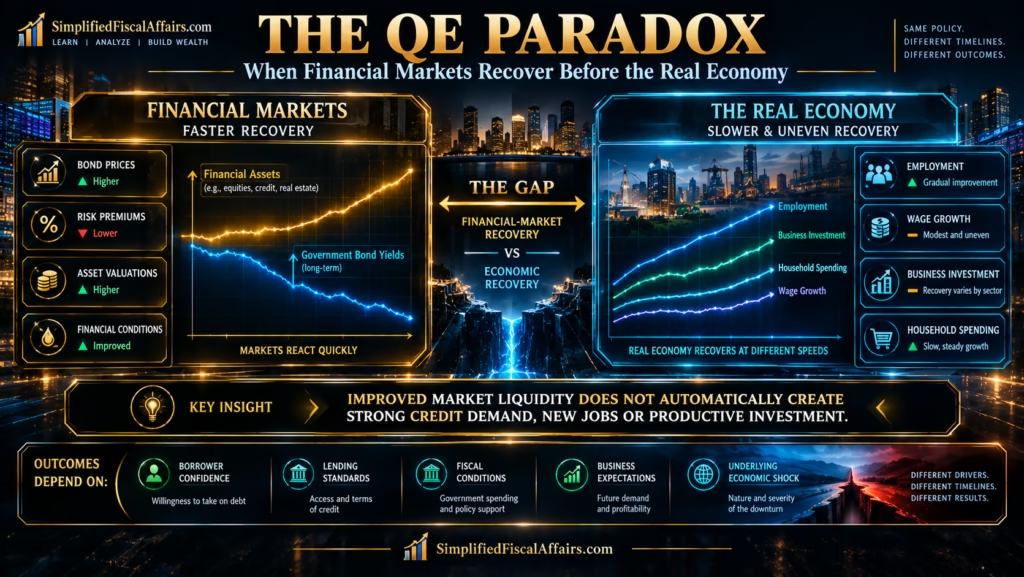
QE is primarily designed to support financial conditions rather than directly increase stock prices.
However, lower bond yields can encourage some investors to consider other assets offering potentially higher expected returns.
At the same time, lower borrowing costs may improve financing conditions for businesses.
These effects can influence financial markets, although many other factors—including corporate earnings, economic growth, and investor sentiment—also play important roles.
Benefits Often Associated with QE
Supporters argue that QE may help:
- Improve market liquidity during periods of stress.
- Lower long-term borrowing costs.
- Encourage lending and investment.
- Reduce financial market disruptions.
- Support economic recovery when conventional policy tools are constrained.
The effectiveness of QE depends on economic conditions and is the subject of ongoing research and debate.

Limitations and Criticisms
QE is not a guaranteed solution.
Economists have raised several questions, including whether QE may:
- Encourage excessive risk-taking in financial markets.
- Contribute to higher asset prices.
- Have uneven effects across different groups within the economy.
- Become less effective if used repeatedly.
- Be difficult to unwind without affecting markets.
Because of these considerations, central banks generally present QE as an extraordinary policy tool rather than a routine instrument.

Historical Perspective
Large-scale bond purchase programmes received significant attention during the 2008 Global Financial Crisis.
When conventional interest-rate policy reached its limits in several major economies, central banks introduced QE to help stabilize financial markets and support economic activity.
Similar programmes were later used in many countries during the economic disruption associated with the COVID-19 pandemic, reflecting the exceptional nature of those circumstances.
These episodes established QE as one of the defining features of modern central banking.

Institutional Insight
Professional fixed-income investors carefully assess questions such as:
- Is the central bank expanding or reducing its balance sheet?
- Which maturities are being purchased?
- How might QE affect the yield curve?
- Are bond prices already reflecting expected purchases?
- What happens when the programme eventually ends?
Understanding these issues helps investors anticipate potential changes in financial conditions.

Common Beginner Mistakes
Many people believe:
“QE means the government is giving away free money.”
QE is more accurately described as a monetary policy operation involving asset purchases intended to influence financial conditions.
Another misconception is:
“QE guarantees economic growth.”
Economic outcomes depend on many factors, including consumer confidence, fiscal policy, banking conditions, productivity, and global developments.
QE is one policy tool among many.
Professional Investor’s Checklist
When evaluating a QE programme, experienced investors often ask:
✔ Why has the central bank introduced QE?
✔ What assets are being purchased?
✔ How large is the programme?
✔ How long are purchases expected to continue?
✔ How might bond yields respond?
✔ What could happen when purchases slow or stop?
Chapter Summary
Quantitative Easing is an unconventional monetary policy used primarily when traditional interest-rate reductions have limited room to provide additional economic support.
By purchasing large quantities of government bonds and other eligible securities, central banks seek to lower longer-term yields, improve market liquidity, and support favourable financial conditions.
QE has become one of the most influential policy tools of the modern era, particularly during periods of severe financial stress.
Although it has played a significant role in stabilizing markets during major crises, economists continue to debate its long-term effects, effectiveness, and potential trade-offs.
For bond investors, understanding QE is essential because few policies have had a greater influence on bond prices, yields, and broader financial markets in the twenty-first century.
← Previous Chapter Inside The Central Bank–Bond Market Nexus – XII
Next Chapter →Quantitative Tightening Explained – XIV
Coming Next
Chapter 14 – Quantitative Tightening Explained: What Happens When Central Banks Stop Buying Bonds and Begin Shrinking Their Balance Sheets
In the next chapter, you’ll learn:
- What Quantitative Tightening (QT) is.
- Why central banks eventually reduce or end bond purchase programmes.
- How QT differs from simply raising interest rates.
- The potential effects of QT on bond yields, liquidity, and financial markets.
- Why investors closely monitor the pace and communication of balance-sheet reduction.
By the end of the next chapter, you’ll understand why the transition from QE to QT is one of the most closely watched developments in global fixed-income markets.