
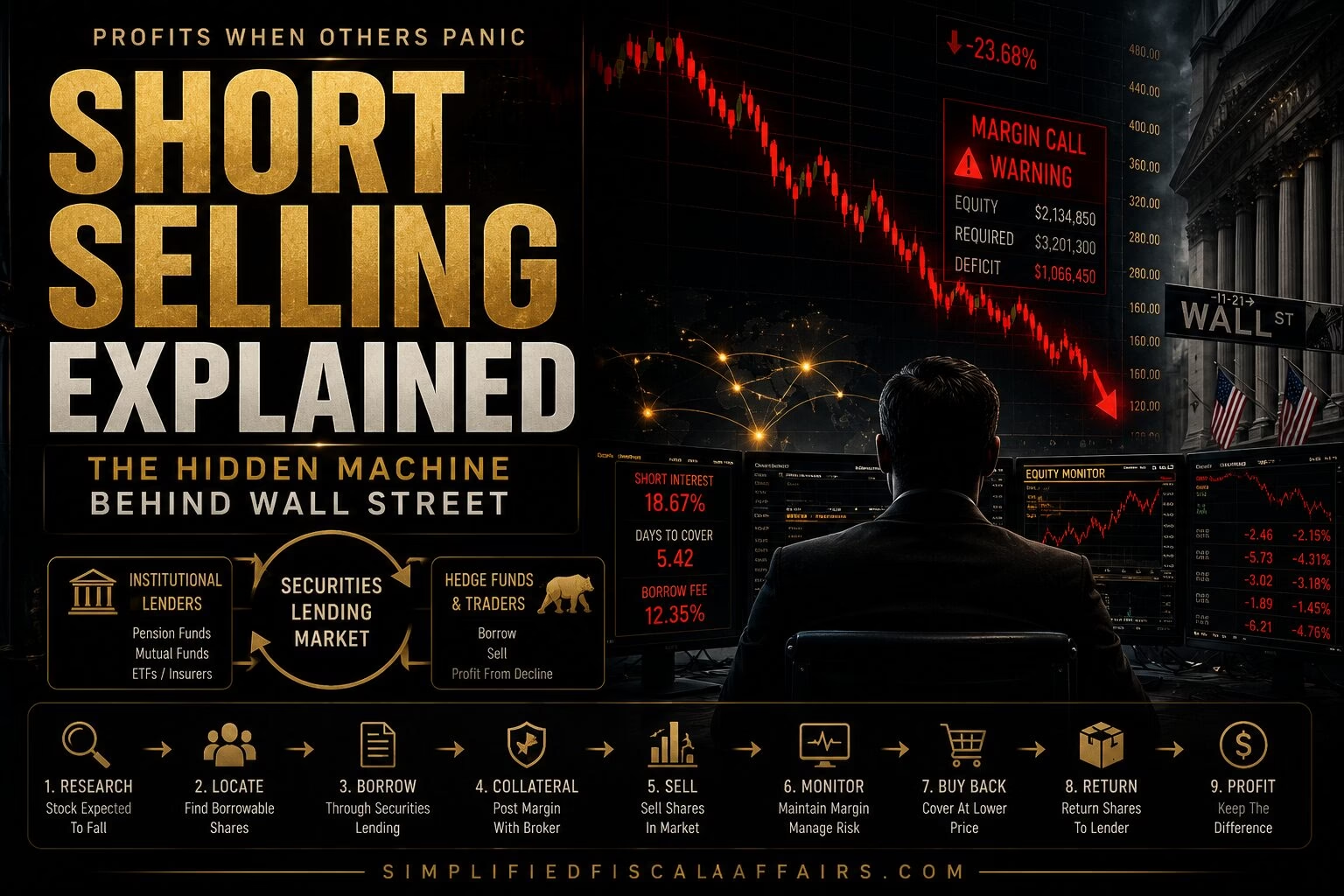
The Art, Science And Risks of Betting Against Financial Markets
Introduction
Most investors seek profits by purchasing assets that they believe will rise in value. However, financial markets provide another pathway to profit—earning money when prices decline.
This practice is known as short selling, one of the most sophisticated and controversial mechanisms in modern financial markets.
Short selling plays a critical role in price discovery, market efficiency, fraud detection, and liquidity creation. Yet it also carries potentially unlimited losses and significant regulatory scrutiny.
Understanding short selling requires more than knowing how investors profit from falling prices. It involves securities lending, margin requirements, institutional risk management, market psychology, derivatives, quantitative analysis, and regulatory frameworks.
This article explores short selling from beginner concepts to advanced institutional strategies.
1. What Is Short Selling?
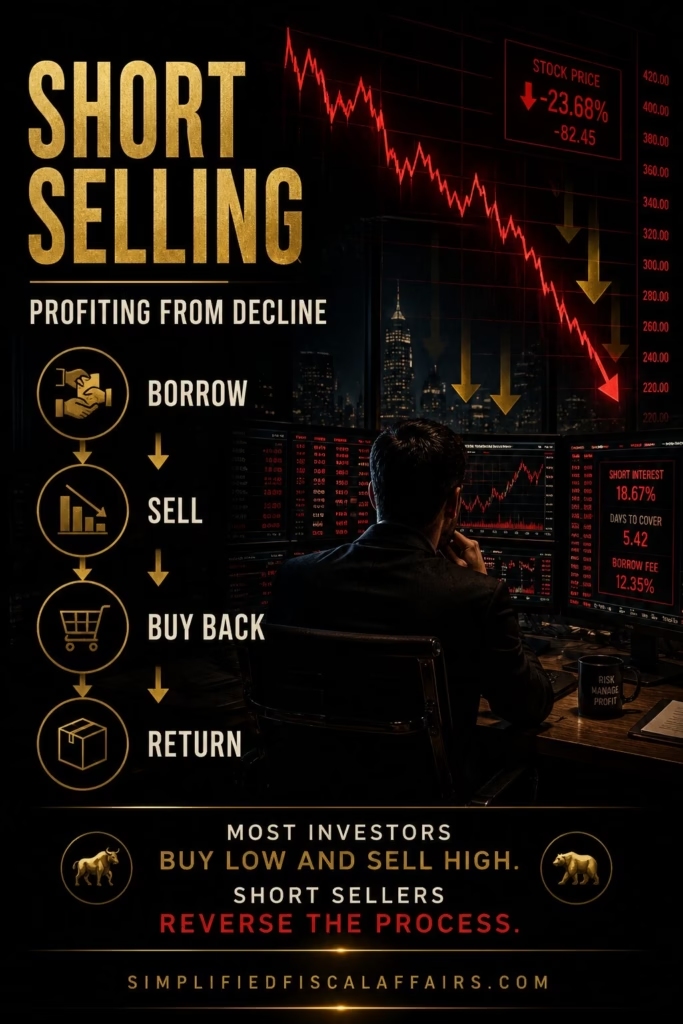
Short selling is one of the most sophisticated strategies in modern finance. Unlike traditional investing, where profits are generated from rising asset prices, short selling allows investors to potentially benefit when securities decline in value. The process involves borrowing shares, selling them in the market, and later repurchasing them at a lower price to return to the lender. While the concept appears straightforward, the underlying ecosystem includes securities lending, margin requirements, risk management, market psychology, regulatory oversight, and institutional trading strategies.
Short selling is a trading strategy in which an investor profits from a decline in the price of a security.
Instead of buying low and selling high, the short seller:
- Borrows shares.
- Sells them immediately.
- Waits for the price to decline.
- Repurchases the shares at a lower price.
- Returns the shares to the lender.
- Keeps the difference as profit.
Example
Suppose an investor believes a stock trading at ₹1,000 is overvalued.
The investor:
- Borrows 100 shares.
- Sells them for ₹100,000.
If the stock falls to ₹700:
- Repurchases 100 shares for ₹70,000.
- Returns them to the lender.
Profit:
₹100,000 − ₹70,000 = ₹30,000
Before fees and interest expenses.
2. Origins of Short Selling
Short selling dates back to the early Dutch stock markets during the 1600s.
One of the earliest documented short sellers was Dutch merchant: Isaac Le Maire
who attempted to profit from declines in shares of the: Dutch East India Company
Since then, short selling has evolved into a major institutional activity used by:
- Hedge funds
- Proprietary trading firms
- Asset managers
- Market makers
- Quantitative funds
3. Why Investors Short Stocks
A. Valuation Concerns
Investors may believe a company is significantly overvalued relative to fundamentals.
Indicators include:
- Excessive P/E ratios
- Weak earnings quality
- Unsustainable growth assumptions
- Asset bubbles
B. Fraud Detection
Many major corporate scandals were first identified by short sellers.
Examples include:
- Enron
- Wirecard
- Luckin Coffee
Short sellers often conduct forensic financial analysis to uncover irregularities.
C. Hedging
Institutions frequently short securities to reduce portfolio risk.
Example:
Long Technology Portfolio
↓ Hedge Risk
Short Technology ETF
This creates a market-neutral position.
4. The Mechanics of Short Selling
The process involves several steps:
Borrow Shares
↓
Post Collateral
↓
Sell Shares
↓
Maintain Margin
↓
Repurchase Shares
↓
Return Shares
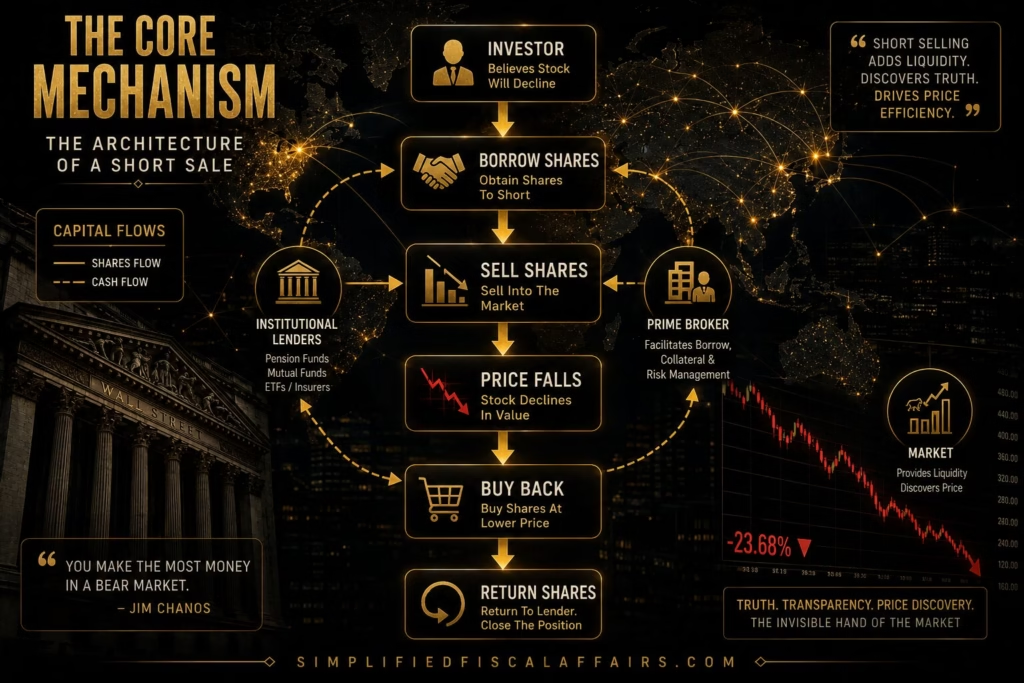
Securities Lending Market
A short seller cannot sell shares without first borrowing them.
Borrowing generally occurs through:
- Pension funds
- Insurance companies
- Mutual funds
- Prime brokers
These institutions lend shares and earn lending fees.
The global securities lending market is worth trillions of dollars.
5. Margin Requirements
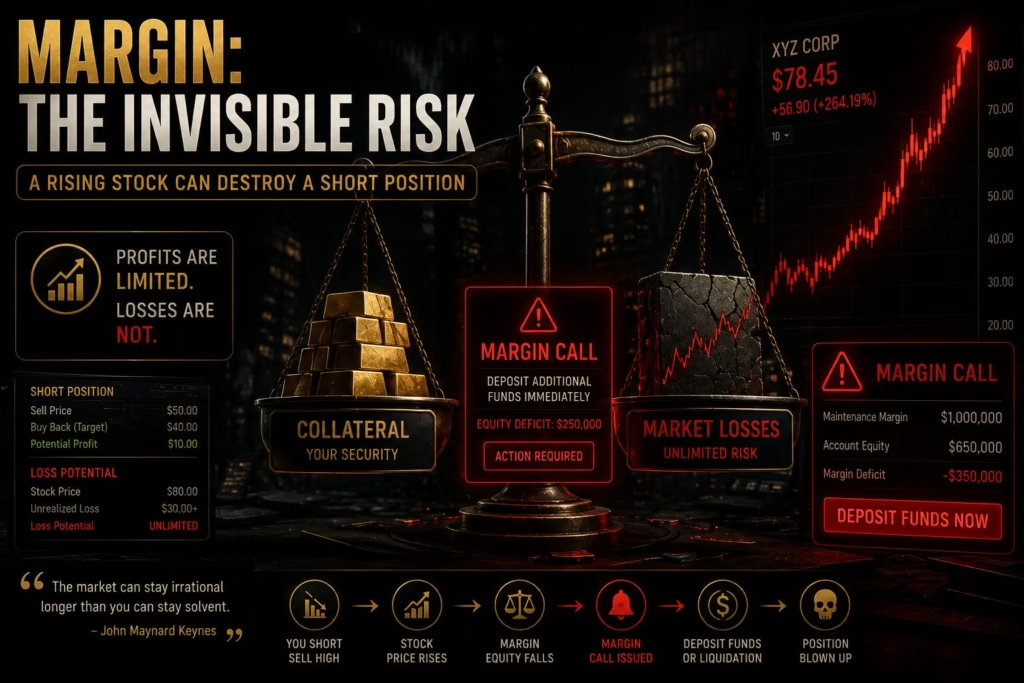
Short selling requires a margin account.
The broker requires collateral because losses can theoretically be unlimited.
Initial Margin
Funds required to open a short position.
Maintenance Margin
Minimum equity that must remain in the account.
Failure to maintain margin results in:
Margin Call
The investor must deposit additional funds or close positions.
6. Profit and Loss Structure
Long Position
Maximum Loss:
100%
Maximum Gain:
Unlimited
Short Position
Maximum Gain:
100%
Maximum Loss:
Unlimited
This asymmetry is one reason professional short sellers use strict risk controls.
7. Short Interest
A key metric used by analysts is:
Short Interest
The number of shares currently sold short but not yet covered.
Formula:
Short Interest = Shares Sold Short
Higher short interest often signals bearish sentiment.
Short Interest Ratio (Days to Cover)
Days to Cover = Short Interest ÷ Average Daily Volume
High ratios indicate potential short squeeze risk.
8. Short Squeeze
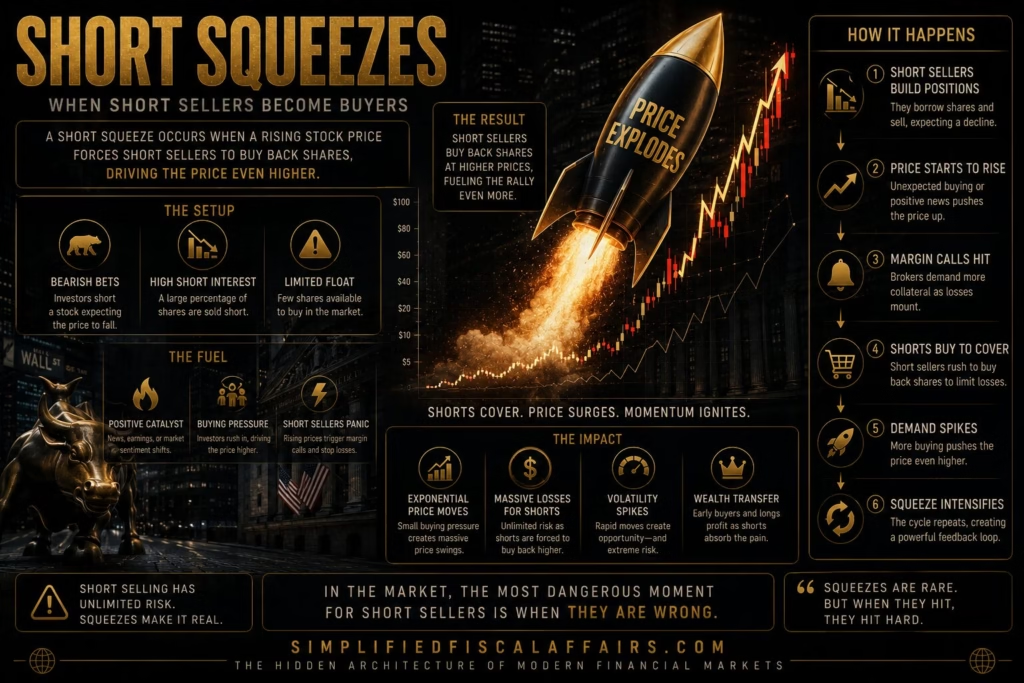
A short squeeze occurs when rising prices force short sellers to buy shares to close positions.
This buying pushes prices even higher.
Feedback Loop:
Price Rises
↓
Short Sellers Lose Money
↓
Forced Buying
↓
Price Rises Further
↓
More Forced Buying

Famous Example: GameStop
The most famous modern short squeeze involved: GameStop in 2021.
Retail investors coordinated through online communities and drove the stock dramatically higher.
Several hedge funds suffered multi-billion-dollar losses.
The event highlighted the power of market structure and crowd psychology.
9. Institutional Short Selling Strategies
Fundamental Short Selling
Based on:
- Financial analysis
- Valuation models
- Industry research
- Competitive dynamics
Goal:
Identify businesses whose intrinsic value is below market price.
Quantitative Short Selling
Quant funds use algorithms to identify:
- Overpriced securities
- Earnings manipulation
- Momentum reversals
- Statistical anomalies
Models analyze thousands of securities simultaneously.
Pair Trading
Example:
Long Company A
Short Company B
Profit depends on relative performance rather than overall market direction.
This is commonly used by hedge funds.
10. Activist Short Selling
Activist short sellers publish research reports explaining why they believe a stock is overvalued.
Well-known firms include:
- Hindenburg Research
- Muddy Waters Research
- Citron Research
These reports often trigger substantial market reactions.
11. Naked Short Selling
Standard short selling requires borrowing shares before selling.
Naked short selling occurs when shares are sold without proper borrowing.
Most major markets heavily restrict or prohibit this practice.
12. Advanced Risks of Short Selling
A. Unlimited Losses
Unlike long investments, losses have no upper limit.
If a stock doubles:
Loss = 100%
If a stock triples:
Loss = 200%
And so on.
B. Borrow Costs
Hard-to-borrow securities can carry high borrow fees.
Annual borrowing costs may exceed 50% or even 100%.
C. Recall Risk
The lender may demand the shares back.
This forces the short seller to cover unexpectedly.
D. Short Squeezes
The most feared risk.
A crowded short trade can rapidly become catastrophic.
E. Regulatory Risk
Authorities may temporarily ban short selling during crises.
Examples occurred during:
- 2008 Financial Crisis
- COVID-19 Market Panic
13. Short Selling and Market Efficiency
Supporters argue short selling:
✔ Improves price discovery
✔ Detects fraud
✔ Increases liquidity
✔ Reduces bubbles
✔ Enhances market efficiency
Critics argue:
✖ Can increase volatility
✖ May create panic
✖ Can accelerate declines
✖ Can be used manipulatively
The debate remains active among regulators and policymakers.
14. The Hedge Fund Perspective
Professional funds rarely rely solely on short positions.
Instead they combine:
Long Investments
+
Short Positions
+
Derivatives
+
Risk Models
This creates diversified return streams.
Many hedge funds seek:
“Absolute Returns”
rather than market-dependent returns.
15. Short Selling Through Derivatives
Institutional investors often express bearish views using:
Put Options
Provide downside exposure with limited risk.
Futures Contracts
Allow leveraged bearish positions.
Swaps
Used by large institutions for synthetic short exposure.
CFDs
Contracts for Difference provide short exposure without direct borrowing.
Availability varies by jurisdiction.
16. The Future of Short Selling
Modern short selling is increasingly influenced by:
- Artificial Intelligence
- Alternative Data
- Satellite Analytics
- Machine Learning
- High-Frequency Trading
- Social Media Sentiment Analysis
The rise of retail investing and online communities has fundamentally altered short-selling dynamics.
Future short sellers must understand not only financial statements but also market structure, behavioral finance, and digital information networks.
Short Selling: Inside the World’s Most Controversial Investment Strategy
The popular image of short selling is simple: an investor bets that a stock will fall and profits when it does. In reality, professional short selling is among the most research-intensive, risk-sensitive, and intellectually demanding activities in finance.
Elite hedge funds can spend months investigating a single company before establishing a short position. They analyze financial statements, supply chains, competitor data, executive behavior, industry trends, regulatory filings, and alternative data sources. Their goal is not merely to identify overvalued companies but to uncover structural weaknesses that the broader market has overlooked.
History shows that some of the greatest fortunes in finance have been made by correctly identifying bubbles, frauds, and unsustainable business models. It also shows that some of the largest losses ever recorded occurred when short sellers underestimated market psychology and short squeeze dynamics.
This section explores the most important real-world lessons from short selling history.
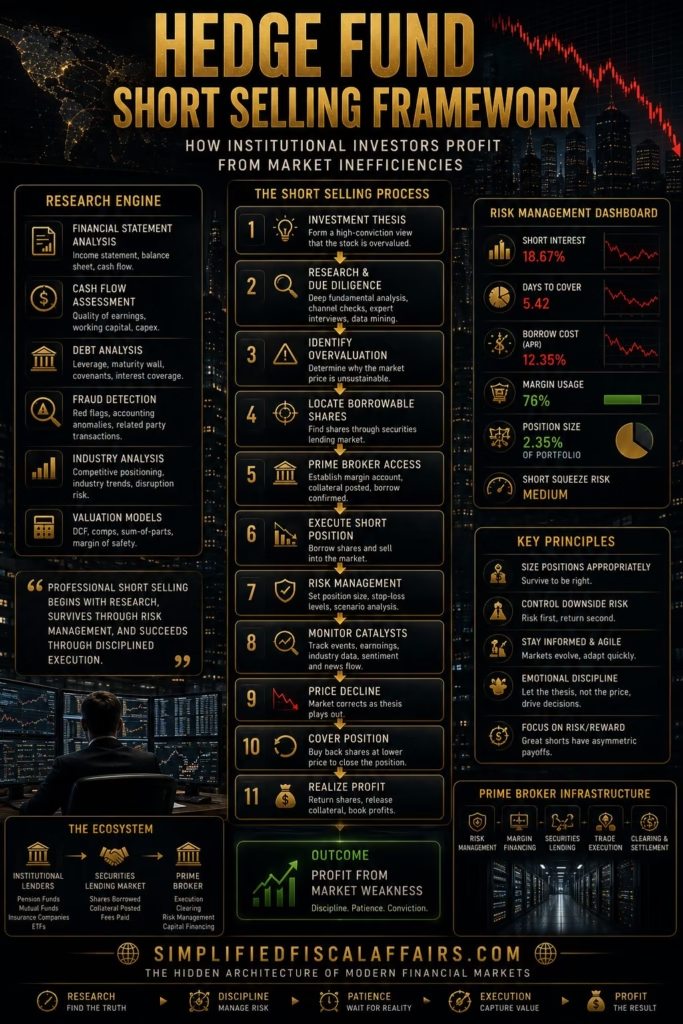
HOW ELITE HEDGE FUNDS SHORT STOCKS
Stage 1: Idea Generation
Sources include:
- Valuation screens
- Earnings anomalies
- Accounting irregularities
- Industry disruption
- Insider selling
A hedge fund may review thousands of companies before selecting a target.
Stage 2: Deep Research
Professional analysts investigate:
Financial Statements
Revenue quality
Profit margins
Cash conversion
Debt obligations
Liquidity
Competitive Position
Market share
Customer retention
Pricing power
Technology advantages
Industry trends
Management Analysis
Executive turnover
Compensation structures
Historical credibility
Capital allocation decisions
Stage 3: Catalyst Identification
A catalyst accelerates price discovery.
Examples:
- Earnings miss
- Regulatory action
- Fraud investigation
- Debt refinancing challenge
- Competitive disruption
Without a catalyst, shorts may remain unprofitable despite being correct.
ADVANCED SHORT SQUEEZE ANALYTICS
Understanding Short Interest
Short Interest measures the total shares sold short.
High levels indicate significant bearish positioning.
However, short interest alone is insufficient.
Professionals monitor multiple indicators.
Days-to-Cover Ratio
Formula:
Days to Cover = Short Interest ÷ Average Daily Trading Volume
Interpretation:
1–3 Days
Low squeeze risk
4–7 Days
Moderate squeeze risk
8–15 Days
Elevated squeeze risk
15+ Days
Extreme squeeze potential
Float Analysis
Professional traders focus on:
Public Float
rather than total shares outstanding.
A small float combined with high short interest creates dangerous conditions.
Borrow Utilization
Borrow utilization measures how much lendable inventory has already been borrowed.
High utilization suggests:
- Scarcity of shares
- Rising borrow costs
- Increased squeeze probability
Cost-to-Borrow
One of the most overlooked metrics.
As borrow fees rise:
Short sellers face increasing expenses.
This pressure can force exits even before prices rise significantly.
THE SHORT SQUEEZE FEEDBACK LOOP
Normal Market
↓
Price Increases
↓
Short Losses Increase
↓
Margin Calls
↓
Forced Buying
↓
Demand Surges
↓
Price Rises Further
↓
Additional Margin Calls
↓
Parabolic Price Movement
This mechanism explains why short squeezes can become self-reinforcing.
WHY MOST SHORT SELLERS FAIL
Despite the potential rewards, many short sellers underperform.
Common mistakes include:
Valuation Alone
A stock can remain expensive for years.
Ignoring Catalysts
Correct analysis without a catalyst often produces poor results.
Excessive Position Size
Short positions require strict risk limits.
Underestimating Narratives
Investor psychology can overwhelm fundamentals.
Fighting Structural Trends
Markets often reward growth and innovation longer than expected.
Conclusion
Short selling is one of the most sophisticated activities in finance.
At its core, it allows investors to profit from declining prices. However, beneath this simple concept lies a complex ecosystem involving securities lending, margin requirements, institutional research, risk management, derivatives, and market psychology.
The greatest short sellers are not simply pessimists. They are investigators, statisticians, behavioral analysts, and risk managers.
Their success comes not from predicting failure, but from recognizing reality before the rest of the market does.
In modern finance, short selling remains one of the most challenging yet intellectually rewarding forms of investing—a field where research, discipline, timing, and risk management matter more than almost anywhere else in the capital markets.
While short selling can expose fraud, improve market efficiency, and generate significant profits, it also carries unique risks—most notably unlimited losses and short squeezes.
For professional investors, successful short selling requires discipline, deep research, rigorous risk controls, and an understanding that markets can remain irrational longer than anticipated.
In modern finance, short selling is not merely betting against companies—it is a critical mechanism that contributes to the functioning, transparency, and efficiency of global capital markets.
Educational Disclaimer:
The information presented by SimplifiedFiscalAffairs.com is provided solely for educational and informational purposes. It does not constitute investment, financial, legal, tax, or trading advice. References to companies, securities, funds, market participants, and investment strategies are for illustrative purposes only and should not be considered recommendations. Investing and trading involve risk, including the potential loss of capital. Always conduct independent research and consult qualified professionals before making financial decisions.
For educational and informational purposes only. This article does not constitute investment, legal, accounting, or financial advice and should not be relied upon for investment decisions.