
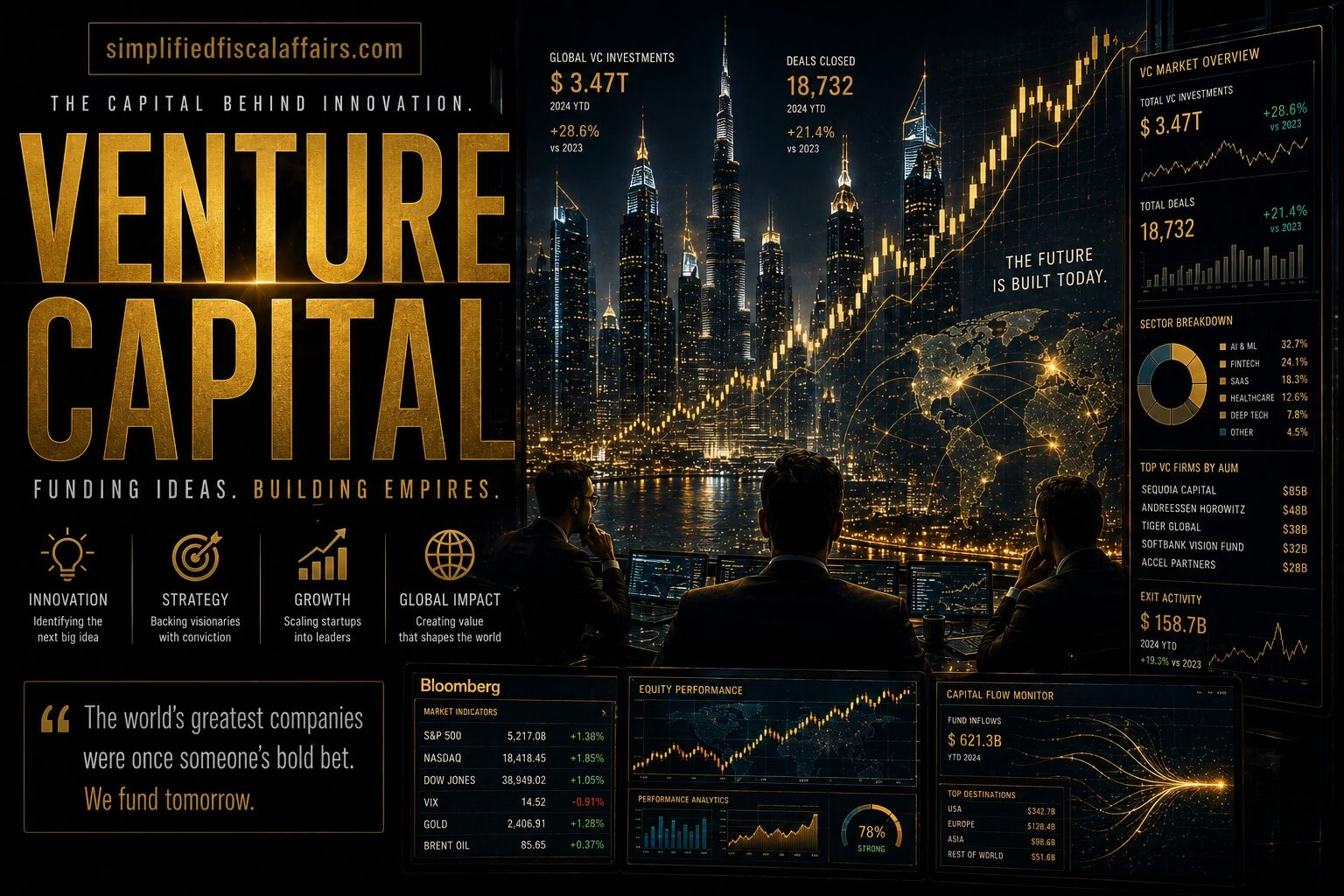
Venture Capital is the fuel behind innovation. It transforms ambitious ideas into global companies by connecting entrepreneurs with investors willing to take calculated risks in pursuit of extraordinary growth.
Every global company starts as an idea. But ideas alone rarely change the world. Behind many of the most successful startups stands a powerful force—venture capital. It is the capital that fuels innovation, transforms entrepreneurs into industry leaders, and shapes the future of entire economies.
Venture Capital (VC) is a form of private financing provided to early-stage, high-growth startups that have strong potential but may not yet be profitable.
How It Works
- Entrepreneurs develop an idea or startup.
- Venture capital firms invest money in exchange for ownership (equity).
- The startup uses the capital to grow rapidly.
- If successful, investors earn returns through:
- IPO (Initial Public Offering)
- Acquisition by another company
- Secondary share sales
Why Venture Capital Exists
Many innovative startups need large amounts of funding before they become profitable. Traditional banks often won’t lend to these companies because they lack collateral or operating history.
VC firms take higher risks in exchange for the possibility of very high returns.
Venture Capital Investment Stages
| Stage | Purpose |
|---|---|
| Pre-Seed | Idea validation |
| Seed | Product development |
| Series A | Business expansion |
| Series B | Scaling operations |
| Series C+ | Market dominance and global growth |
Famous VC-Backed Companies
- Uber
- Airbnb
- Stripe
Key Venture Capital Concepts
- Equity Ownership – Investors receive shares.
- Valuation – Estimated value of the startup.
- Exit – How investors realize profits.
- Unicorn – Startup valued above $1 billion.
- Portfolio – Collection of startup investments.
Why VC Is Powerful
Venture capital doesn’t just provide money—it often provides:
- Strategic guidance
- Industry connections
- Recruitment support
- Business expertise
- Access to future funding rounds

Venture Capital is not simply “investing in startups.”
At the highest level, VC is a mechanism for allocating capital into high-growth, high-risk innovation ecosystems with the expectation that a very small number of investments generate the majority of returns.
Many people think VC is about finding good startups.
Elite investors know VC is actually about:
- Portfolio construction
- Power-law mathematics
- Network effects
- Ownership optimization
- Capital allocation
- Information asymmetry
- Exit engineering
1. What Is Venture Capital?
Venture Capital is a form of private equity financing provided to early-stage companies that have:
✓ High growth potential
✓ Scalable business models
✓ Large addressable markets
✓ Strong founding teams
VC firms exchange capital for equity ownership.
Unlike banks:
- No collateral
- No regular repayments
- Extremely high failure rates
The VC wins only if the company becomes dramatically more valuable.
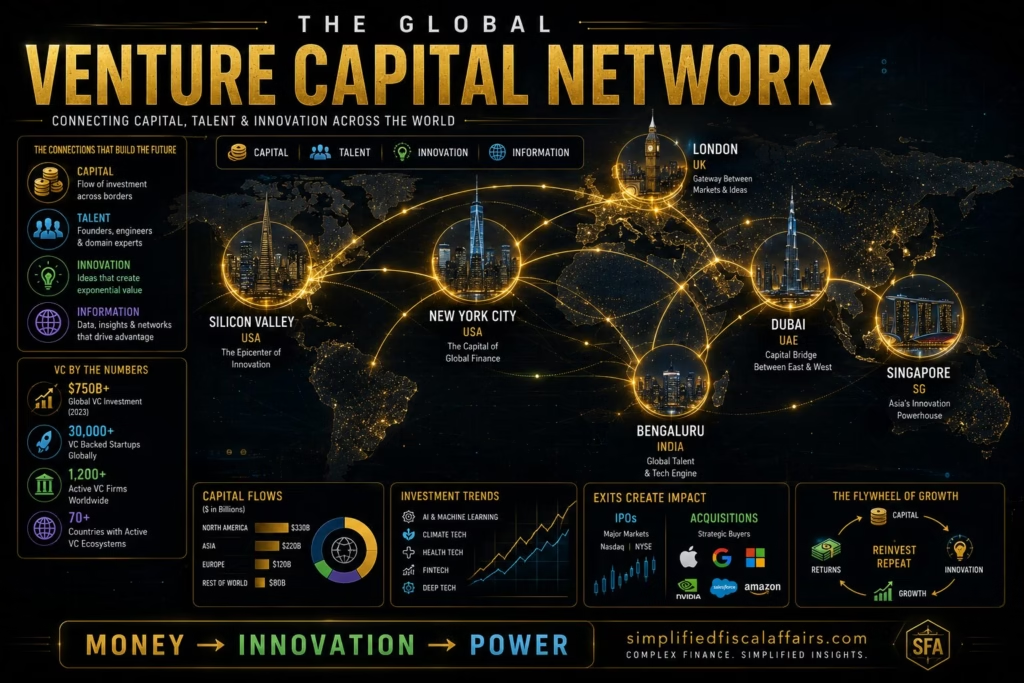
2. Why Venture Capital Exists
Innovation often requires funding long before profitability.
Examples:
- Uber
- Airbnb
- Stripe
- SpaceX
- OpenAI
These firms required enormous funding before generating substantial cash flows.
Traditional lenders would never finance such risk.
VC fills this gap.
3. Venture Capital Ecosystem
Participants
Founders
Create companies.
Angel Investors
Invest personal capital.
Venture Capital Firms
Manage pooled investment funds.
Limited Partners (LPs)
Provide capital to VC firms.
Examples:
- Pension funds
- Sovereign wealth funds
- University endowments
- Family offices
Investment Banks
Help with IPOs and exits.
Acquirers
Buy startups.
Examples:
- Microsoft
- Meta
4. How VC Funds Work
Step 1: Raise a Fund
VC firm raises:
$500 million
from LPs.
This becomes a VC fund.
Step 2: Invest
Example:
50 startups
Average investment:
$10 million
Step 3: Support
VCs help:
- Hiring
- Fundraising
- Strategy
- Partnerships
Step 4: Exit
Exit through:
IPO
Examples:
- Airbnb
- Snowflake
Acquisition
Example:
Startup sold to larger corporation.
5. Venture Capital Fund Structure
A typical VC fund has:
General Partners (GPs)
Manage investments.
Limited Partners (LPs)
Provide capital.
Management Fee
Usually:
2% annually
Example:
$1 billion fund
Management fee:
$20 million/year
Carried Interest (“Carry”)
Usually:
20%
If profits:
$500 million
Carry:
$100 million
This is where elite VC wealth comes from.
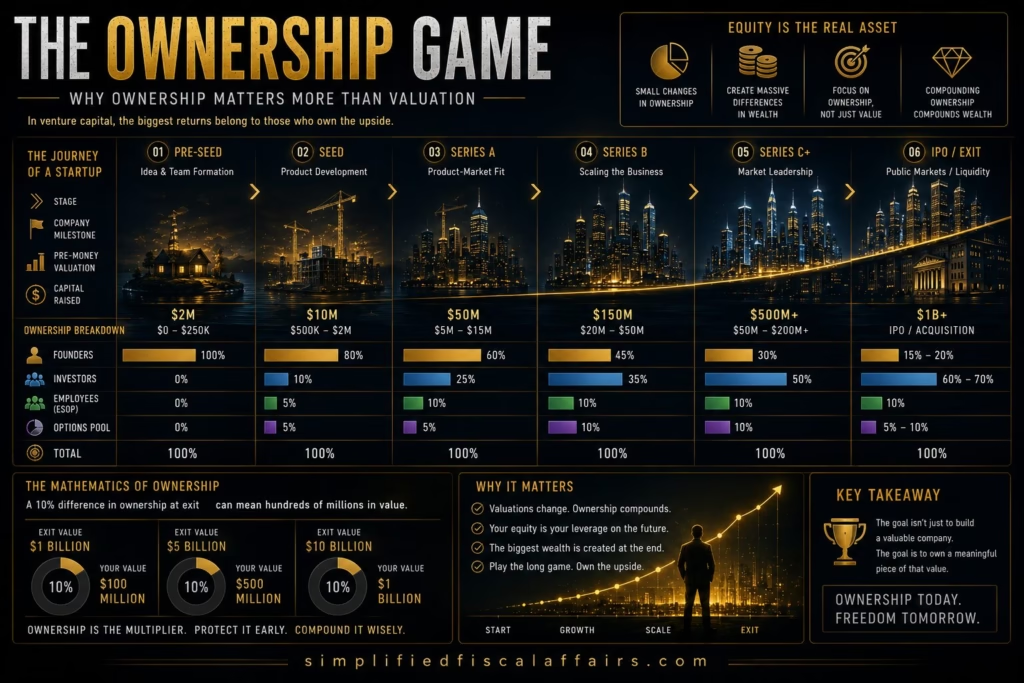
6. Startup Funding Stages
Pre-Seed
Idea stage
Funding:
$50K – $500K
Seed
Product development
Funding:
$500K – $5M
Series A
Product-market fit
Funding:
$5M – $20M
Series B
Scaling
Funding:
$20M – $100M
Series C+
Global expansion
Funding:
$100M+
7. VC Valuation Methods
Unlike public markets, startups often have:
- No profits
- Limited revenue
- Negative cash flow
Thus valuation becomes partly probabilistic.
Comparable Analysis
Compare similar startups.
Example:
SaaS firms valued at 15× ARR.
Startup ARR:
$10M
Valuation:
$150M
Venture Capital Method
Formula:
Exit Value ÷ Required Return
Example:
Expected Exit:
$1B
Required Return:
10×
Current Value:
$100M
Discounted Future Scenarios
Multiple probabilistic outcomes.
Institutional investors increasingly use scenario-weighted valuation models.
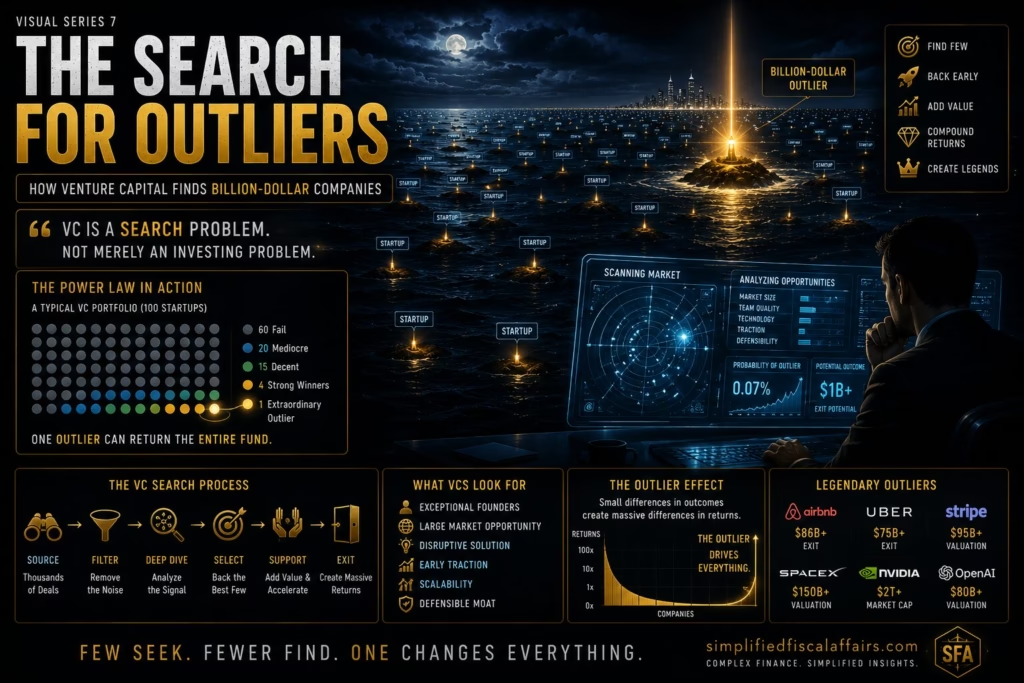
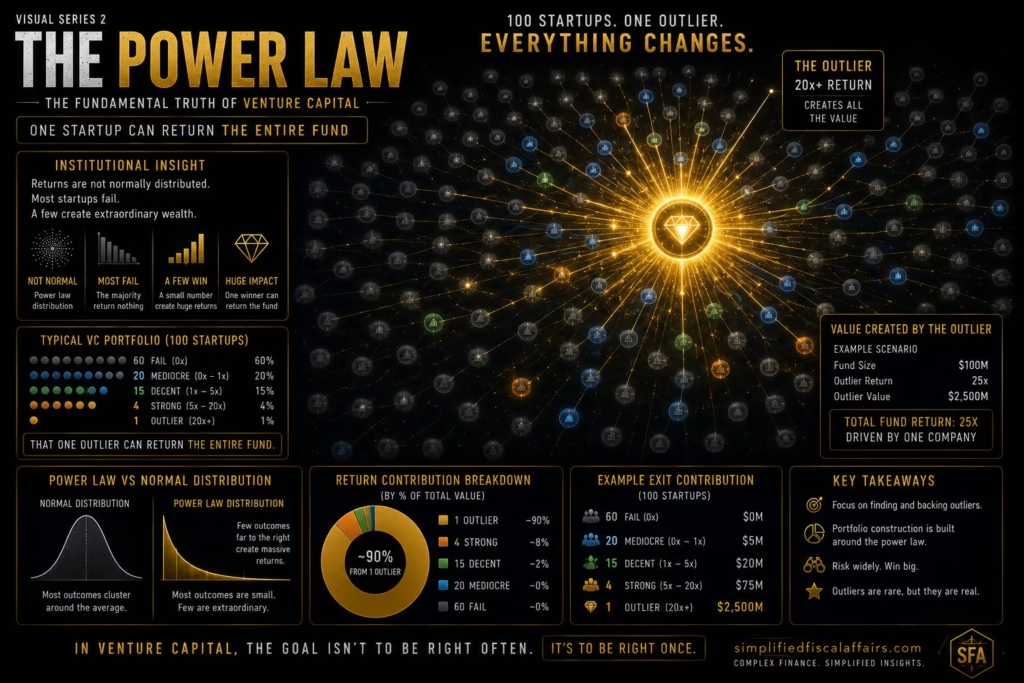
8. The Power Law Principle
The most important concept in VC.
A typical portfolio:
100 startups
Results:
- 60 fail completely
- 20 mediocre
- 15 decent
- 4 strong winners
- 1 extraordinary winner
That one company may generate more value than all others combined.
This phenomenon is called:
Power-Law Returns
The foundation of modern VC economics.
9. Ownership Mathematics
Elite VCs obsess over ownership.
Example:
10% ownership of company.
Company exits:
$10 billion
Value:
$1 billion
Small ownership differences can create hundreds of millions in return variation.
10. Dilution
Every funding round issues new shares.
Founders and investors get diluted.
Example:
Founder:
100%
Seed round:
80%
Series A:
60%
Series B:
45%
IPO:
15–25%
Managing dilution is a core VC skill.
11. Cap Tables
Cap Table = Capitalization Table
Tracks:
- Founders
- Employees
- Investors
- Options
Institutional investors analyze cap tables before investing.
12. Venture Capital Metrics
Burn Rate
Monthly cash consumption.
Runway
Cash ÷ Burn Rate
CAC
Customer Acquisition Cost
LTV
Lifetime Value
ARR
Annual Recurring Revenue
NRR
Net Revenue Retention
Gross Margin
Key SaaS metric.
13. Venture Capital Due Diligence
Professional VC firms evaluate:
Team
Can founders execute?
Market
Large enough?
Product
Defensible?
Competition
How crowded?
Economics
Can margins scale?
Legal Risks
IP ownership?
Regulatory concerns?

14. Advanced VC Concepts
TAM Analysis
Total Addressable Market
Elite VCs seek:
$10B+ opportunities.
Network Effects
Products become stronger as users increase.
Examples:
- Uber
Platform Businesses
Generate ecosystems.
Examples:
- Amazon
- Apple
Winner-Take-Most Markets
Dominant companies capture outsized value.
15. Advanced VC Portfolio Theory
Most people think diversification reduces risk.
VC is different.
Top funds intentionally concentrate capital.
Example:
After identifying winners:
- Increase follow-on investments
- Double down on outperformers
This is called:
Conviction Investing
16. Mega Funds
Large VC funds:
Sequoia Capital
Andreessen Horowitz
Accel
Benchmark
Lightspeed Venture Partners
Manage billions of dollars.
17. Modern Trends in Venture Capital
Artificial Intelligence
Major investment theme.
Examples:
- OpenAI
- Anthropic
Climate Tech
- Carbon removal
- Clean energy
- Battery innovation
Defense Technology
Growing rapidly.
Space Economy
Examples:
- SpaceX
Fintech
- Payments
- Digital banking
- Embedded finance
18. How Elite VCs Think
Institutional investors ask:
Not:
“Is this startup good?”
But:
- Could it become a $10B company?
- Is the market enormous?
- Is growth non-linear?
- Is there a defensible moat?
- Can it dominate globally?
- Can it generate venture-scale returns?
19. The Mathematics of Venture Returns
A simplified VC portfolio:
| Investment | Result |
|---|---|
| 30 Companies | Fail |
| 10 Companies | Break-even |
| 8 Companies | 3× |
| 1 Company | 20× |
| 1 Company | 100× |
That final 100× investment often determines whether a fund becomes legendary.
20. Institutional-Level Insight
The deepest secret of venture capital:
VC is not primarily about predicting the future.
It is about constructing a portfolio that benefits from extreme uncertainty.
The best venture firms build systems that:
- Discover exceptional founders
- Gain access before competitors
- Preserve ownership
- Concentrate capital into winners
- Engineer successful exits
That is why firms like Sequoia Capital and Benchmark have generated extraordinary returns over decades.